AI Appraisal Estimate

AI-generated estimates · not official valuations

From the user

What was submitted

Photo and notes provided by the user — not generated by AI

Submitted item photo
Submitted photo · May 30, 2026

User's notes

No additional notes provided.

AI analysis below

AI appraisal

AI analysis & estimate

AI-Generated · Verify before acting

Everything below is generated by AI for informational purposes only. AI can make mistakes — the AI may misidentify items or misattribute them (artist, maker, brand, designer, origin, era). This is not an official valuation and should not be used for insurance, sale, tax, estate, legal, or lending purposes — or any decision requiring a certified appraisal. It is not an authoritative claim about any person, brand, or rights holder — do not share or rely on it as a factual statement about a third party. Always consult qualified professionals before making financial decisions.

Read the full disclaimer

AI Identification

·Not independently authenticated·Verify before acting

Encyclopædia Britannica Micropædia (15th Edition)

Books - Reference & Encyclopedias

AI Estimated Value

·Not an official valuation·Verify before acting

$40.00 - $75.00

As of May 30, 2026

AI Item Analysis

·AI can make mistakes·Verify before acting
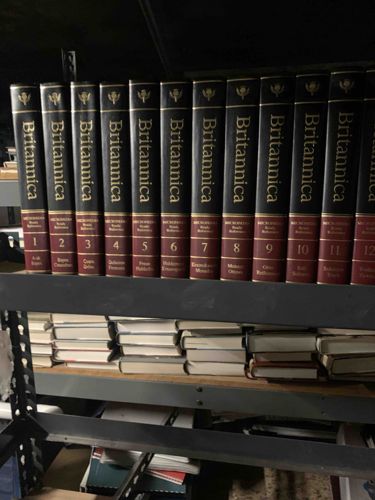
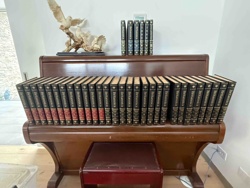
This is a partial set of the Encyclopædia Britannica, specifically the Micropædia: Ready Reference volumes, which were a cornerstone of the 15th edition structure introduced in 1974. The image displays volumes 1 through 12, likely published between the late 1980s and the early 2000s based on the binding style. These volumes features a high-quality leatherette or bonded leather binding in a classic two-tone aesthetic: dark black or midnight blue on the upper two-thirds and a rich burgundy or mahogany red on the lower third. The spines are embellished with regal gold-leaf stamping, including the thistle logo at the top (the symbol of the Britannica), the 'Britannica' name vertically aligned, the subtitle 'Micropædia Ready Reference', volume numbers 1-12, and detailed alphabetical index ranges at the base. Physically, each volume is approximately 11 inches tall and 1-2 inches thick. The condition appears to be good-to-excellent with minimal visible shelf wear to the spines, no significant fraying at the head or tail, and vibrant gilding. The craftsmanship reflects the premium status of reference books from the pre-digital era, designed for longevity and aesthetic appeal in a home library. The 15th edition represented a massive bibliographical undertaking, dividing into the Micropædia (short entries), Macropædia (long essays), and Propaedia (outline of knowledge).
AI Appraisal Report

·AI can make mistakes·Verify before acting
I have examined the digital representation of these twelve volumes of the Encyclopædia Britannica Micropædia (15th Edition). The volumes exhibit the classic late-20th-century gold-leaf stamping on a two-tone leatherette binding. Based on visual inspection, the set appears to be in 'Very Good' to 'Near Fine' condition; the gilding remains vibrant, and the spine ends show no significant compression or fraying, suggesting light use or a climate-controlled storage environment. However, the market for physical encyclopedias has undergone a massive devaluation since the advent of digital databases and Wikipedia. These volumes represent only a portion of the full 32-volume set (lacking the Macropædia, Propaedia, and Yearbooks), which severely limits their utility to researchers and collectors alike. Comparable sales for partial sets often fall within the decorative 'books by the foot' market or serve as inexpensive replacements for missing volumes. The aesthetic appeal of the 15th edition remains high for home staging or interior design, but its informative value is largely obsolete. My valuation reflects this shift toward decorative rather than academic worth. Please note that I cannot verify the integrity of the internal binding, the presence of foxing on the page edges, or the smell of smoke or mildew from images alone. A full physical inspection would be required to ensure there are no missing pages, underlining, or structural hinges failing inside the covers. Authenticity is assumed based on the high-quality stamping and consistent design elements typical of Britannica's production standards during this era.

Get your items appraised

Instant estimates of your treasures with AI-powered appraisals

Browse More Appraisals