AI estimate as of August 10, 2025 · verify with a professional before acting
AI-Generated · Verify before acting
Everything on this page is generated by AI for informational purposes only. AI can make mistakes — the AI may misidentify items or misattribute them (artist, maker, brand, designer, origin, era). This is not an official valuation and should not be used for insurance, sale, tax, estate, legal, or lending purposes — or any decision requiring a certified appraisal. It is not an authoritative claim about any person, brand, or rights holder — do not share or rely on it as a factual statement about a third party. Always consult qualified professionals before making financial decisions.
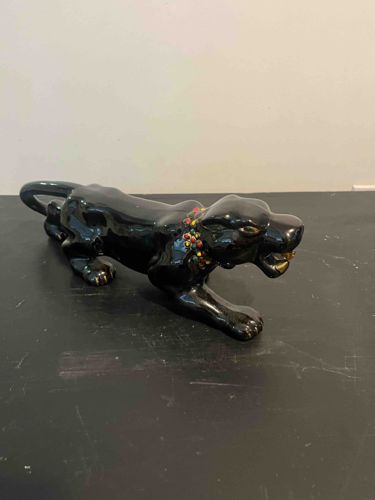
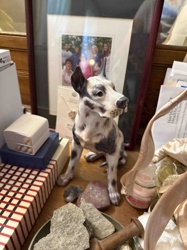
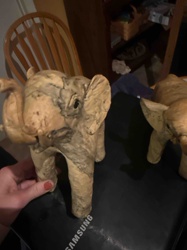
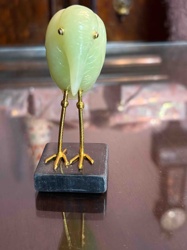
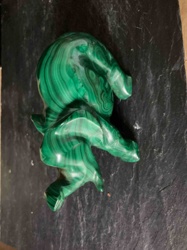
This item is a ceramic or pottery figurine depicting a crouching black panther or jaguar, likely from the Mid-Century Modern period (1950s-1970s) given its style. The animal is rendered in a sleek, elongated form with a highly glossy black glaze, typical of Hollywood Regency or associated styles. It measures approximately 12-18 inches in length, suggested by the proportions against the background. The panther is in a stalking or resting pose, with its head slightly raised and its body low to the ground. Its features are subtly defined, with visible ears, a snout, and well-formed paws. A notable feature is the decorative collar or necklace around its neck, which appears to be composed of small, colorful 'jewels' or beads in shades of red, yellow, and possibly green or orange, adding a touch of vibrant contrast to the otherwise monochromatic body. The panther's eyes and the inside of its mouth/fangs are accented with gold or brass-colored paint, enhancing its predatory gaze. Its claws on the visible front paws also show hints of this metallic gold detailing. The overall condition appears good, with the glaze intact and no obvious chips or cracks visible from this angle. There might be minor surface wear consistent with age, such as light scratches 'on the black surface it is sitting on', but the figurine itself seems well-preserved. There are no discernible maker's marks or signatures visible in the provided image. The craftsmanship suggests a commercially produced decorative piece, likely intended for display on a mantel, shelf, or table.
AI Appraisal Report
I have examined the provided image of the black glazed ceramic panther figurine. Based on its stylistic characteristics—sleek, elongated form, glossy black glaze, and decorative collar—it is highly consistent with Mid-Century Modern decorative arts, particularly those influenced by Hollywood Regency aesthetics, popular from the 1950s to 1970s. The size, estimated between 12-18 inches, contributes to its decorative impact.
The condition appears very good from the image; the glossy glaze seems intact with no obvious chips, cracks, or significant abrasions. The gold accents on the eyes, mouth, and claws, along with the vibrant 'jeweled' collar, show good preservation. Minor surface wear on the black surface it is sitting on is noted, but this does not appear to affect the figurine itself. Authenticity, based solely on visual inspection, places it within the typical production of that era for commercially produced decorative ceramics. While no maker's marks are visible, many such pieces were mass-produced without prominent signatures.
The market for Mid-Century Modern decorative objects, especially animal figurines of this scale and style, remains consistently strong. Comparables frequently appear in online marketplaces and auction results, valued as accent pieces for vintage interiors. Demand is steady, driven by collectors and interior designers seeking period-appropriate decor. These panther figurines, particularly the larger, more ornate examples, are relatively common but desirable, making them sought-after but not exceedingly rare.
Key factors impacting value include its good condition, appealing size, and distinctive Mid-Century Modern style. The 'jeweled' collar further enhances its visual appeal and collectibility over simpler versions. Limitations in verifying authenticity wholly rely on the image; I cannot confirm specific makers without a physical examination for marks, nor can I perform scientific tests on the materials or glaze composition to rule out modern reproductions. Likewise, provenance documentation would strengthen its historical authenticity. An in-person examination would allow for a thorough check of all surfaces for minute imperfections, hidden repairs, and clearer identification of any subtle maker's marks or production nuances.