AI estimate as of September 27, 2025 · verify with a professional before acting
AI-Generated · Verify before acting
Everything on this page is generated by AI for informational purposes only. AI can make mistakes — the AI may misidentify items or misattribute them (artist, maker, brand, designer, origin, era). This is not an official valuation and should not be used for insurance, sale, tax, estate, legal, or lending purposes — or any decision requiring a certified appraisal. It is not an authoritative claim about any person, brand, or rights holder — do not share or rely on it as a factual statement about a third party. Always consult qualified professionals before making financial decisions.
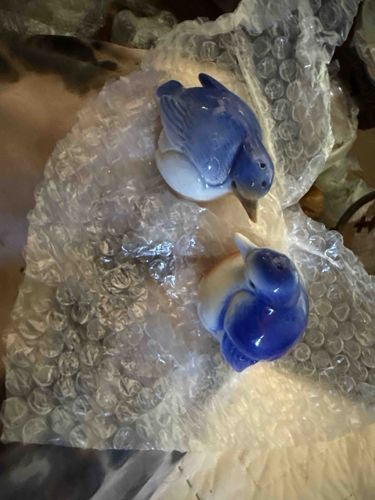
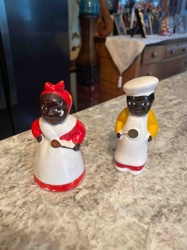
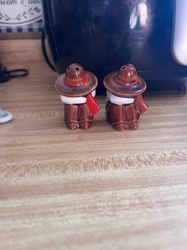
This is a charming pair of ceramic salt and pepper shakers, designed in the form of blue birds. Each shaker features a body primarily colored in a vibrant, glossy blue glaze, transitioning to a creamy white on the underside or belly section. The birds are depicted in a somewhat stylized, plump form, suggesting a comfortable, possibly resting posture. Notable physical characteristics include molded feathers on the back and wings, which are subtly defined by the glaze's interaction with the ceramic form. The beaks appear to be a light brown or unglazed ceramic color, contrasting with the glossy blue. Each bird has small, round holes on its back, typical for dispensing salt or pepper; one bird clearly shows three holes, suggesting it is the pepper shaker, while the other with fewer, larger holes (partially obscured) would be for salt. The overall construction appears solid with a smooth, glazed finish indicative of mass-produced ceramicware, likely porcelain or earthenware. No significant visible condition issues like chips, cracks, or repairs are discernible from the provided images, though they are partially encased in bubble wrap. Without a view of the underside, specific manufacturing marks or stopper types cannot be identified. Given their style, these shakers likely date from the mid-20th century to the present, possibly a vintage item from the 1950s-1970s, though without maker's marks, this is an estimation. The craftsmanship suggests a good quality decorative ceramic item, functional but also aesthetically pleasing as a table ornament.
AI Appraisal Report
Upon visual examination of the provided image, I note a charming pair of ceramic blue bird salt and pepper shakers. The vibrant, glossy blue glaze transitioning to creamy white on the belly suggests a mid-century aesthetic, likely porcelain or earthenware. The molded feather details and contrasting light brown beaks contribute to their decorative appeal. One shaker clearly exhibits three holes, indicating it is for pepper, while the other with fewer, larger holes (partially obscured) would be for salt.
From the image, their condition appears excellent, with no discernible chips, cracks, or repairs, though the partial encasement in bubble wrap does limit a full assessment. The smoothness of the glaze suggests quality mass-produced ceramic. However, without inspecting the underside, I cannot ascertain manufacturer marks, stopper types, or any hidden damage. These factors are crucial for a definitive authenticity and condition report.
In terms of market conditions, similar vintage ceramic salt and pepper shakers, often referred to as 'kitschy' or 'collectible kitchenalia,' have a modest but steady demand, particularly for novelty animal designs. Comparables in good condition typically retail within the $10-$40 range. Rarity is low; many such sets were produced. Demand is driven by collectors of specific themes (e.g., bird motifs) or vintage kitchenware enthusiasts. The absence of a recognized maker's mark significantly impacts value, placing them in the general vintage decorative item category rather than fine collectible ceramics.
For a full authentication, physical examination is essential to inspect for maker's marks, confirm the material, assess the integrity of the glaze and ceramic body, and determine the presence and type of stoppers. Provenance documentation would also add considerable value, though it's uncommon for items of this nature. Based on the visual evidence, I estimate the appraisal value to be between $15 and $30 for the pair.