AI estimate as of December 4, 2025 · verify with a professional before acting
AI-Generated · Verify before acting
Everything on this page is generated by AI for informational purposes only. AI can make mistakes — the AI may misidentify items or misattribute them (artist, maker, brand, designer, origin, era). This is not an official valuation and should not be used for insurance, sale, tax, estate, legal, or lending purposes — or any decision requiring a certified appraisal. It is not an authoritative claim about any person, brand, or rights holder — do not share or rely on it as a factual statement about a third party. Always consult qualified professionals before making financial decisions.
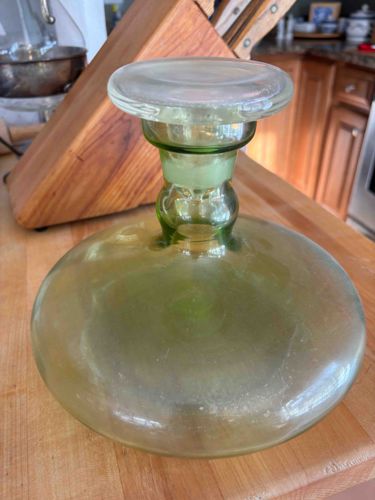
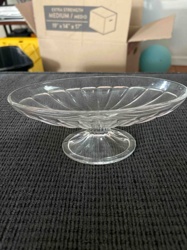
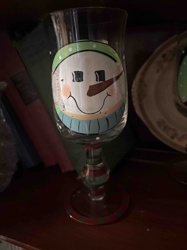
This item is a pedestal-style glass dish, likely intended as a candy dish, compote, or perhaps a decorative centerpiece. It is constructed entirely of glass, exhibiting a distinct green hue that appears denser and slightly darker in the stem, and lighter and more translucent in the bowl and base. The design features a substantial, flattened circular base that provides stability, from which a relatively short, bulbous stem rises. The stem transitions into a wider, flanged collar that supports a shallow, broad circular bowl. The top surface of the bowl is flat with a raised rim, suggesting it could also function as a candle holder or a stand. The construction appears to be machine-made or at least mold-blown, given the consistency of shape and the apparent lack of pontil marks typical of hand-blown glass, though further inspection of the underside would be needed to confirm this. The overall form is simple and functional. There are visible signs of wear, particularly on the surface of the base and bowl, manifesting as scattered light scratches and scuff marks, consistent with regular use or handling. There are no obvious chips, cracks, or repairs discernible from the provided images, suggesting its condition is relatively good despite the surface wear. The glass itself has a somewhat translucent quality, allowing light to pass through, and the color suggests a vintage or mid-century aesthetic, potentially from the 1950s to 1970s. The quality of the glass appears good, with no overt inclusions or significant bubbles, although the finish has a slightly utilitarian rather than highly refined appearance. Its sturdy design and broad base suggest durability.
AI Appraisal Report
I have visually examined this green glass pedestal candy dish or compote. The item appears to be machine-made or mold-blown glass, indicated by the consistent shape and lack of apparent pontil marks. The distinct green hue, denser in the stem and lighter in the bowl and base, points to a likely mid-century origin, possibly between the 1950s and 1970s. The overall condition is good, considering the visible light scratches and scuff marks on the base and bowl, consistent with regular use. Crucially, I see no obvious chips, cracks, or repairs from the image provided.
In terms of market conditions, similar vintage green glass candy dishes or compotes are readily available. This piece falls into a broad category of decorative yet functional glassware. Demand is moderate, driven by collectors of vintage glassware, particularly those seeking specific color palettes or mid-century aesthetics. Rarity is low; this style of glass production was quite common. Factors impacting value include the lack of specific maker's marks, which would elevate its desirability, and the general utilitarian rather than artistic quality of the glass. The minor surface wear is typical and does not significantly devalue the piece in this price range.
My primary limitation in this appraisal is the lack of physical examination. An in-person inspection would allow me to check for pontil marks, examine the glass for inclusions or bubbles more closely, and confirm the absence of subtle cracks or repairs not visible in the image. Scientific testing would be excessive for an item of this type and value. Without provenance documentation or specific identifying marks, attributing it to a particular manufacturer or precise date beyond the general period is impossible.