Dresden-style Floral and Figural Porcelain Urn with Plinth
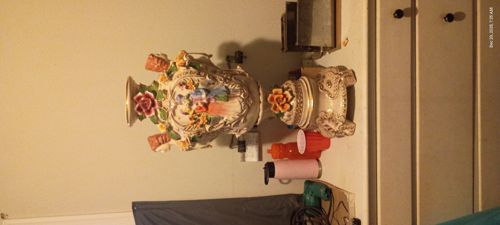
This is a highly decorative porcelain urn with a matching separate base or plinth, crafted in a style reminiscent of German Dresden or Meissen porcelain. The urn features elaborate encrusted three-dimensional (schneeballen style) floral applications including large pink and yellow roses and green foliage. The central body contains a relief scene of figures in 18th-century Rococo-style attire amidst a landscape. The piece is accented with gold gilt along the rim and scrolled handles. The separate footed base is similarly decorated with high-relief scrollwork and a large orange/yellow floral finial. Its construction suggests a slip-cast porcelain body with hand-applied floral elements and hand-painted details. There are visible signs of dust accumulation and minor wear to the delicate petal edges, which is common for such intricate floral work. Based on the ornate, eclectic design, this likely dates to the late 19th or early 20th century, representing a high-Victorian or Edwardian era decorative aesthetic designed to showcase technical ceramic mastery.
AI-Generated Appraisal Disclaimer
Estimated Value
$600 - $900
Basic Information
Category
Decorative Arts - Ceramics
Appraised On
February 23, 2026
Estimated Value
$600 - $900
Item Description
This is a highly decorative porcelain urn with a matching separate base or plinth, crafted in a style reminiscent of German Dresden or Meissen porcelain. The urn features elaborate encrusted three-dimensional (schneeballen style) floral applications including large pink and yellow roses and green foliage. The central body contains a relief scene of figures in 18th-century Rococo-style attire amidst a landscape. The piece is accented with gold gilt along the rim and scrolled handles. The separate footed base is similarly decorated with high-relief scrollwork and a large orange/yellow floral finial. Its construction suggests a slip-cast porcelain body with hand-applied floral elements and hand-painted details. There are visible signs of dust accumulation and minor wear to the delicate petal edges, which is common for such intricate floral work. Based on the ornate, eclectic design, this likely dates to the late 19th or early 20th century, representing a high-Victorian or Edwardian era decorative aesthetic designed to showcase technical ceramic mastery.
Related Tags
Explore similar items and categories:
Get Your Items Appraised
Instant estimates of your treasures with AI-powered instant appraisals