Obsidian Mineral Shards
Geological Specimens / Minerals

Obsidian Mineral Shards

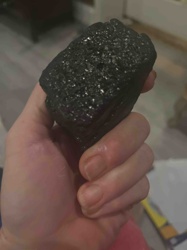
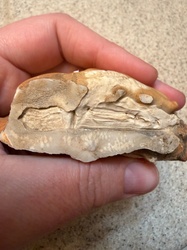
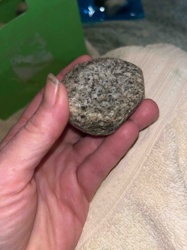
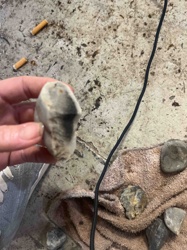
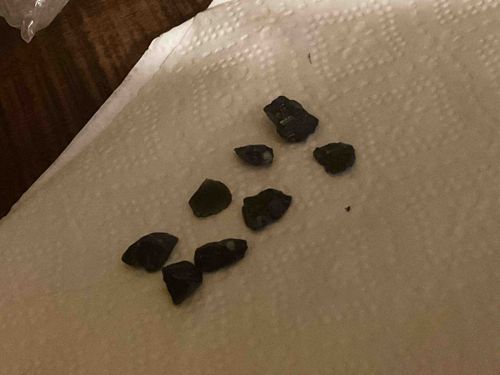
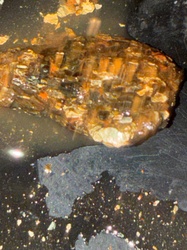
This specimen consists of eight small shards and fragments of natural obsidian, an extrusive igneous rock formed as a type of volcanic glass. The pieces vary in size, ranging from approximately 0.5 cm to 1.5 cm in length. The material exhibits a characteristic deep black, opaque to translucent appearance with a vitreous (glassy) luster visible on the fresh fracture surfaces. The shards display diagnostic conchoidal fracturing, resulting in sharp, curved edges and smooth, shell-like surfaces typical of high-silica volcanic materials. Unlike manufactured glass, these fragments show subtle natural variations in density and translucency when viewed under direct light. Several pieces exhibit small white or grayish inclusions, which may be phenocrysts or spherulites (possibly indicative of 'snowflake' obsidian), though they appear primarily as concentrated mineral spots. The condition is raw and unpolished, with some surface dust and minor internal stress fractures. There are no signs of human manipulation, such as pressure flaking for lithic tools, suggesting these are natural debitage or breakage from a larger parent stone. The specimens are geologically ancient but recently fractured from a larger mass, displaying a clean, unweathered patina. Overall craftsmanship is non-applicable as these are natural geological samples, but the quality of the glass is high with minimal vesicularity (air bubbles).
Estimated Value

$5 - $15

Basic Information

Category

Geological Specimens / Minerals

Appraised On

February 27, 2026

Estimated Value

$5 - $15

Additional Details Provided By Owner

User Provided Information

Small shards of a obsidian specimen

Item Description

This specimen consists of eight small shards and fragments of natural obsidian, an extrusive igneous rock formed as a type of volcanic glass. The pieces vary in size, ranging from approximately 0.5 cm to 1.5 cm in length. The material exhibits a characteristic deep black, opaque to translucent appearance with a vitreous (glassy) luster visible on the fresh fracture surfaces. The shards display diagnostic conchoidal fracturing, resulting in sharp, curved edges and smooth, shell-like surfaces typical of high-silica volcanic materials. Unlike manufactured glass, these fragments show subtle natural variations in density and translucency when viewed under direct light. Several pieces exhibit small white or grayish inclusions, which may be phenocrysts or spherulites (possibly indicative of 'snowflake' obsidian), though they appear primarily as concentrated mineral spots. The condition is raw and unpolished, with some surface dust and minor internal stress fractures. There are no signs of human manipulation, such as pressure flaking for lithic tools, suggesting these are natural debitage or breakage from a larger parent stone. The specimens are geologically ancient but recently fractured from a larger mass, displaying a clean, unweathered patina. Overall craftsmanship is non-applicable as these are natural geological samples, but the quality of the glass is high with minimal vesicularity (air bubbles).
Get Your Items Appraised

Instant estimates of your treasures with AI-powered instant appraisals

Browse More Appraisals