AI estimate as of November 7, 2025 · verify with a professional before acting
AI-Generated · Verify before acting
Everything on this page is generated by AI for informational purposes only. AI can make mistakes — the AI may misidentify items or misattribute them (artist, maker, brand, designer, origin, era). This is not an official valuation and should not be used for insurance, sale, tax, estate, legal, or lending purposes — or any decision requiring a certified appraisal. It is not an authoritative claim about any person, brand, or rights holder — do not share or rely on it as a factual statement about a third party. Always consult qualified professionals before making financial decisions.
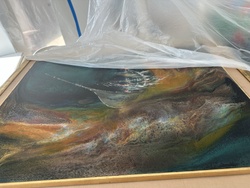
This is an abstract oil painting on canvas, likely depicting a sunset over water or a hazy landscape. The dominant colors are various shades of peach, rose, and muted orange, transitioning into lighter tones of gray, lavender, and white towards the bottom third of the canvas, which suggests a horizon or waterline. The brushstrokes are horizontal and blended, creating a soft, ethereal, and atmospheric quality, characteristic of color field painting or tranquil abstract landscapes. The painting appears to be stretched over a wooden frame, and it is housed within a simple, thin wooden frame, possibly made of light-colored wood or a faux-gold finish, which adds a clean border without distracting from the artwork. The overall impression is one of calm and serenity. There are no visible artist signatures or marks in the provided image. The canvas texture is subtly visible through the paint, indicating it is likely oil or acrylic on canvas. The condition appears to be good, with no obvious signs of damage, tears, or significant paint loss. The framing also seems intact. Based on the abstract nature and color palette, it likely dates from the mid-20th century to contemporary, possibly within the last 30-50 years, given its clean aesthetic.
AI Appraisal Report
Upon visual examination of the provided image, I assess this abstract oil painting, 'Abstract Sunset Seascape,' to be in good overall condition. There are no apparent tears, paint loss, or significant damage to the canvas or the oil medium. The frame appears intact and complements the artwork without distracting from it. Authenticity, based solely on this image, refers to it being an original painting rather than a print or reproduction; the visible canvas texture and paint application support this. However, without in-person examination, I cannot comment on the artistic hand or determine if it’s a known artist.
Market conditions for abstract landscapes and color field paintings are generally stable, with a broad appeal for decorative pieces. Comparables for unsigned, decorative abstract oil paintings of this size and aesthetic typically fall within the $300-$600 range in secondary markets, such as online art platforms or local galleries. Demand for tranquil, aesthetically pleasing abstract works like this remains consistent among collectors and interior designers.
Factors impacting value significantly include the absence of an artist's signature, which limits specific attribution and thus a higher valuation. Rarity is also difficult to ascertain without provenance. While aesthetically pleasing, without an identified artist or a documented exhibition history, it is valued primarily as a decorative art piece.
Limitations in authenticity verification are substantial with only images. Full authentication would require a hands-on physical inspection to assess paint layers, canvas age through warp/weft analysis, stretcher bar construction, and any hidden signatures. Provenance documentation, such as receipts or exhibition history, would be crucial to attribute it to a specific artist or period. Scientific testing (e.g., pigment analysis, carbon-14 dating for canvas) could narrow down the age definitively beyond the visual estimate of mid-20th century to contemporary. Without these, the value remains in the decorative art category.