AI estimate as of December 4, 2025 · verify with a professional before acting
AI-Generated · Verify before acting
Everything on this page is generated by AI for informational purposes only. AI can make mistakes — the AI may misidentify items or misattribute them (artist, maker, brand, designer, origin, era). This is not an official valuation and should not be used for insurance, sale, tax, estate, legal, or lending purposes — or any decision requiring a certified appraisal. It is not an authoritative claim about any person, brand, or rights holder — do not share or rely on it as a factual statement about a third party. Always consult qualified professionals before making financial decisions.
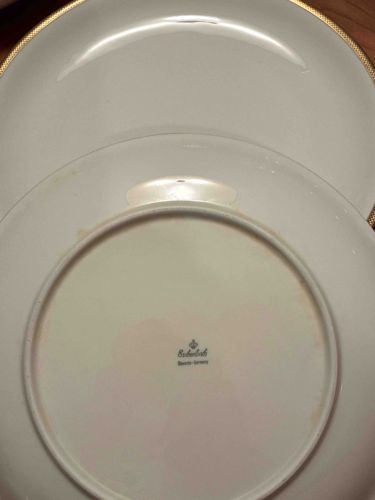
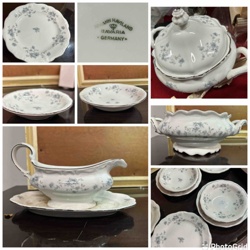
The item is identified as a dinner plate, primarily white with a distinctive gold rim. The plate appears to be crafted from fine porcelain or ceramic, showcasing a smooth, glossy glaze on its surface. The outer rim of the plate features a decorative gold band, which exhibits a delicate, possibly etched, pattern or texture, indicating a touch of elegance and refinement. The back of the plate, as visible, reveals the maker's mark: 'Seltmann Weiden' printed in a stylized script, underneath which is 'Bavaria-Germany', indicating its origin. A small crown-like emblem or a stylized 'S' is positioned above the brand name. The plate's construction suggests a standard round form for dinnerware. In terms of condition, there are some visible surface inconsistencies; what appears to be residue or discoloration is present on the underside of the plate, particularly around the foot ring and in some central areas, leaning towards a light brown or yellowish tint. There are also a few minor scuff marks or light abrasions on the glazed surface, consistent with normal use or storage. The gold rim seems largely intact, though a closer inspection would be needed to determine any minor wear or loss of gilding. The overall craftsmanship points to a well-made, possibly mass-produced, item from a reputable German porcelain manufacturer, likely dating from the mid-20th century onwards, given the 'Bavaria-Germany' marking becoming more common post-WWII.
AI Appraisal Report
Based on my examination of the provided image of this Seltmann Weiden dinner plate, I've assessed its condition and potential value. The plate is clearly identified by its 'Seltmann Weiden Bavaria-Germany' mark, along with a crown-like emblem, which confirms its authenticity as a product from this recognized German manufacturer. The gold rim is a characteristic decorative element often found on their dinnerware.
In terms of condition, I observe some surface inconsistencies, including residue or discoloration on the underside and foot ring, appearing light brown or yellowish. There are also minor scuff marks or light abrasions on the glazed surface, indicative of normal use or storage. The gold rim appears largely intact, though a closer physical inspection would be needed to detect any subtle wear or loss of gilding. These condition issues detract somewhat from its value, but are not severe enough to render it unsalable.
Market conditions for Seltmann Weiden dinner plates, especially those from the mid-20th century onwards, generally show them as attractive but not high-value collectibles. They are well-made and durable, but not particularly rare. Demand is moderate, typically from individuals looking to complete a set, replace a broken piece, or source vintage dinnerware for everyday use or casual entertaining. Comparable single dinner plates from similar German porcelain manufacturers (e.g., Rosenthal, Hutschenreuther) with similar age and condition typically fetch similar prices in online marketplaces or antique shops. The 'Bavaria-Germany' mark suggests a post-WWII origin, common for readily available vintage pieces.
Factors significantly impacting value here include its mass-produced nature, the visible signs of wear and discoloration, and the lack of any unique or exceptionally rare pattern. Without in-person examination, I cannot definitively assess the exact nature of the discoloration (e.g., staining vs. manufacturing imperfection) or the precise extent of gilding wear. Provenance documentation, such as original sales receipts, could add a minor premium if it supported a particular historical context, but it's unlikely for such an item. Scientific testing is not typically required for authenticating standard vintage dinnerware of this type unless there's a specific dispute regarding origin or material composition, which is not suggested here.