AI estimate as of December 16, 2025 · verify with a professional before acting
AI-Generated · Verify before acting
Everything on this page is generated by AI for informational purposes only. AI can make mistakes — the AI may misidentify items or misattribute them (artist, maker, brand, designer, origin, era). This is not an official valuation and should not be used for insurance, sale, tax, estate, legal, or lending purposes — or any decision requiring a certified appraisal. It is not an authoritative claim about any person, brand, or rights holder — do not share or rely on it as a factual statement about a third party. Always consult qualified professionals before making financial decisions.
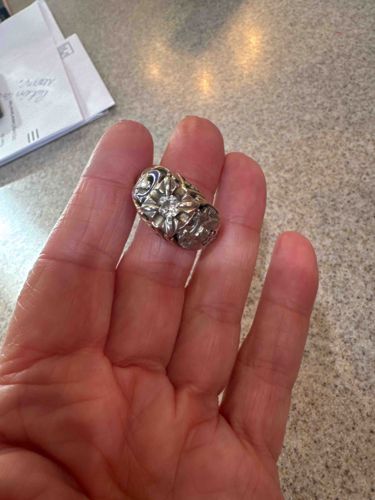
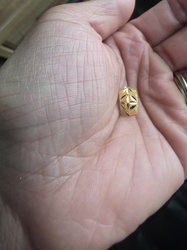
The item is a small, elongated, tubular or barrel-shaped bead, likely intended as a charm or a component for jewelry. It appears to be made of a silver-toned metal, possibly sterling silver, given its luster and the common use of such material for intricate designs. The surface is elaborately decorated with filigree or chased patterns. The primary motif visible on the top surface is a floral design, possibly a stylized star or blossom, with a central element that could be a small embedded stone or a polished metallic detail. Surrounding this central flora are swirling, organic-looking patterns, reminiscent of vines or scrollwork, which extend around the cylindrical body of the bead. The craftsmanship appears to be detailed, suggesting either hand-worked artistry or finely cast production. The metal exhibits some areas of darker patina, particularly in the recessed parts of the design, which enhances the three-dimensional quality of the ornamentation and suggests some age or intentional antiquing. There are no obvious signs of significant damage such as dents, cracks, or missing pieces, but minor surface wear consistent with handling or use is likely present, though not clearly discernible from the provided image. The overall style suggests a decorative, possibly antique or vintage, piece, perhaps from the late 19th or early to mid-20th century, or a modern reproduction in a similar style. Its size is suitable for a bracelet, necklace, or a decorative accent.
AI Appraisal Report
Based on my visual examination of the provided image, this silver-toned tubular bead or charm exhibits intricate filigree or chased patterns, predominantly featuring a floral design surrounded by organic scrollwork. The visible luster and some areas of darker patina suggest it is likely sterling silver or a high-quality silver alloy. The craftsmanship appears detailed, indicating either skilled handwork or fine casting. I observe no overt signs of damage like severe dents or cracks, though typical surface wear consistent with age and use is to be expected. The overall aesthetic leans towards an antique or vintage style, possibly late 19th to mid-20th century, or a modern piece replicating that era. Given its size, it is well-suited for a bracelet or necklace.
Market conditions for such decorative silver-toned beads vary. Similar items, particularly if confirmed as sterling silver and vintage, generally fetch modest prices in the current market, often driven by their artistic merit and material weight. Demand exists within the jewelry making and vintage costume jewelry communities, though true rarity for a piece like this, without specific hallmarks or historical attribution, is low. Factors impacting value include the actual metal content (sterling silver being preferable), the intricacy and condition of the filigree, and age. If the central element is indeed a gemstone rather than metal, that would also increase value.
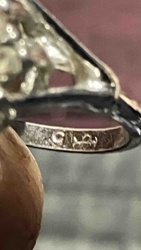
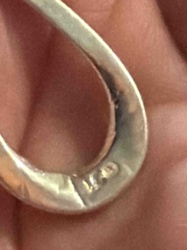
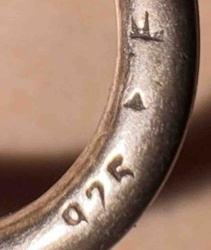
My primary limitation is the lack of physical examination. I cannot definitively confirm the metal content (e.g., sterling silver vs. silver-plated base metal) or the nature of the central element without in-person inspection. A detailed inspection under magnification would reveal specific manufacturing techniques and condition details. Authentication would require hallmark identification, if present, or spectroscopic analysis for material composition. Provenance documentation would be crucial for attributing it to a specific period or maker. The appraised range reflects these uncertainties, with the higher end typically reserved for confirmed sterling silver vintage pieces in excellent condition.