AI Appraisal Estimate

AI-generated estimates · not official valuations

From the user

What was submitted

Photo and notes provided by the user — not generated by AI

Submitted item photo
Submitted photo · May 28, 2026

User's notes

This type of ceramic wash set is typically associated with early to mid-20th-century household items, often used for personal hygiene before modern plumbing became widespread. The mark suggests it was produced by a Dutch manufacturer, and the gold trim and design indicate it might be a decorative or higher-quality piece. Holland

AI analysis below

AI appraisal

AI analysis & estimate

AI-Generated · Verify before acting

Everything below is generated by AI for informational purposes only. AI can make mistakes — the AI may misidentify items or misattribute them (artist, maker, brand, designer, origin, era). This is not an official valuation and should not be used for insurance, sale, tax, estate, legal, or lending purposes — or any decision requiring a certified appraisal. It is not an authoritative claim about any person, brand, or rights holder — do not share or rely on it as a factual statement about a third party. Always consult qualified professionals before making financial decisions.

Note

This analysis also relies on unverified notes provided by the user, which may be incomplete or inaccurate and could affect the result.

Read the full disclaimer

AI Identification

·Not independently authenticated·Verify before acting

Vintage Ceramic Pitcher and Basin Wash Set

Household Ceramic Wash Set

AI Estimated Value

·Not an official valuation·Verify before acting

$90 - $140

As of May 28, 2026

AI Item Analysis

·AI can make mistakes·Verify before acting
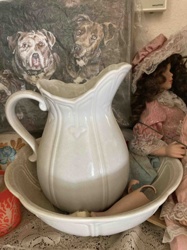
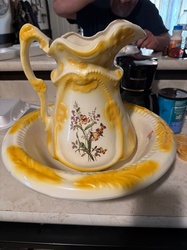
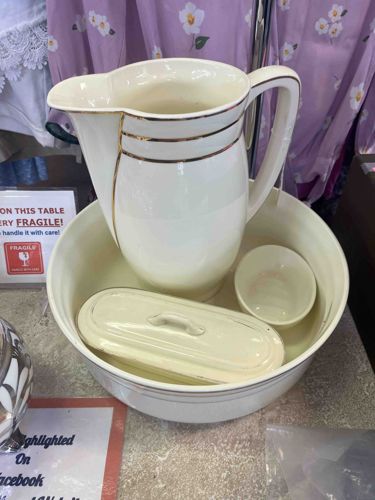
This is a vintage ceramic wash set, comprising at least four pieces: a large pitcher (or ewer), a spacious washbasin (bowl), a lidded rectangular dish (likely a soap dish), and a smaller circular bowl. All components are crafted from glazed ceramic, exhibiting a uniform creamy off-white or ivory hue with a subtle sheen, suggestive of either earthenware or fine porcelain. The design is elegantly simple, characterized by smooth, clean lines. The most prominent decorative feature is the application of delicate gold-colored banding. The pitcher showcases horizontal gold stripes around its rim and mid-body, complemented by an eye-catching vertical gold stripe running down its side, gracefully intersecting the horizontal bands. The large washbasin mirrors this style with coordinating gold trim along its rim. The rectangular lidded dish and the small circular bowl appear plainer, serving as functional complements to the more ornate main pieces. There are no immediate signs of significant damage such as chips, cracks, or extensive crazing visible, though minor wear consistent with age and use, like subtle patina or slight rubbing on the gold trim, is to be expected upon closer inspection. The absence of visible maker's marks in the image prevents definitive identification, but the provided context suggests a Dutch manufacturing origin. The overall style, utility, and the presence of such sets for personal hygiene point to an early to mid-20th-century period (approximately 1900s-1950s). The quality of the glaze and the precise application of the gold accents indicate good craftsmanship and durability, distinguishing it as a well-made, decorative, yet functional domestic item typical of an era preceding widespread indoor plumbing.
AI Appraisal Report

·AI can make mistakes·Verify before acting
Based on my examination of the provided images and description, this vintage ceramic wash set, reportedly of Dutch origin, presents as a well-preserved example of early to mid-20th-century domestic ware. The set includes a large pitcher, basin, lidded soap dish, and a smaller bowl, all featuring an elegant ivory glaze with delicate gold banding. The overall condition appears to be very good, with no visible chips, cracks, or significant crazing. The gold trim shows only minor wear consistent with its age. While the 'Holland' mark suggests a Dutch manufacturer, without a specific maker's mark (e.g., Petrus Regout, Société Céramique), precise attribution is challenging. The market for these wash sets is relatively soft, as their original function is obsolete. They are now primarily collected as decorative or 'shabby chic' interior design pieces. Similar unmarked or lesser-known European sets from this era (c. 1900-1950) typically sell in the $75 to $150 range at auction or in antique shops. The completeness of this four-piece set and its excellent visual condition are its primary value drivers. However, the lack of a prominent maker's mark and the general market saturation for such items limit its value potential. It is crucial to note that this appraisal is based on images alone. A definitive authentication would require in-person examination to confirm the 'Holland' mark, check for hidden damages or repairs under UV light, and assess the quality of the ceramic and glaze firsthand. Full verification of origin would depend on identifying the specific manufacturer's mark.

Get your items appraised

Instant estimates of your treasures with AI-powered appraisals

Browse More Appraisals