AI estimate as of November 13, 2025 · verify with a professional before acting
AI-Generated · Verify before acting
Everything on this page is generated by AI for informational purposes only. AI can make mistakes — the AI may misidentify items or misattribute them (artist, maker, brand, designer, origin, era). This is not an official valuation and should not be used for insurance, sale, tax, estate, legal, or lending purposes — or any decision requiring a certified appraisal. It is not an authoritative claim about any person, brand, or rights holder — do not share or rely on it as a factual statement about a third party. Always consult qualified professionals before making financial decisions.
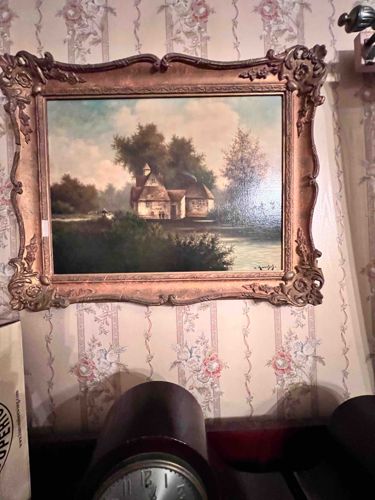
This is an oil painting depicting a rustic cottage scene, likely rendered in the Romantic or Impressionistic style, though specific brushwork detail cannot be fully discerned from the image. The painting is rectangular, set within a substantial, ornate gilded frame. The frame features intricate rococo-inspired carvings, including scrolling foliage and floral motifs, particularly prominent at the corners and along the edges. The color palette of the frame is a warm gold, with areas of darker patination that suggest age and enhance the decorative elements. The painting itself showcases a small, thatched-roof cottage nestled amongst lush green trees and foliage, appearing to be situated near a body of water, possibly a river or lake, which reflects the pale sky. The sky above is a mix of light blues and soft whites, indicating either a bright day with some cloud cover or a hazy atmosphere. The surrounding landscape is dominated by varied shades of green, brown, and hints of lighter, possibly flowering or autumn-tinged trees. There appears to be a signature in the bottom right corner of the painting, though it is not legible from the provided image. The overall condition of the painting appears good, with no visible tears or significant damage, though some surface grime or age-related darkening might be present. The frame shows some minor wear consistent with age, particularly where the gilding might have chipped or dulled. The craftsmanship of the frame indicates a piece intended for display in a formal or traditionally decorated interior, complementing the pastoral subject matter of the painting. The piece evokes a sense of tranquility and rural charm.
AI Appraisal Report
This Framed Cottage Landscape Painting, likely oil on canvas, depicts a tranquil rural scene. The painting presents in good overall condition from the image, with no obvious tears or significant damage, though surface grime or age-related darkening may be present. The ornate gilded frame, featuring rococo-inspired carvings, shows minor wear consistent with age, such as slight chipping or dulling of the gilding. The legibility of the signature in the bottom right corner is crucial for artist identification, which significantly impacts value.
From the visual evidence, I assess this piece as a decorative artwork from the late 19th to mid-20th century, likely European or American, drawing on Romantic or Impressionistic sensibilities. While the quality appears competent, without a clear artist attribution, it falls into the category of 'school of' or unsigned decorative landscape art. Market conditions for such pieces are stable but not commanding, with value primarily driven by aesthetic appeal, condition, and framing. Comparable decorator-grade landscape paintings of similar size and condition typically sell in the $400-$700 range. Demand for aesthetically pleasing, traditionally framed landscapes remains consistent, but rarity is low for unsigned works.
Key limitations: Authenticity of the artist (if signed) cannot be verified without in-person examination. A physical inspection is needed to assess the medium, substrate, exact condition (e.g., craquelure, restoration), and frame integrity. Provenance documentation (prior ownership, exhibition history) would be essential for establishing higher value for an attributed artist. Scientific testing (e.g., pigment analysis) could further confirm age and origin.