AI Appraisal Estimate

AI-generated estimates · not official valuations

From the user

What was submitted

Photo and notes provided by the user — not generated by AI

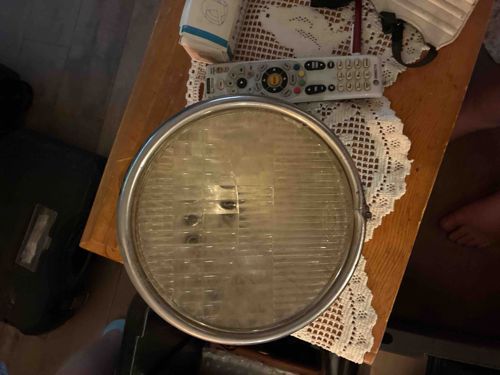
Submitted item photo
Submitted photo · June 6, 2026

User's notes

No additional notes provided.

AI analysis below

AI appraisal

AI analysis & estimate

AI-Generated · Verify before acting

Everything below is generated by AI for informational purposes only. AI can make mistakes — the AI may misidentify items or misattribute them (artist, maker, brand, designer, origin, era). This is not an official valuation and should not be used for insurance, sale, tax, estate, legal, or lending purposes — or any decision requiring a certified appraisal. It is not an authoritative claim about any person, brand, or rights holder — do not share or rely on it as a factual statement about a third party. Always consult qualified professionals before making financial decisions.

Read the full disclaimer

AI Identification

·Not independently authenticated·Verify before acting

Vintage Automotive Sealed Beam Headlight

Automotive Part

AI Estimated Value

·Not an official valuation·Verify before acting

$25-75

As of June 6, 2026

AI Item Analysis

·AI can make mistakes·Verify before acting
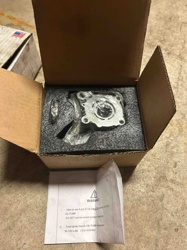
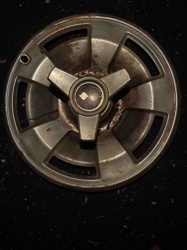
The item depicted is a vintage sealed beam headlight, likely from an automobile or truck manufactured in the mid-20th century, specifically pre-1980s when composite headlights became common. It features a circular glass face with horizontal fluting and several distinct circular bosses or lenses integrated into the glass, typical for directing the light beam, possibly indicating a high/low beam capability. The glass appears to be clear or slightly yellowed with age, showing some internal dust or debris, which is common for older sealed units, but no obvious cracks or chips are visible on the main lens. A prominent chrome or polished metal bezel frames the glass, indicating a decorative and functional element characteristic of period automotive design. The bezel shows some wear and minor tarnishing consistent with age and exposure. The overall construction suggests a robust build quality designed for durability. While no specific manufacturer's marks are discernible from the image, the presence of specific lens patterns and the universal sealed beam design points towards a standardized replacement part or an original equipment component common to many vehicles of that era. The visible condition is fair, consistent with an unrestored, used automotive part, showing expected signs of age and patina. The lack of a visible bulb indicates it's a sealed beam unit where the filament, reflector, and lens are one integrated, non-serviceable unit.
AI Appraisal Report

·AI can make mistakes·Verify before acting
I have examined the provided image of what appears to be a vintage automotive sealed beam headlight. Based on my visual assessment, the item exhibits characteristics consistent with units produced from the 1940s through the 1970s. The circular glass face with horizontal fluting and integrated bosses is typical for directing light and often indicates a dual-beam function. The overall condition, with some internal dust/debris and minor tarnishing on the bezel, suggests fair, unrestored, used automotive part condition. There are no readily visible cracks or chips on the main lens, which is a positive. The robust construction is characteristic of the era. From a market perspective, demand for these specific vintage sealed beam headlights can be niche, primarily driven by restorers or collectors of period-correct vehicles. Compatibility is key; while these were standardized visually, electrical specifications or mounting variations might exist. Value is largely dependent on the specific vehicle application for which it is sought. Given the generic nature without a visible manufacturer's mark or part number, it's considered a universal replacement part rather than a rare, vehicle-specific unit, which limits its individual rarity unless it's New Old Stock (NOS). Key factors impacting value include its exact electrical specifications (e.g., 6V vs. 12V), specific lumen output if known, and crucially, its applicability to desirable collector vehicles. Its current used, unrestored condition also limits the top-end value. The biggest limitation in authenticity verification from an image alone is the inability to test functionality (is it still sealed? does it work?), confirm voltage, or check for subtle manufacturer markings often found on the glass edge or rear housing that could denote a more valuable original equipment manufacturer (OEM) part. An in-person examination would allow for physical inspection of the rear housing, electrical connectors, and potential part numbers, as well as testing internal integrity and functionality.

Get your items appraised

Instant estimates of your treasures with AI-powered appraisals

Browse More Appraisals