AI Appraisal Estimate

AI-generated estimates · not official valuations

From the user

What was submitted

Photo and notes provided by the user — not generated by AI

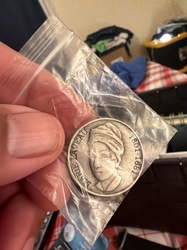
Submitted item photo
Submitted photo · June 8, 2026

User's notes

No additional notes provided.

AI analysis below

AI appraisal

AI analysis & estimate

AI-Generated · Verify before acting

Everything below is generated by AI for informational purposes only. AI can make mistakes — the AI may misidentify items or misattribute them (artist, maker, brand, designer, origin, era). This is not an official valuation and should not be used for insurance, sale, tax, estate, legal, or lending purposes — or any decision requiring a certified appraisal. It is not an authoritative claim about any person, brand, or rights holder — do not share or rely on it as a factual statement about a third party. Always consult qualified professionals before making financial decisions.

Read the full disclaimer

AI Identification

·Not independently authenticated·Verify before acting

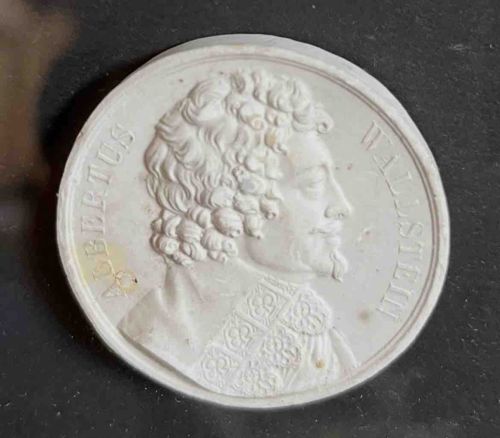
Albrecht von Wallenstein Portrait Medallion

Fine Art / Commemorative Medallions

AI Estimated Value

·Not an official valuation·Verify before acting

$450 - $700

As of June 8, 2026

AI Item Analysis

·AI can make mistakes·Verify before acting
This is a circular relief medallion, likely made of plaster or unglazed ceramic (biscuit), depicting the profile portrait of Albrecht von Wallenstein (1583–1634), the famous Bohemian military leader. The item measures a few inches in diameter and features a matte white finish. The central figure is shown in right-side profile with highly detailed curly hair, a pointed goatee, and a wide-collared doublet adorned with intricate geometric or floral patterns. The figure is flanked by the circular inscription 'ALBERTUS WALLSTEIN' in raised serif lettering. This style of medallion is characteristic of 18th or 19th-century commemorative work, possibly a Grand Tour souvenir or a plaster cast from a collection like those of James Tassie. The craftsmanship is high, evidenced by the delicate rendering of the hair and the sharpness of the collar details. Condition-wise, the medallion shows visible aging including some surface discoloration (yellowish foxing or staining) on the left side, minor pitting, and several small dark specks scattered across the surface. There are slight abrasions along the outer rim, though no major chips or structural cracks are immediately apparent.

AI Appraisal Report

·AI can make mistakes·Verify before acting
I have conducted a visual examination of the relief medallion depicting Albrecht von Wallenstein. The piece exhibits the characteristic matte finish and sharp casting associated with 19th-century biscuit porcelain or high-quality plaster intaglios, common in Grand Tour collections. The crispness of the 'ALBERTUS WALLSTEIN' serif lettering and the detailed rendering of his lace-trimmed doublet suggest a secondary casting from an earlier 17th-century medal, likely intended for historical study or museum-quality decorative display. The condition is fair to good. I observed significant foxing and atmospheric staining on the left flan, which suggests the material is porous (likely plaster). These surface contaminants and minor rim abrasions are typical for an unglazed item of this age but do marginally detract from the aesthetic value. The market for 17th-century military figures remains stable among European history enthusiasts, though plaster casts typically command lower premiums than original bronze or silver strikings. Comparables of 19th-century 'Tassie' style medallions of similar diameter generally realize prices in the $400-$800 range depending on the subject's prominence. Final authentication is limited by the digital nature of this inspection. I cannot definitively determine the exact substrate composition (biscuit vs. plaster) or detect internal repairs. To confirm this valuation, an in-person examination is required to check for 'kiln marks' or signatures on the reverse. Provenance documentation tracing the piece to a specific 19th-century collection would significantly increase its marketability. Scientific testing, such as a solubility test on the surface staining, would be necessary to determine if the discoloration can be professionally conserved without damaging the delicate relief.

Get your items appraised

Instant estimates of your treasures with AI-powered appraisals

Browse More Appraisals