AI Appraisal Estimate

AI-generated estimates · not official valuations

From the user

What was submitted

Photo and notes provided by the user — not generated by AI

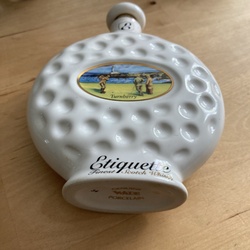
Submitted item photo
Submitted photo · June 6, 2026

User's notes

Ceramic

AI analysis below

AI appraisal

AI analysis & estimate

AI-Generated · Verify before acting

Everything below is generated by AI for informational purposes only. AI can make mistakes — the AI may misidentify items or misattribute them (artist, maker, brand, designer, origin, era). This is not an official valuation and should not be used for insurance, sale, tax, estate, legal, or lending purposes — or any decision requiring a certified appraisal. It is not an authoritative claim about any person, brand, or rights holder — do not share or rely on it as a factual statement about a third party. Always consult qualified professionals before making financial decisions.

Note

This analysis also relies on unverified notes provided by the user, which may be incomplete or inaccurate and could affect the result.

Read the full disclaimer

AI Identification

·Not independently authenticated·Verify before acting

Miniature Japanese Ceramic Vase (or Thimble)

Ceramic Collectible

AI Estimated Value

·Not an official valuation·Verify before acting

$15-35

As of June 6, 2026

AI Item Analysis

·AI can make mistakes·Verify before acting
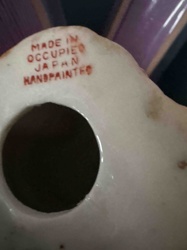
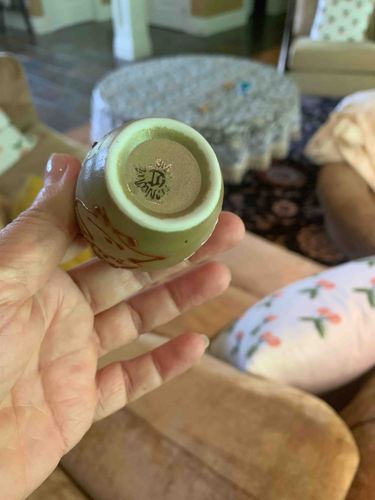
This appears to be a miniature ceramic vase or perhaps a thimble, judging by the size relative to the hand holding it. The item is characterized by its light olive green or pale sage green glaze, which has a matte or satin finish. The form is rounded and bulbous at the base, tapering slightly upwards towards a narrow rimmed opening at the top, which reveals a lighter, unglazed or differently glazed interior of a cream or off-white color. The exterior is adorned with decorative elements, possibly leaves or floral motifs, rendered in a brownish-red or terracotta color, painted directly onto the green glaze. These designs appear to be hand-painted, showing slight irregularities that suggest artisan craftsmanship rather than mass production. The most notable feature is the base, which clearly displays a stamped maker's mark. The mark is circular or oval, featuring a stylized 'D' or 'DX' surmounted by what appears to be a crown or imperial emblem, along with additional indistinct lettering below, possibly reading 'JAPAN' or a similar origin or company name. The overall condition appears good, with no visible chips, cracks, or significant wear on the exterior. The unglazed rim of the base shows some slight discoloration or dirt from contact with surfaces over time, indicating a natural patina of age. The small size and delicate decoration suggest it could be an ornamental piece, possibly from the mid-20th century given the style of the maker's mark and the 'Japan' context. The craftsmanship appears to be of good quality, with even glazing and intricate, though simple, hand-painted details.
AI Appraisal Report

·AI can make mistakes·Verify before acting
Upon examining the images of this miniature Japanese ceramic vase, I assess it to be a charming example of mid-20th century decorative ware. The piece, likely intended for ornamental purposes or as a thimble-holder, features a distinctive pale sage green glaze with hand-painted terracotta-colored floral or leaf motifs. The overall condition appears to be very good, with no visible chips or cracks, which is crucial for its value. The stamped maker's mark on the base, while somewhat indistinct in the photograph, is a key feature. It appears to be a mark used for export wares from Japan, possibly from the period between 1921 and the 1950s. The style is consistent with items produced in regions like Kutani or Seto for the Western market. Currently, the market for such small, decorative Japanese ceramics is modest but steady among collectors. Similar unmarked or common-mark miniature vases from this era typically sell in the $10-$30 range. The specific maker's mark, if identified as belonging to a more desirable manufacturer, could elevate its value. However, without a clear identification of the 'D' or 'DX' mark, it falls into the general category of vintage Japanese export porcelain. While the hand-painted details and good condition are positive attributes, the primary limitation to a full appraisal is the inability to physically inspect the piece. An in-person examination would allow for a tactile assessment of the ceramic body, glaze quality, and a clearer view of the maker's mark. Full authentication would benefit from identifying the specific kiln and artist, which is challenging from images alone. Without further provenance or a confirmed maker, the piece is valued as a well-preserved example of its type.

Get your items appraised

Instant estimates of your treasures with AI-powered appraisals

Browse More Appraisals