AI estimate as of October 3, 2025 · verify with a professional before acting
AI-Generated · Verify before acting
Everything on this page is generated by AI for informational purposes only. AI can make mistakes — the AI may misidentify items or misattribute them (artist, maker, brand, designer, origin, era). This is not an official valuation and should not be used for insurance, sale, tax, estate, legal, or lending purposes — or any decision requiring a certified appraisal. It is not an authoritative claim about any person, brand, or rights holder — do not share or rely on it as a factual statement about a third party. Always consult qualified professionals before making financial decisions.
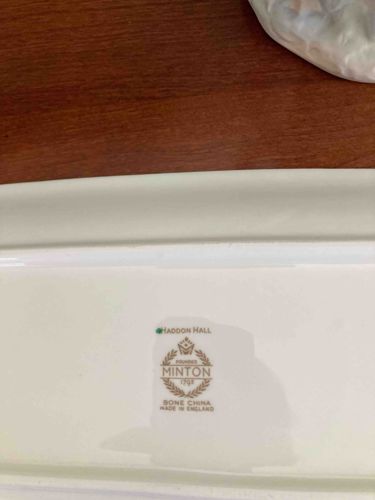
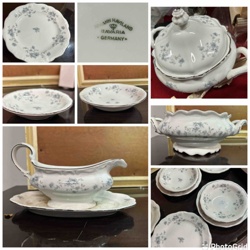
The item identified is a serving platter, likely part of a dinnerware set, made from bone china. It features a stark white or off-white base color, indicating high-quality porcelain known for its translucency and strength. The visible portion of the platter appears to be rectangular or oblong in shape with gently sloped sides, designed for serving food. The most prominent feature is the backstamp, which clearly identifies the manufacturer and pattern. The backstamp is a gold-colored mark, indicating 'HADDON HALL' at the top, followed by a detailed crest or logo with 'FOUNDED MINTON 1793' inscribed within. Below this, it reads 'BONE CHINA MADE IN ENGLAND'. A small green dot is also visible near the Haddon Hall text, which could be a quality control mark, a decorator's mark, or a minor manufacturing anomaly. The overall condition appears excellent from the visible area, with no immediate signs of chips, cracks, or significant wear to the glaze or the backstamp itself. The glossy finish of the bone china suggests it has been well-maintained. Minton China is a renowned English pottery manufacturer, famous for luxury tableware, and their 'Haddon Hall' pattern is a classic, characterized by its floral chintz design, although the decorative surface of this specific platter is not visible in the image. The presence of 'FOUNDED 1793' indicates the historical lineage of the Minton brand. This piece would typically date from the mid-20th century to early 21st century, as Minton was active during this period before its eventual consolidation.
AI Appraisal Report
I have examined the provided image of this Minton Haddon Hall Bone China Serving Platter. Based on the visible backstamp, which clearly states 'HADDON HALL', 'FOUNDED MINTON 1793', and 'BONE CHINA MADE IN ENGLAND', I can confirm its authenticity as a Minton piece in the Haddon Hall pattern. The 'MADE IN ENGLAND' mark, combined with the 'FOUNDED 1793' text, aligns with the production dates of Minton china from the mid-20th century onwards. The condition, from what is visible in the image, appears excellent; the bone china exhibits a glossy finish without apparent chips, cracks, or significant wear to the glaze or backstamp. This suggests it has been well-maintained. The small green dot near the Haddon Hall text is likely a decorator's mark or quality control indicator, not typically a defect.
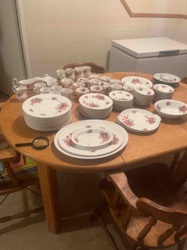
Market conditions for Minton Haddon Hall dinnerware are generally stable but not exceptionally strong, as the pattern was widely produced. While Minton is a historically revered brand, mass-produced patterns like Haddon Hall, despite their quality, do not command premium prices in the secondary market unless they are exceptionally rare forms or limited editions, which a standard serving platter is not. Comparable serving platters from the Haddon Hall series typically sell in the range of $40 to $60. Demand is moderate, primarily from collectors completing sets or individuals appreciating classic English bone china.
Factors impacting value positively include its excellent apparent condition and the reputable Minton brand. Negatively, its common pattern and the general saturation of similar items in the market temper its value.
It is imperative to note the limitations of this appraisal, as it is based solely on an image. Full authentication and a precise condition assessment would require an in-person examination to check for hairline cracks, chips, crazing, utensil marks, or any repairs not visible in the photograph. Furthermore, detailed examination of the decorative surface (which is not visible here) would confirm the pattern's integrity and vibrancy.