AI Appraisal Estimate

AI-generated estimates · not official valuations

From the user

What was submitted

Photo and notes provided by the user — not generated by AI

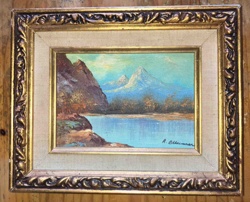
Submitted item photo
Submitted photo · May 18, 2026

User's notes

Charles Johann Palmie original painting 26x32

AI analysis below

AI appraisal

AI analysis & estimate

AI-Generated · Verify before acting

Everything below is generated by AI for informational purposes only. AI can make mistakes — the AI may misidentify items or misattribute them (artist, maker, brand, designer, origin, era). This is not an official valuation and should not be used for insurance, sale, tax, estate, legal, or lending purposes — or any decision requiring a certified appraisal. It is not an authoritative claim about any person, brand, or rights holder — do not share or rely on it as a factual statement about a third party. Always consult qualified professionals before making financial decisions.

Note

This analysis also relies on unverified notes provided by the user, which may be incomplete or inaccurate and could affect the result.

Read the full disclaimer

AI Identification

·Not independently authenticated·Verify before acting

Haystacks in a Field by Charles Johann Palmié

Fine Art - Painting

AI Estimated Value

·Not an official valuation·Verify before acting

$4,000 - $6,000

As of May 18, 2026

AI Item Analysis

·AI can make mistakes·Verify before acting
This original oil painting by the German Impressionist painter Charles Johann Palmié (1863–1911) depicts a series of golden haystacks (grain sheaves) arranged in a field under a clear blue-grey sky. The composition features approximately seven tall, pyramidal haystacks in the foreground, rendered with thick, textural brushstrokes typical of late 19th and early 20th-century Neo-Impressionism and Pointillism. In the mid-ground, a vibrant green horizontal band suggests further vegetation or a separate field, accented by two prominent standalone deciduous trees and a smaller structure or tree in the distance. The artwork measures approximately 26x32 inches including the frame. It is housed in a substantial, wide, ebony-toned stepped wooden frame with a thin gilded inner liner, which provides a dramatic contrast to the light, airy palette of the canvas. A brass nameplate is affixed to the bottom center of the frame. The painting shows evidence of high-quality craftsmanship through its sophisticated use of light and dabs of color to create form and depth. A faint signature is visible in the lower right corner of the painting surface. The condition appears stable, though there is a soft patina consistent with age; the frame shows minor surface dust but remains structurally sound.


AI Appraisal Report

·AI can make mistakes·Verify before acting
Based on a visual examination of the provided images, this work is attributed to Charles Johann Palmié (German, 1863–1911), a noted figure in German Impressionism and Neo-Impressionism. The subject matter—golden haystacks under an airy sky—strongly reflects the influence of Claude Monet on Palmié's oeuvre and his pivotal role in the 'Die Scholle' artist group. The brushwork exhibits the sophisticated, textural impasto and divisionist technique characteristic of his mature period. The 26x32 inch dimensions (framed) suggest a substantial canvas size, likely around 18x24 or 20x26 unframed, which is a desirable scale for collectors. The condition appears visually stable with appropriate age-related patina; the pigment remains vibrant, particularly in the mid-ground greens. The ebony stepped frame with a brass nameplate adds period-appropriate presentation value. Palmié's auction history is solid but variable; while major works have fetched over $15,000, smaller landscapes typically trade in the $3,000 to $8,000 range depending on provenance and composition. This specific motif is highly decorative and representative of his style, supporting a valuation in the mid-range. Crucially, this appraisal assumes the work is an authentic original oil on canvas. Confirmation of authenticity requires physical inspection to verify the signature under UV light, examine the canvas verso for gallery labels or stamps, and analyze the paint layering. Documentation of provenance (history of ownership) is essential to rule out 20th-century homage pieces. Without these tangible verifications, this valuation remains a preliminary estimate based on current market data for similar works attributed to the artist.

Get your items appraised

Instant estimates of your treasures with AI-powered appraisals

Browse More Appraisals