AI estimate as of August 14, 2025 · verify with a professional before acting
AI-Generated · Verify before acting
Everything on this page is generated by AI for informational purposes only. AI can make mistakes — the AI may misidentify items or misattribute them (artist, maker, brand, designer, origin, era). This is not an official valuation and should not be used for insurance, sale, tax, estate, legal, or lending purposes — or any decision requiring a certified appraisal. It is not an authoritative claim about any person, brand, or rights holder — do not share or rely on it as a factual statement about a third party. Always consult qualified professionals before making financial decisions.
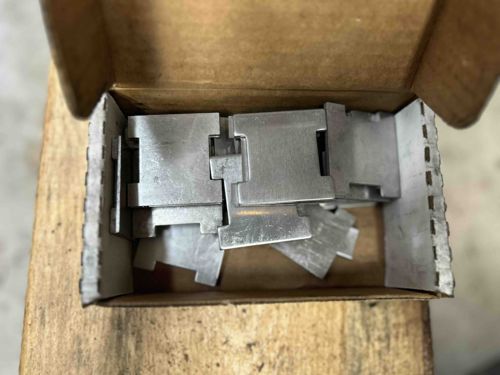
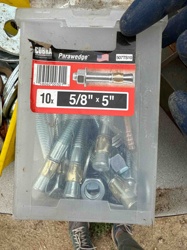
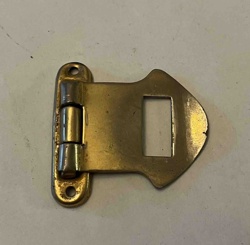
The image displays a quantity of what appear to be custom-stamped or machined metal clips or brackets, neatly contained within a brown corrugated cardboard box. Each individual piece is relatively small, with general dimensions appearing to be a few inches in length and width. They are constructed from a light-colored metal, likely steel or aluminum, exhibiting a matte, brushed, or possibly galvanized finish. The dominant color is a metallic silver-gray. Each piece features a distinctive 'L' or 'T' shape with precisely cut notches and tabs, suggesting they are designed to interlock or provide support for another component. Several pieces show minor surface scratches and scuffs, indicative of bulk handling or light industrial use, but no significant damage, bending, or corrosion is readily apparent. The edges appear clean-cut and sharp, implying good manufacturing tolerances. There are no visible maker's marks, stamps, or significant identifying numbers on the individual pieces. Given their industrial appearance and the lack of decorative elements, they likely serve a functional purpose in assembly or construction. Their precise and repetitive form suggests they are mass-produced parts, perhaps from a post-war to contemporary period, but without specific markings, a precise age is difficult to ascertain. The craftsmanship appears to be standard for industrial components, prioritizing functionality and consistency over aesthetic refinement. The box itself is a simple, utilitarian packaging method, showing some signs of wear typical for a used container.
AI Appraisal Report
Upon examining the provided image, I can assess these stamped metal interlocking clips/brackets. Their condition appears to be very good, showing only minor surface scuffs consistent with bulk handling. There is no visible corrosion, significant bending, or structural damage. The clean-cut edges suggest precise manufacturing. Authenticity, in terms of them being genuine manufactured parts rather than replicas, is high given their industrial appearance and uniformity; however, without a maker's mark or specific identifying features, it's impossible to link them to a particular manufacturer or application.
Market conditions for generic industrial hardware like this are primarily driven by function and material cost, not collectible value. Comparables would be similar stamped or fabricated steel brackets available from industrial suppliers or surplus channels. Demand is project-specific; these are not highly sought-after items on the open market unless a specific need arises. Rarity is low; while custom, their design doesn't suggest unique materials or a limited production run.
The primary factors impacting value are the material weight, the complexity of the stamping process (which appears moderate here), and the quantity available. Without knowing the exact metal composition (e.g., specific alloy, plating), true material cost is an estimate. Their 'L' or 'T' shape with precise notches strongly suggests a functional, inter-fitting purpose, possibly for assembly in furniture, displays, or light construction. The lack of identifying marks significantly limits their value beyond scrap metal or general hardware. They likely fall into a category of specialized components with limited reuse outside their intended design.
Limitations in authenticity verification are significant based solely on the image. To fully authenticate, I would need to physically inspect the items to determine specific material composition (e.g., via XRF analysis), measure precise dimensions and tolerances, and potentially perform hardness tests. Provenance documentation, such as original purchase orders or manufacturing specifications, would be crucial to determine their original purpose, manufacturer, and period of production. Without these, their appraisal remains largely based on their generic form and material.