AI estimate as of August 24, 2025 · verify with a professional before acting
AI-Generated · Verify before acting
Everything on this page is generated by AI for informational purposes only. AI can make mistakes — the AI may misidentify items or misattribute them (artist, maker, brand, designer, origin, era). This is not an official valuation and should not be used for insurance, sale, tax, estate, legal, or lending purposes — or any decision requiring a certified appraisal. It is not an authoritative claim about any person, brand, or rights holder — do not share or rely on it as a factual statement about a third party. Always consult qualified professionals before making financial decisions.
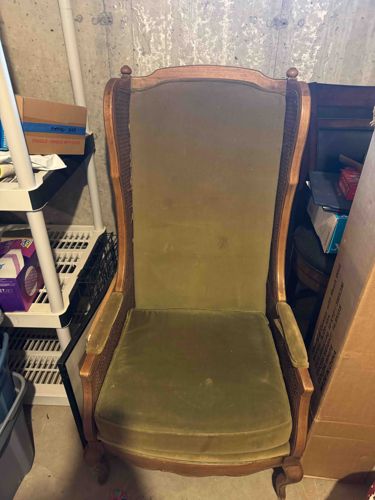
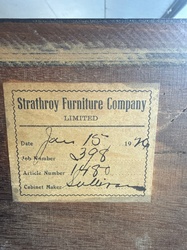
This is a vintage cane and upholstered armchair, likely dating from the mid-20th century, possibly 1940s-1970s, making it Mid-Century Modern or French Provincial Revival in style. The frame appears to be constructed from a light-colored wood, possibly oak, birch, or maple, with visible grain and a light stain or natural finish. The back and sides feature woven cane panels, which show signs of age and possible drying, but overall appear intact. The upholstery is a soft, crushed velvet or velour fabric in a muted olive green color. The seat cushion is thick and separate from the back, suggesting it might be removable. The backrest is tall and gently curves, with a carved wood trim along the top and sides, featuring a small finial-like detail at the top corners. The armrests are also wooden, with upholstered pads on top for comfort. The legs appear to be carved and slightly cabriole in style at the front, indicating a more decorative design. The fabric shows visible signs of wear, including multiple lighter spots and areas where the pile is flattened, consistent with prolonged use and dust accumulation. There doesn't appear to be any major tears or rips in the upholstery, but the overall condition suggests it would benefit from professional cleaning. No specific maker's marks or signatures are discernible from the provided images. The craftsmanship, particularly the joinery and carving of the wooden frame, seems to be of reasonable quality for its period, suggesting it was a mass-produced but well-made piece of furniture.
AI Appraisal Report
Upon examining this vintage cane and upholstered armchair, my assessment is that it likely dates from the mid-20th century, specifically consistent with styles seen between the 1940s and 1970s, aligning with either Mid-Century Modern or French Provincial Revival aesthetics. The wooden frame, possibly oak, birch, or maple, appears to have good craftsmanship for its era, indicating a well-made, albeit likely mass-produced, piece. The cane panels seem intact but show expected signs of age and drying. The most significant condition issue impacting value is the olive green crushed velvet upholstery. It exhibits considerable wear, including flattened pile, lighter spots, and dust accumulation, necessitating professional cleaning or re-upholstery. While no major tears are visible, this condition significantly detracts from its 'as-is' market appeal.
From a market perspective, there's a steady demand for vintage furniture with character, and styles like this appeal to those seeking a classic, comfortable look. However, the existing upholstery condition limits its immediate desirability. Comparables for similar vintage cane armchairs in good to excellent upholstered condition typically fetch higher prices. Rarity is low as these were mass-produced. Factors significantly impacting its value include the worn upholstery (a negative), the solid wood and cane construction (a positive), and the classic design (a positive).
Authenticity verification from images alone is limited. I cannot definitively confirm the wood species, detect subtle repairs, or verify internal construction without a physical inspection. An in-person examination would allow for tactile assessment of the fabric, integrity of the cane, and closer inspection of joinery and finishes. Provenance documentation, such as original purchase receipts or family history, would provide further authentication details. Scientific testing would be excessive for a piece of this nature.