AI estimate as of December 16, 2025 · verify with a professional before acting
AI-Generated · Verify before acting
Everything on this page is generated by AI for informational purposes only. AI can make mistakes — the AI may misidentify items or misattribute them (artist, maker, brand, designer, origin, era). This is not an official valuation and should not be used for insurance, sale, tax, estate, legal, or lending purposes — or any decision requiring a certified appraisal. It is not an authoritative claim about any person, brand, or rights holder — do not share or rely on it as a factual statement about a third party. Always consult qualified professionals before making financial decisions.
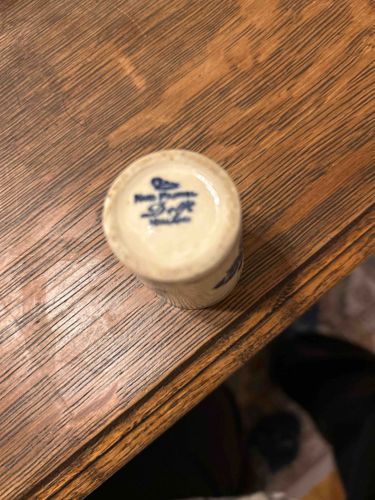
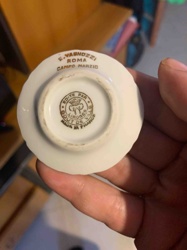
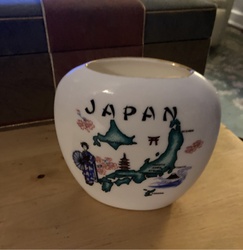
This item is a miniature porcelain mug, likely a souvenir or decorative piece. The primary material is ceramic, specifically porcelain, indicated by the smooth, light cream-colored glaze visible on the interior and exterior base. The mug appears to have a cylindrical or slightly tapered form, though only the bottom portion is clearly visible. The overall color is a light, off-white or cream. A key feature is the maker's mark or backstamp on the underside, rendered in dark blue. This mark includes a stylized 'Stiefel' or 'Stiezel' (the exact spelling is slightly obscured but 'Stiefel' is more probable given common brand names), with additional text below which appears to read 'Made in Germany' or 'München' (Munich), suggesting its origin. The text also includes 'Porzellan' (German for porcelain) or a similar word. The lettering is finely detailed, suggesting quality printing. On the visible exterior side of the mug, there are faint blue decorative elements, possibly a floral or traditional German motif, although these are largely out of focus. The condition appears good, with no visible chips, cracks, or significant wear on the base. The glaze has an even, semi-glossy finish. The craftsmanship suggests a commercially manufactured item, possibly from the mid-20th century or later, common for souvenir ware from German regions. Its small scale indicates it is not intended for regular use but rather for display or collection as a miniature. The visible mark provides strong clues about its manufacturer and country of origin, which are crucial for appraisal.
AI Appraisal Report
Based on my visual examination of the provided image, this miniature porcelain mug is in good condition, showing no visible chips, cracks, or significant wear on the base or glaze. The light cream-colored porcelain and even semi-glossy glaze suggest a commercially manufactured piece. The dark blue maker's mark on the underside, which appears to include 'Stiefel' or 'Stiezel' along with 'Made in Germany' or 'München' and 'Porzellan,' strongly indicates its origin from Germany. This level of detail in the mark suggests authenticity for a production piece of this nature.
Market conditions for miniature souvenir porcelain mugs are generally modest. While individual pieces with distinctive designs or historical significance can fetch higher prices, generic German souvenir mugs, even from established manufacturers like what 'Stiefel' might represent, typically trade at lower values. Comparables often include similar miniature porcelain steins or mugs from various German regions. Demand for such items is primarily from collectors of miniatures or German souvenirs, which is a niche market, but not exceptionally rare. Factors impacting value include the precise age (mid-20th century or later is suggested), the clarity and completeness of the backstamp, and any specific historical or cultural connection of the decorative elements, which are faintly visible as possibly floral or traditional motifs.
My assessment for this item, consistent with similar decorative collectibles and souvenirs, places its current market value in the range of $5 to $15. This is assuming it is indeed a mass-produced souvenir item. Without a physical inspection, however, I cannot definitively confirm the authenticity of the mark or the material composition, nor can I rule out subtle defects or repairs not visible in the image. An in-person examination would allow for tactile inspection, detailed magnification of the mark, and potentially a closer look at the decorative elements to confirm their nature and quality, which could slightly sway the value, though unlikely by a significant margin for this type of item. Provenance documentation could also pinpoint its exact manufacturing date, which is helpful but not crucial for items in this value bracket.