AI Appraisal Estimate

AI-generated estimates · not official valuations

From the user

What was submitted

Photo and notes provided by the user — not generated by AI

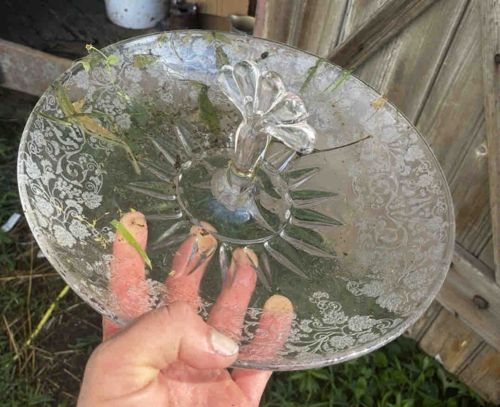
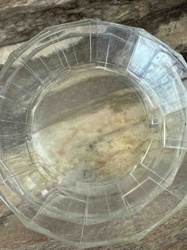
Submitted item photo
Submitted photo · June 3, 2026

User's notes

No additional notes provided.

AI analysis below

AI appraisal

AI analysis & estimate

AI-Generated · Verify before acting

Everything below is generated by AI for informational purposes only. AI can make mistakes — the AI may misidentify items or misattribute them (artist, maker, brand, designer, origin, era). This is not an official valuation and should not be used for insurance, sale, tax, estate, legal, or lending purposes — or any decision requiring a certified appraisal. It is not an authoritative claim about any person, brand, or rights holder — do not share or rely on it as a factual statement about a third party. Always consult qualified professionals before making financial decisions.

Read the full disclaimer

AI Identification

·Not independently authenticated·Verify before acting

Etched Depression Era Center-Handle Tidbit Tray

Vintage Glassware / Kitchenware

AI Estimated Value

·Not an official valuation·Verify before acting

$25.00 - $45.00

As of June 3, 2026

AI Item Analysis

·AI can make mistakes·Verify before acting
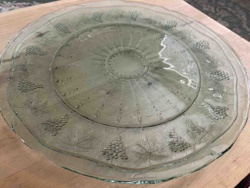
This is a vintage center-handle serving tray, commonly referred to as a tidbit tray, crafted from clear pressed and etched glass. The piece is circular with a shallow, bowl-like depth, featuring a central glass handle shaped into a stylized four-petal flower or spade-like finial. The tray's base is decorated with a pressed sunburst or star pattern radiating from the center, while the outer rim is adorned with an intricate, frosted acid-etched floral and damask-style scroll pattern. Based on the construction and decorative style, this piece likely dates from the Depression Era (1920s-1940s) and is characteristic of manufacturers like Fostoria, Cambridge, or Heisey. The glass appears to have a medium weight with visible thickness at the handle attachment point. Notable condition issues include significant surface grime, dirt, and organic debris, suggesting long-term storage in an outdoor or unprotected environment. There is a visible yellowish residue or tarnishing at the joint where the handle meets the plate, which may indicate aged adhesive or mineral buildup. No major chips or cracks are immediately apparent, but the glass surface likely has minor scuffing and scratches consistent with its age and current storage conditions. The craftsmanship is typical of high-quality early 20th-century American glassware, showing sharp detail in both the pressed base and the delicate etching.
AI Appraisal Report

·AI can make mistakes·Verify before acting
I have examined the digital images of this center-handle tidbit tray. The piece exhibits the classic characteristics of Depression Era elegant glass, specifically reflecting the motifs utilized by firms such as Cambridge or Fostoria. The acid-etched floral and scroll border is well-executed, providing a sophisticated contrast to the pressed starburst base and spade-form handle. Based on visual indicators, the item appears authentic to the 1920s-1940s period. The market for Depression-era glass is currently stable but saturated; tidbit trays of this size and style are common, though the 'Elegant' designation (etched vs. molded) maintains a slight premium over machine-made glass. The primary detractor here is the condition. The visible accumulation of organic debris, surface grime, and particularly the yellowed residue at the handle joint suggests potential calcification or aged repair adhesive. Without an in-person inspection, I cannot determine if the glass has suffered 'sick glass' syndrome (irreversible etching from hard water) or if the residue hides a structural fracture at the stress point where the handle joins the plate. To fully authenticate and refine this valuation, a physical examination is required to check for 'straw marks' versus modern mold seams and to perform a blacklight test (UV) to observe the fluorescence of the manganese or uranium content common in glass of that era. Provenance documentation regarding the specific pattern name and manufacturer would further solidify its place in the collectors' market.

Get your items appraised

Instant estimates of your treasures with AI-powered appraisals

Browse More Appraisals