AI estimate as of October 23, 2025 · verify with a professional before acting
AI-Generated · Verify before acting
Everything on this page is generated by AI for informational purposes only. AI can make mistakes — the AI may misidentify items or misattribute them (artist, maker, brand, designer, origin, era). This is not an official valuation and should not be used for insurance, sale, tax, estate, legal, or lending purposes — or any decision requiring a certified appraisal. It is not an authoritative claim about any person, brand, or rights holder — do not share or rely on it as a factual statement about a third party. Always consult qualified professionals before making financial decisions.
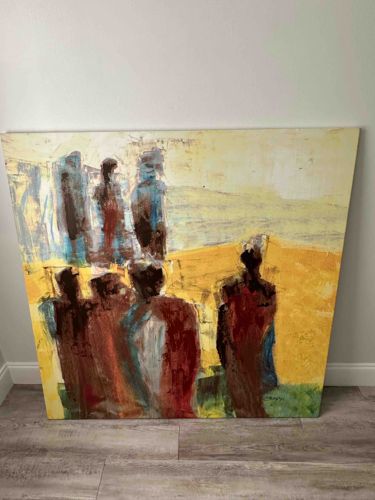
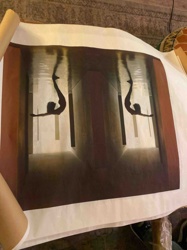
This is a large, rectangular abstract figurative painting on canvas, featuring a group of stylized human figures within a landscape setting. The physical characteristics indicate a substantial size, likely a wall-mounted artwork, though exact dimensions are not provided. The medium appears to be acrylic or oil paint, applied with visible brushstrokes and impasto techniques, suggesting a textured surface. The color palette is dominated by warm earth tones, primarily yellows and golds in the background, transitioning to a light green at the bottom. The figures themselves are rendered in shades of brown, red, and blue-gray, with some white accents, creating a sense of depth and form despite their abstract nature. The composition features several figures in the foreground, viewed from behind, along with additional figures in the mid-ground. The treatment of the figures is minimalist, focusing on silhouettes and form rather than detailed facial features. The background suggests a vast, open landscape, possibly a desert or open field under a bright sky. There are no immediately visible signs of damage, wear, or repairs from the provided image, indicating a good to very good condition. No discernible artist's signature or maker's marks are visible in the provided crops, making it difficult to attribute or determine specific manufacturing details or an exact style period. However, the abstract nature and use of color suggest a contemporary or mid-20th century to early 21st century origin. The craftsmanship appears to be professional, with effective use of color and texture to convey mood and form in an abstract manner. The stark contrast between the warm background and the darker figures creates a compelling visual dynamic.
AI Appraisal Report
Based on my visual examination of the provided image, this large, rectangular abstract figurative painting appears to be in very good condition with no visible signs of damage, wear, or repairs. The visible brushstrokes and impasto suggest a tactile surface, likely indicating an oil or acrylic medium. The composition features stylized human figures set against a warm, earthy landscape, showcasing a professional application of color and texture to create an evocative scene.
Establishing authenticity without a visible signature or maker's mark and relying solely on an image is inherently limited. Full authentication would necessitate an in-person examination to assess paint layers, canvas weave, stretcher bar construction, and potential hidden signatures. Provenance documentation is crucial for verifying authorship and history, and scientific testing could provide insights into pigments and age.
In the current market, abstract figurative works that effectively convey mood and form without explicit storytelling often find a receptive audience. While lacking specific attribution, the aesthetic quality and presumed substantial size contribute positively to its commercial appeal. Comparable sales for unsigned, quality contemporary or mid-century abstract figurative paintings by lesser-known or regional artists typically fall within the $800 to $1,500 range, depending on scale and perceived artistic merit. Demand exists for such pieces, particularly for decorative purposes in residential or corporate settings. The absence of an artist's signature or provenance, however, significantly impacts its potential for higher valuation as a collectible artwork, reducing rarity and definitive artistic attribution. Its value is currently primarily driven by its aesthetic appeal and condition.