AI Appraisal Estimate

AI-generated estimates · not official valuations

From the user

What was submitted

Photo and notes provided by the user — not generated by AI

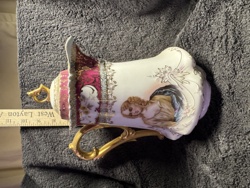
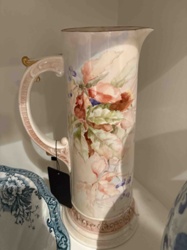
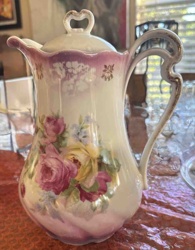
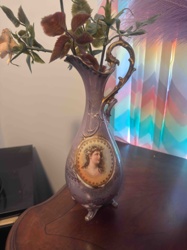
Submitted item photo
Submitted photo · June 3, 2026

User's notes

No additional notes provided.

AI analysis below

AI appraisal

AI analysis & estimate

AI-Generated · Verify before acting

Everything below is generated by AI for informational purposes only. AI can make mistakes — the AI may misidentify items or misattribute them (artist, maker, brand, designer, origin, era). This is not an official valuation and should not be used for insurance, sale, tax, estate, legal, or lending purposes — or any decision requiring a certified appraisal. It is not an authoritative claim about any person, brand, or rights holder — do not share or rely on it as a factual statement about a third party. Always consult qualified professionals before making financial decisions.

Read the full disclaimer

AI Identification

·Not independently authenticated·Verify before acting

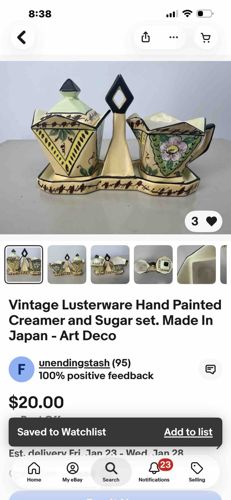
Vintage Japanese Art Deco Lusterware Creamer and Sugar Set with Underplate

Antique Ceramics and Porcelain

AI Estimated Value

·Not an official valuation·Verify before acting

$45 - $65

As of June 3, 2026

AI Item Analysis

·AI can make mistakes·Verify before acting
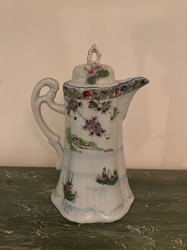
This is a three-piece ceramic condiment or breakfast set consisting of a lidded sugar bowl, a small creamer, and a specialized fitted underplate with a central diamond-shaped handle. The set is crafted in the Art Deco style, likely dating from the 1920s to 1930s, and is representative of Japanese export lusterware. The bodies of the vessels feature an angular, geometric construction typical of the era, finished in a pale cream luster glaze. Each piece is hand-painted with floral motifs in shades of pink, green, and brown, accented by bold black line work and chevrons that emphasize the Art Deco silhouette. The sugar bowl includes a notched lid to accommodate a small spoon. The central tray handle features a distinctive open-diamond design with black contrasting trim. Stylistically, the set mirrors the folk-art influence within mid-century Japanese ceramics intended for Western markets. Condition appears consistent with age, showing some mild surface wear and minor paint loss on the black trim, but no visible structural cracks or major chips in the primary photograph. The craftsmanship displays the charming, slightly irregular quality of hand-painted mass-produced exports of that period, often marked 'Made in Japan' or 'Hand Painted' on the underside.
AI Appraisal Report

·AI can make mistakes·Verify before acting
Upon visual examination of this three-piece Japanese lusterware set, I have determined it to be a classic example of export ceramics from the Taisho or early Showa period (circa 1920-1935). The set demonstrates the geometric angularity characteristic of the Art Deco movement, combined with the iridescent metallic glaze technique known as lusterware, which was highly popular for Western breakfast tables. The hand-painted floral motifs and bold black chevrons are consistent with mid-range production houses of the era. The condition appears fair to good; while the luster remains bright, there is visible 'cold paint' loss on the black trim, specifically on the handles and tray edges, which is typical for these pieces as the overglaze black was not always fired at high temperatures. In the current secondary market, Japanese lusterware remains plentiful. While the unique underplate with the diamond-cutout handle adds a degree of 'kitcsh' appeal, these sets were mass-produced. Similar 'Made in Japan' condiment sets frequently appear at estate auctions and online marketplaces, with values tempered by the high volume of surviving examples. The primary value drivers here are the completeness of the set and the integrity of the fragile luster finish. This appraisal is based solely on digital imagery. A full authentication would require physical inspection to check for 'flea bites' along the inner rim of the sugar bowl, hairline fractures in the tray, and a clear view of the backstamp to identify specific kilns. Scientific testing is not warranted for this class of ceramic, but provenance documentation could confirm its specific import history.

Get your items appraised

Instant estimates of your treasures with AI-powered appraisals

Browse More Appraisals