AI Appraisal Estimate

AI-generated estimates · not official valuations

From the user

What was submitted

Photo and notes provided by the user — not generated by AI

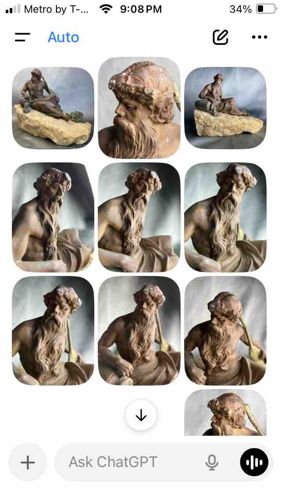
Submitted item photo
Submitted photo · June 22, 2026

User's notes

No additional notes provided.

AI analysis below

AI appraisal

AI analysis & estimate

AI-Generated · Verify before acting

Everything below is generated by AI for informational purposes only. AI can make mistakes — the AI may misidentify items or misattribute them (artist, maker, brand, designer, origin, era). This is not an official valuation and should not be used for insurance, sale, tax, estate, legal, or lending purposes — or any decision requiring a certified appraisal. It is not an authoritative claim about any person, brand, or rights holder — do not share or rely on it as a factual statement about a third party. Always consult qualified professionals before making financial decisions.

Read the full disclaimer

AI Identification

·Not independently authenticated·Verify before acting

Classical Terracotta or Plaster Sculpture of a Bearded Figure

Fine Art - Sculpture

AI Estimated Value

·Not an official valuation·Verify before acting

$1,200 - $1,800

As of June 22, 2026

AI Item Analysis

·AI can make mistakes·Verify before acting
This item is a sculptural representation of a mature, bearded male figure, possibly a deity like Neptune/Poseidon or a philosopher, rendered in a classical style. The figure is depicted in a reclining or seated semi-nude pose atop a rough-hewn, rock-like rectangular plinth. Physically, the sculpture appears to be composed of terracotta, clay, or patinated plaster, characterized by earthy brown and ochre tones. The figure features a long, flowing beard and wavy hair, wearing a distinctive head covering that looks like a coastal or sailor-style cap, further suggesting a maritime connection. The construction shows fine anatomical detail in the torso and musculature. Notable features include high-relief carving of the drapery around the lower body and sharp facial features. The condition reveals significant age-appropriate wear, including visible surface abrasions, dust accumulation in the crevices, and small chips particularly along the base and the edges of the head covering. There are no clearly visible maker's marks in the provided images, but the quality of the modeling suggests late 19th to early 20th-century European craftsmanship, potentially in the Grand Tour tradition. The contrast between the finely detailed figure and the crudely textured base is a deliberate stylistic choice to emphasize the classicism of the subject.

AI Appraisal Report

·AI can make mistakes·Verify before acting
I have conducted a visual appraisal of this classical sculpture, which depicts a seated bearded male figure—likely an allegorical representation of a river god or Neptune, given the maritime cap and reclining posture. Based on the texture and surface patination, the work appears to be executed in terracotta or high-quality patinated plaster, consistent with European academic sculpture from the late 19th century. The anatomical precision and the contrast between the fluid drapery and the rustic, rock-like plinth suggest a refined hand, potentially from a French or Italian studio catering to the Grand Tour market. The condition shows integrity despite age-related wear. Significant dust accumulation in the interstices and minor chipping at the edges of the base and headgear are present, though these carry the character of authentic use rather than artificial distressing. Market demand for 19th-century classical terracottas remains stable among traditional collectors, particularly for works displaying this level of muscular dynamism and expressive portraiture. However, there are critical limitations to this appraisal. From photographic evidence alone, I cannot confirm if this is a unique artist's bozzetto (sketch) or a later cast production. Full authentication would require a physical examination to check for internal armature material (wire vs. wood), structural cracks, or faint signatures often hidden near the base. I would also require provenance documentation—such as previous auction records or gallery labels—to determine if this is a work by a recorded master. Scientific testing (thermoluminescence) could be employed to confirm the firing date of the clay. Without these, this valuation reflects a speculative market price for a high-quality period decorative work rather than a signed investment-grade masterpiece.

Get your items appraised

Instant estimates of your treasures with AI-powered appraisals

Browse More Appraisals