AI estimate as of October 22, 2025 · verify with a professional before acting
AI-Generated · Verify before acting
Everything on this page is generated by AI for informational purposes only. AI can make mistakes — the AI may misidentify items or misattribute them (artist, maker, brand, designer, origin, era). This is not an official valuation and should not be used for insurance, sale, tax, estate, legal, or lending purposes — or any decision requiring a certified appraisal. It is not an authoritative claim about any person, brand, or rights holder — do not share or rely on it as a factual statement about a third party. Always consult qualified professionals before making financial decisions.
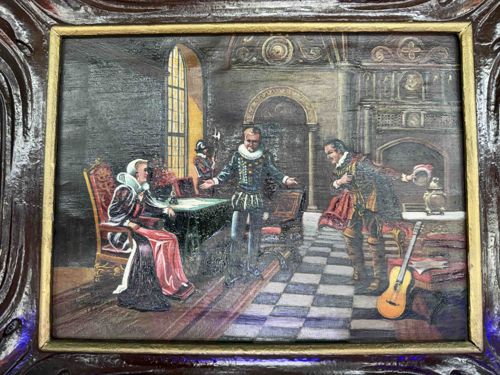
This item is a decorative panel featuring a multi-figure scene, rendered in a three-dimensional, relief style. The panel depicts a period drama set in what appears to be a grand chamber or hall, characteristic of the Baroque or early Renaissance era. The scene includes five figures. On the left, a woman in a tall-backed, ornate chair, dressed in a black gown with red underskirt and a white ruff collar, appears to be engaged in conversation. Facing her, a prominent male figure with a white ruff collar and doublet gestures towards a third male figure on the right, who is bowing and removing his hat, suggesting a formal interaction or an arrival/departure. A fourth figure, possibly a guard, stands in the background near a large arched window, and a fifth, less distinct figure seems to be in the far background. The room's interior details include a checkered floor, a large fireplace or mantelpiece with intricate carvings, and an arched entryway. A lute or similar stringed instrument leans against a table on the right. The color palette is rich and somewhat muted, dominated by dark browns, reds, and grays, with accents of gold and white. The entire scene is encompassed within a heavy, darkly stained wooden frame, which exhibits deep, intricate carvings, likely in a floral or acanthus leaf motif, along its outer and inner edges. The frame appears to be of substantial age, showing wear and a developed patina consistent with an older piece. The relief technique used gives the figures and architectural elements a sculptural quality, enhancing the sense of depth within the scene. The overall condition suggests some age, with potential minor surface wear or discoloration on the panel itself, and visible distressing or wear on the frame, adding to its antique charm. This piece exemplifies craftsmanship of a bygone era, with attention to detail in both the narrative scene and its elaborate framing.
AI Appraisal Report
Based on my visual examination of the provided image, this Baroque-Style Figural Relief Panel in a Carved Wooden Frame displays notable craftsmanship and age. The three-dimensional relief, multi-figure composition depicting a period drama, and the rich color palette contribute to its decorative appeal. The panel appears to be in good antique condition, with the described wear and patina on both the relief and especially the intricately carved frame consistent with its age, rather than significant damage. The deep, elaborate carvings on the frame are particularly impressive and enhance its overall aesthetic and perceived value.
Market conditions for detailed ornamental relief panels from the Baroque or early Renaissance influence with substantial frames tend to be steady. Collectors appreciate the historical narrative and sculptural quality. Comparable items appearing at auction or through reputable antique dealers often fetch prices in the range I've indicated, particularly when the detail and condition are good. Demand is moderate, driven by specific collectors of period decorative arts or those seeking unique, statement pieces for interior design. The rarity lies in finding a piece with both a well-executed relief and such a finely carved original frame.
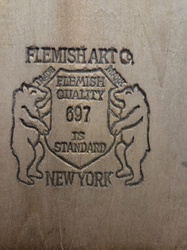
Factors significantly impacting value include the artistic quality of the carving, the complexity of the scene, and the overall condition. The visible wear on the frame, if stable, can contribute positively as authentic patina. A key limitation of image-based appraisal is that I cannot verify the material origin of the relief itself (e.g., carved wood, gesso, or composite), nor can I inspect the reverse side of the panel for any maker's marks, labels, or structural integrity. Full authentication would require in-person examination to ascertain the exact material composition, assess the structural stability of both the relief and frame, and seek any provenance documentation or scientific testing (e.g., carbon dating for precise age determination of wood components) if there were significant questions regarding its historical period or origin.