AI identification & appraisal estimate

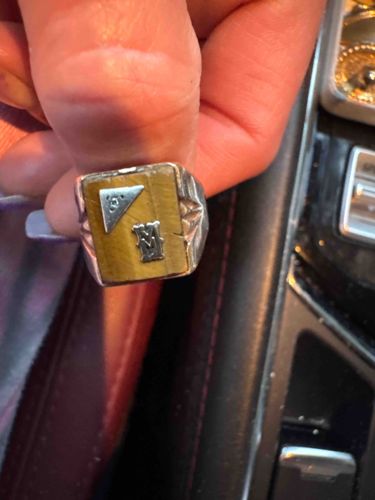
Vintage Masonic Signet Ring with Tiger's Eye and Silver Emblems

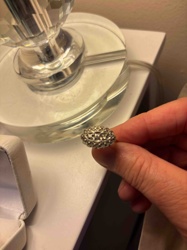
Submitted photo of Vintage Masonic Signet Ring with Tiger's Eye and Silver Emblems
Photo submitted by the user — not generated by AI

User's notes

Vintage

These notes were written by the person who submitted this item. Appraiser.AI has not verified them, and the AI's identification and estimate may rely on them.

AI Estimated Value

Not an official valuation

$150-250

AI estimate as of July 29, 2025 · verify with a professional before acting

AI-Generated · Verify before acting

Everything on this page is generated by AI for informational purposes only. AI can make mistakes — the AI may misidentify items or misattribute them (artist, maker, brand, designer, origin, era). This is not an official valuation and should not be used for insurance, sale, tax, estate, legal, or lending purposes — or any decision requiring a certified appraisal. It is not an authoritative claim about any person, brand, or rights holder — do not share or rely on it as a factual statement about a third party. Always consult qualified professionals before making financial decisions.

This analysis also relies on unverified notes provided by the user, which may be incomplete or inaccurate and could affect the result.

Read the full disclaimer

AI Item Analysis

The item is a vintage Masonic signet ring, likely crafted from sterling silver based on its appearance and typical materials for such pieces from the mid-20th century. The ring features a rectangular bezel set with a cabochon cut stone that exhibits a chatoyancy effect, characteristic of Tiger's Eye. The stone is a warm golden-brown color with visible fibrous bands that create a shifting play of light. Adorning the surface of the Tiger's Eye are two distinct Masonic symbols, applied in what appears to be a contrasting metal, possibly silver to match the band. In the upper left corner of the stone, there is a triangular emblem with a stylized 'G' within, representing the square and compasses and the letter 'G' (for God or Geometry), a fundamental Masonic symbol. Below it, slightly off-center to the right, is another symbol that resembles an 'M' or a stylized 'W', also rendered in the same contrasting metal. The ring's band is a classic signet style, with broad shoulders that taper towards the back, showing some decorative elements or engravings on the shoulders themselves, though these are not entirely clear from the image. The silver shows a significant amount of dark patination, particularly in recessed areas and along edges, indicating age and oxidation. There are visible signs of wear consistent with a vintage item, including minor surface scratches on both the metal and the stone. The overall construction appears solid and well-made, typical of a piece intended for daily wear. The craftsmanship suggests a commercially produced item rather than a unique artisan piece, but of good quality for its type and era. The design is indicative of a mid-20th century aesthetic, possibly from the 1940s to 1960s, given the robust design and use of semi-precious stones.
AI Appraisal Report

Upon examining this vintage Masonic signet ring, I assess its condition as good, consistent with a vintage item. The visible patination confirms its age, and the minor surface wear is typical for an object intended for daily use. The Tiger's Eye stone appears intact with good chatoyancy. Authenticity, based solely on the image, seems likely for an era-appropriate Masonic piece. The classic styling and materials align with mid-20th century production (1940s-1960s). Comparison with similar vintage Masonic rings reveals a stable market. Demand for such pieces is moderate, primarily from collectors of Masonic memorabilia or those seeking vintage jewelry. Rarity is low; many such rings were produced. Factors impacting value include the sterling silver composition, the Tiger's Eye stone (a common semi-precious gem for this type of jewelry), and its good condition despite wear. The applied Masonic emblems are standard representations. Limitations in authenticity verification from an image alone are significant; I cannot definitively confirm metal purity (e.g., sterling vs. plated) without hallmarks or testing. The exact nature of the 'M' or 'W' symbol is also hard to ascertain. A physical examination would allow precise identification of hallmarks, assessment of the stone's setting and integrity, and confirmation of any repairs. Provenance documentation would further authenticate its history and potential associations. Scientific testing (e.g., metal analysis) would confirm material composition.

Keep exploring

More ring appraisals

Get your items appraised

Instant AI-powered appraisal estimates from a photo

Browse More Appraisals