AI Appraisal Estimate

AI-generated estimates · not official valuations

From the user

What was submitted

Photo and notes provided by the user — not generated by AI

Submitted item photo
Submitted photo · May 26, 2026

User's notes

Antique frame 24” x 36”

AI analysis below

AI appraisal

AI analysis & estimate

AI-Generated · Verify before acting

Everything below is generated by AI for informational purposes only. AI can make mistakes — the AI may misidentify items or misattribute them (artist, maker, brand, designer, origin, era). This is not an official valuation and should not be used for insurance, sale, tax, estate, legal, or lending purposes — or any decision requiring a certified appraisal. It is not an authoritative claim about any person, brand, or rights holder — do not share or rely on it as a factual statement about a third party. Always consult qualified professionals before making financial decisions.

Note

This analysis also relies on unverified notes provided by the user, which may be incomplete or inaccurate and could affect the result.

Read the full disclaimer

AI Identification

·Not independently authenticated·Verify before acting

Late 19th Century Gilt-Composition Cove Frame

Antiques & Collectibles - Picture Frames

AI Estimated Value

·Not an official valuation·Verify before acting

$450 - $650

As of May 26, 2026

AI Item Analysis

·AI can make mistakes·Verify before acting
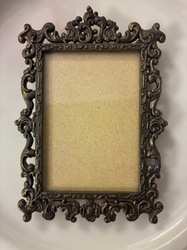
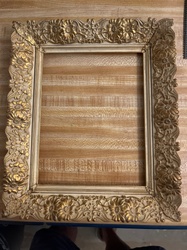
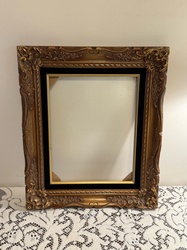
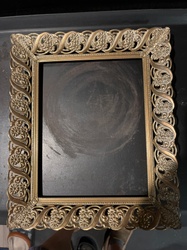
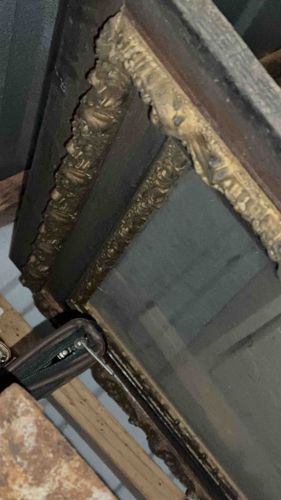
This is an antique picture frame measuring approximately 24 x 36 inches, featuring a deep cove profile characteristic of the late 19th-century Victorian era. The frame is constructed from a wooden base layered with cast composition (compo) ornamentation and finished with gold leaf or metallic gilding. The decorative program includes a prominent gadrooned or foliate patterned outer edge, followed by a wide, smooth dark-patinated cove that draws the eye toward the central artwork. An inner beaded or pearl course borders the sight edge, providing a delicate transition to the interior. The gilding shows a significant aged patina with dark oxidation and accumulation of surface grime in the crevices of the molding. There is visible evidence of structural wear, including minor losses to the fragile composition material and cracking (craquelure) consistent with the drying of the underlying plaster-like material over time. The craftsmanship reflects a mass-produced but high-quality industrial art object from the late 1800s, designed to provide a sense of substance and grandeur to domestic oil paintings or mirrors. No maker's mark is visible in the provided angle, though the heavy mitered corners suggest traditional joinery techniques protected by thick ornamental overlays.
AI Appraisal Report

·AI can make mistakes·Verify before acting
I have virtually examined this Late 19th-Century Gilt-Composition Cove Frame. Based on the 24" x 36" dimensions and morphological characteristics, the frame is a classic example of American or European Victorian industrial art. The construction—utilizing a pine or basswood substrate with molded 'compo' ornaments—is consistent with high-volume production from the 1880s to 1890s. The profile is particularly desirable for period landscapes and portraits. The condition exhibits 'honest wear,' including craquelure and minor losses to the compo, which is typical for the age of such fragile materials. The patina suggests a combination of oxidized metal leaf and accumulated soot, which most collectors prefer over modern over-painting. However, the visible cracks in the substrate corners indicate potential structural instability that may require stabilization. Market demand for large Victorian frames remains steady but price-sensitive. Comparables for 24x36 units in un-restored condition generally range from $400 to $700. Unlike hand-carved giltwood frames, which can command thousands, composition frames are valued based on the integrity of their molding. The absence of a maker's mark (such as Newcomb-Macklin or Milch) suggests a standard commercial origin, placing it in the mid-market tier. Note: This appraisal is based on photographic evidence only. A physical inspection is required to determine if the finish is genuine gold leaf or a 'bronze' Dutch metal leaf, the latter being less valuable. Furthermore, infrared or ultraviolet examination would be needed to identify historical repairs or over-gilding. Full authentication would also benefit from provenance documentation regarding the original painting it housed.

Get your items appraised

Instant estimates of your treasures with AI-powered appraisals

Browse More Appraisals