AI estimate as of September 12, 2025 · verify with a professional before acting
AI-Generated · Verify before acting
Everything on this page is generated by AI for informational purposes only. AI can make mistakes — the AI may misidentify items or misattribute them (artist, maker, brand, designer, origin, era). This is not an official valuation and should not be used for insurance, sale, tax, estate, legal, or lending purposes — or any decision requiring a certified appraisal. It is not an authoritative claim about any person, brand, or rights holder — do not share or rely on it as a factual statement about a third party. Always consult qualified professionals before making financial decisions.
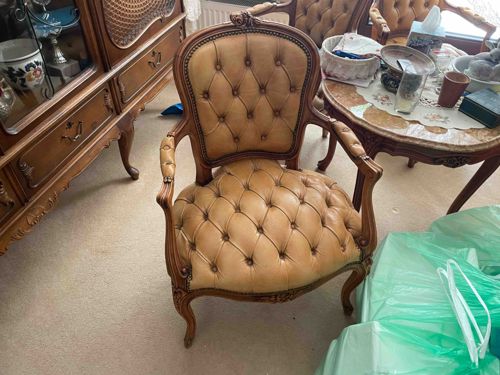
This is a Rococo Revival style armchair, characterized by its ornate carved wooden frame and tufted upholstery. The chair features a medium to dark brown stained wood, likely mahogany or walnut, exhibiting intricate floral and scrollwork carvings typical of the Rococo aesthetic on the crest rail, arms, and legs. The upholstery is a light tan or camel-colored leather, deeply tufted with buttons, particularly on the backrest and seat. The tufting creates a plush, cushioned appearance. Observable condition issues include some wear and creasing on the leather, consistent with age and use, especially on the seat and armrests, indicating a well-loved piece. The wood appears to have a fine patina, though specific damages like chips or cracks are not clearly discernible from the image. The construction quality appears high, with robust carved elements and a generous seat, suggesting a piece designed for comfort and elegance. The overall style points to a manufacturing period likely in the late 19th or early 20th century, a time when Rococo designs experienced a resurgence. No specific maker's marks or signatures are visible in the provided image. The armrests have carved details that mimic a scrolled or leaf-like form, contributing to its decorative appeal. The legs are cabriole style, further emphasizing its Rococo inspiration.
AI Appraisal Report
Upon visual examination of the provided image, I assess this Rococo Revival Tufted Leather Armchair to be a well-preserved example from the late 19th to early 20th century. The ornate carved wooden frame, likely mahogany or walnut, displays intricate floral and scrollwork characteristic of the style. The light tan, tufted leather upholstery, while showing expected wear, creasing, and patina consistent with age and use, particularly on the seat and armrests, remains largely intact and contributes significantly to its aesthetic appeal. There are no immediately discernible chips or cracks in the wood from the image, suggesting structural integrity.
My assessment of authenticity is based on the period-appropriate design elements, construction methods implied by the overall form, and material choices. The high quality of the carving and robust construction are hallmarks of the era. However, authenticity verification is limited by image-only examination; an in-person inspection would be crucial to confirm wood species, construction techniques (e.g., joinery), and absence of repairs or restorations. Provenance documentation, though currently unavailable, would also significantly aid in authentication and value.
Market conditions for Rococo Revival furniture are generally steady, with strong demand for well-maintained, aesthetically pleasing pieces. While not exceptionally rare, a finely carved example with original or period-appropriate leather upholstery like this holds appeal for collectors and interior designers seeking period elegance. Comparables for such an armchair, considering its condition and decorative qualities, typically range from $800 to $1,500. Factors impacting value positively include the quality of carving, the original leather (if confirmed), and the overall visual appeal. Factors that would negatively impact value include significant structural damage, extensive repairs, or non-period upholstery.
To fully authenticate and finalize a precise valuation, an in-person examination is necessary to inspect the underside of the chair, examine joinery, assess the true condition of the wood and upholstery more closely, and search for any hidden maker's marks or labels. Scientific testing, such as wood dating, would further confirm the age.