AI estimate as of September 25, 2025 · verify with a professional before acting
AI-Generated · Verify before acting
Everything on this page is generated by AI for informational purposes only. AI can make mistakes — the AI may misidentify items or misattribute them (artist, maker, brand, designer, origin, era). This is not an official valuation and should not be used for insurance, sale, tax, estate, legal, or lending purposes — or any decision requiring a certified appraisal. It is not an authoritative claim about any person, brand, or rights holder — do not share or rely on it as a factual statement about a third party. Always consult qualified professionals before making financial decisions.
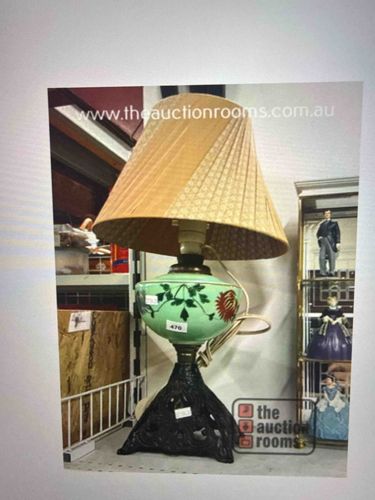
This is a Victorian-era style table lamp, possibly dating from the late 19th to early 20th century, characterized by its ornate design and traditional materials. The lamp features a pleated, natural-toned fabric lampshade with a geometric or checkered pattern, likely made of silk or a similar fine textile, which softly diffuses light. Below the shade, the lamp's fount or body is crafted from light green opal glass, hand-painted with trailing crimson floral motifs and green leaf accents, suggesting a botanical theme. The fount holds the electrical components and bulb socket, which appears to be a standard screw-in type, indicating it has been electrified or was originally an oil lamp converted to electricity. The base of the lamp is a substantial, dark-colored, possibly cast iron or patinated bronze, pyramidal or triangular form with highly decorative, relief-carved detailing, perhaps depicting acanthus leaves or other classical ornamentation. This heavy base provides stability and contributes to the lamp's antique aesthetic. Visible condition issues include potential wear to the pleated fabric shade, which may show signs of age or dust accumulation. The paint on the glass fount appears intact but could have minor abrasions or fading common with age. The metal components, including the base, show a dark, possibly original, finish with some visible wear. There are no clear manufacturer's marks or signatures visible from the image, but the craftsmanship suggests a period piece. The overall quality is good, reflecting typical artisanal standards for such decorative lighting fixtures of the era, combining functional illumination with considerable aesthetic appeal.
AI Appraisal Report
Based on my visual examination of the provided image, this Victorian Era-Style Table Lamp with a Hand-Painted Glass Font presents as a charming and well-preserved example of period-inspired decorative lighting. The pleated fabric shade, while showing slight signs of age and pattern definition loss, appears to be original or a sympathetic replacement. The defining feature, the light green opal glass fount with its hand-painted crimson floral motifs, is in good condition, with the paintwork seemingly intact, although minor abrasions or fading common with age cannot be entirely ruled out without close inspection. The substantial, dark-colored base, likely cast iron or patinated bronze, exhibits the expected wear congruent with its age, contributing to its authentic antique aesthetic. The electrification suggests a conversion from an original oil lamp, which is common and generally does not detract significantly from value in such pieces unless the conversion is poorly executed. My assessment of authenticity is based on the lamp's design language, material choices, and apparent construction methods, all of which align with late 19th to early 20th-century Victorian revival styles.
Market conditions for antique lighting of this type are generally stable, with a consistent demand for attractive and functional period pieces. Comparable lamps with hand-painted glass elements and detailed metalwork typically fetch within the mid-hundreds range at auction or specialist antique dealers. The absence of clear manufacturer's marks limits specific provenance tracking, but the overall quality is commendable. Rarity is moderate; while not unique, lamps with well-preserved hand-painted founts are less common than plain glass examples.
To fully authenticate and assess precise condition, an in-person examination would be crucial. This would allow me to thoroughly inspect the integrity of the glass for cracks or repairs, assess the exact material and finish of the base, determine if the wiring meets current safety standards, and search for any hidden marks. Furthermore, analyzing the composition of the glass and paint, or examining the construction methods of the original oil lamp burner (if converted), could confirm the period. Provenance documentation, if available, correlating the lamp to a specific manufacturer or original owner, would significantly enhance its value.