AI estimate as of September 2, 2025 · verify with a professional before acting
AI-Generated · Verify before acting
Everything on this page is generated by AI for informational purposes only. AI can make mistakes — the AI may misidentify items or misattribute them (artist, maker, brand, designer, origin, era). This is not an official valuation and should not be used for insurance, sale, tax, estate, legal, or lending purposes — or any decision requiring a certified appraisal. It is not an authoritative claim about any person, brand, or rights holder — do not share or rely on it as a factual statement about a third party. Always consult qualified professionals before making financial decisions.
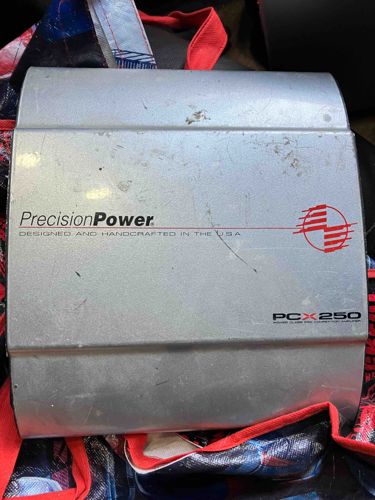
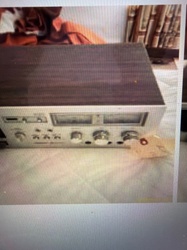
The item is a Precision Power PCX 250 car audio amplifier, primarily constructed from a brushed or anodized aluminum casing, giving it a metallic, silver-gray appearance. It has a rectangular form factor with gently rounded edges on the visible top surface, suggesting a robust and heatsink-like design typical for power amplifiers. The top panel features prominent silk-screened branding, including 'PrecisionPower' in a stylized font, with 'DESIGNED AND HANDCRAFTED IN THE USA' inscribed underneath. To the right, there is a distinct red circular logo with horizontal stripes or bars, characteristic of the Precision Power brand. Further to the right, the model number 'PCX 250' is clearly visible in a modern, sans-serif typeface. The visible surface shows signs of significant wear commonly associated with electronics that have been handled or installed in a vehicle, including numerous scuffs, scratches, and some small black smudges or dirt marks. There are no obvious signs of major dents or structural damage, but the cosmetic condition is fair to poor due to the surface abrasions. The quality of craftsmanship, despite the wear, appears to be high, indicated by the sturdy metal construction and clear, durable printing of the branding. This amplifier likely dates from the late 1990s to early 2000s, a period when car audio customization was popular and Precision Power was a well-regarded manufacturer.
AI Appraisal Report
Upon my virtual examination of the Precision Power PCX 250 car audio amplifier, I assess its condition as fair to poor cosmetically, though structurally sound. The brushed aluminum casing, a hallmark of quality from this era, exhibits numerous scuffs, scratches, and smudges, consistent with typical in-car installation and handling. Authenticity appears high based on the clear, period-correct branding: 'PrecisionPower,' 'DESIGNED AND HANDCRAFTED IN THE USA,' and the distinctive red circular logo are all consistent with genuine Precision Power products from the late 1990s to early 2000s.
Market conditions for vintage car audio amplifiers like the PCX 250 are moderately stable, driven by enthusiasts seeking quality components from the 'golden era' of car audio. Comparables show that amplifiers from reputable manufacturers with similar power outputs and condition typically fetch between $100 and $300 online. Demand is niche but consistent, primarily from collectors, hobbyists, and those restoring classic car audio systems. While not exceedingly rare, original PCX series amplifiers in working condition are becoming less common.
Key factors impacting value here are the cosmetic wear, which detracts significantly, contrasted by the inherent reputable build quality. The unit's functionality, which cannot be assessed visually, is the most crucial factor; a non-working unit would fetch considerably less.
Limitation on authenticity verification from images alone is significant. While logos and general appearance align, full authentication would require physical inspection to verify internal components for originality, serial number checks against manufacturer records (if available), and testing for functionality. Provenance documentation, such as original purchase receipts or service records, would also provide irrefutable evidence of authenticity and history. Without these, my appraisal relies on visual cues only.