Noritake Morimura Bros. Porcelain Backstamp
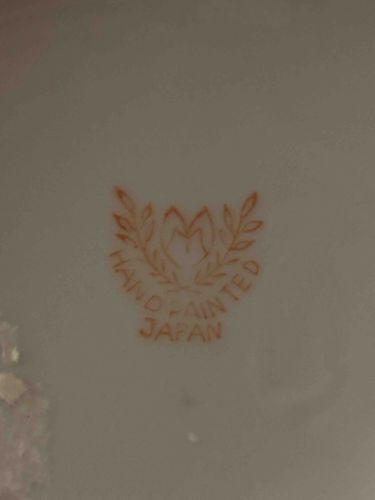
This image features a distinctive red-orange overglaze backstamp located on the underside of a porcelain object, likely a piece of dinnerware or a decorative vase. The mark consists of a stylized 'M' enclosed within a symmetrical wreath of laurel leaves. Below the wreath, the words 'HAND PAINTED' are arranged in a downward arc, with 'JAPAN' printed straight across at the bottom. This specific 'M-in-wreath' mark was used by the Morimura Brothers, the founders of Noritake, primarily between 1911 and 1921. The porcelain substrate appears to be a clean, fine-grained white ceramic with a smooth glaze. The application of the stamp shows some slight blurring, which is characteristic of genuine period marks. There are minor irregularities in the surface texture and some slight residue or surface wear near the bottom left corner, suggesting age-appropriate handling. The orange-red pigment is typical for export wares destined for the US market during the early 20th century. This mark indicates a period of high-quality craftsmanship where Japanese artisans blended traditional hand-painting techniques with Western-influenced designs for the international market.
AI-Generated Appraisal Disclaimer
Estimated Value
$45 - $125
Basic Information
Category
Antique Ceramics / Japanese Porcelain
Appraised On
March 3, 2026
Estimated Value
$45 - $125
Item Description
This image features a distinctive red-orange overglaze backstamp located on the underside of a porcelain object, likely a piece of dinnerware or a decorative vase. The mark consists of a stylized 'M' enclosed within a symmetrical wreath of laurel leaves. Below the wreath, the words 'HAND PAINTED' are arranged in a downward arc, with 'JAPAN' printed straight across at the bottom. This specific 'M-in-wreath' mark was used by the Morimura Brothers, the founders of Noritake, primarily between 1911 and 1921. The porcelain substrate appears to be a clean, fine-grained white ceramic with a smooth glaze. The application of the stamp shows some slight blurring, which is characteristic of genuine period marks. There are minor irregularities in the surface texture and some slight residue or surface wear near the bottom left corner, suggesting age-appropriate handling. The orange-red pigment is typical for export wares destined for the US market during the early 20th century. This mark indicates a period of high-quality craftsmanship where Japanese artisans blended traditional hand-painting techniques with Western-influenced designs for the international market.
Get Your Items Appraised
Instant estimates of your treasures with AI-powered instant appraisals