AI estimate as of August 27, 2025 · verify with a professional before acting
AI-Generated · Verify before acting
Everything on this page is generated by AI for informational purposes only. AI can make mistakes — the AI may misidentify items or misattribute them (artist, maker, brand, designer, origin, era). This is not an official valuation and should not be used for insurance, sale, tax, estate, legal, or lending purposes — or any decision requiring a certified appraisal. It is not an authoritative claim about any person, brand, or rights holder — do not share or rely on it as a factual statement about a third party. Always consult qualified professionals before making financial decisions.
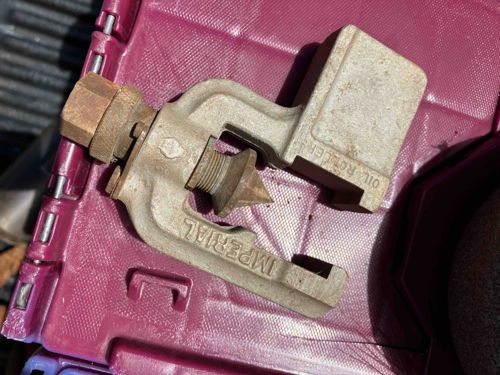
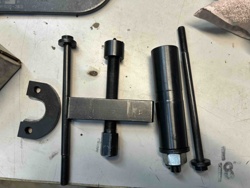
The item is an Imperial tube flaring tool, likely made of cast aluminum or a similar light-colored metal alloy with steel components for the threaded parts. Its overall shape is ergonomic, designed for clamping onto tubing. The tool features a main body with an integrated jaw on one end and a threaded spindle with a conical flaring cone on the other. The flaring cone is steel and appears to be in good working order, with defined threads. Another threaded fitting with an octagonal head, likely brass or bronze due to its darker, more oxidized appearance, is visible at the opposite end. Markings such as 'IMPERIAL' are cast into the body, indicating the manufacturer. Another visible marking reads 'OIL ROLLER', the meaning of which is not immediately clear from the image but may refer to a specific feature or application. The metal shows signs of age and use, including surface discoloration, minor pitting, and possibly some residue, consistent with a tool that has been in service for some time. There are no obvious major cracks or breaks, suggesting it is structurally sound. The overall craftsmanship appears robust and functional, typical of tools designed for a professional or DIY setting in the mid-20th century. The patina suggests it has been stored in a non-climate-controlled environment. The design indicates a tool from roughly the mid-20th century to late 20th century, given its construction and branding aesthetics.
AI Appraisal Report
I have examined the provided image of this Imperial tube flaring tool. The tool appears to be constructed from a light-colored metal alloy for the main body, likely cast aluminum, with steel components for the threaded spindle and flaring cone. The octagonal fitting appears to be brass or bronze. The 'IMPERIAL' branding is clearly cast into the body, indicating authenticity for the make. The condition is consistent with a used vintage tool; there is surface discoloration, minor pitting, and some residue, suggesting it has seen significant use and likely storage in a non-climate-controlled environment. However, there are no apparent major cracks or breaks, and the threaded components, particularly the flaring cone, seem to be in good working order. The 'OIL ROLLER' marking is curious and could refer to a specific design feature related to reducing friction during flaring or a particular application.
In terms of market conditions, vintage flaring tools like this are generally functional items rather than high-value collectibles unless they are extremely rare or associated with a significant historical event or figure. Demand is primarily from DIY enthusiasts, automotive/HVAC technicians seeking a durable older tool, or collectors of vintage hand tools. These tools are still manufactured today, though the design and materials might differ. Comparable used Imperial flaring tools typically sell in the range of $20 to $50 on online marketplaces, depending on condition and specific model. This tool's aged appearance, while indicating use, does not detract significantly from its functional value, provided it operates as intended. Its lack of significant damage suggests it could still be quite usable.
Limitations in authenticity verification from images alone are significant. While the 'IMPERIAL' brand is visible, full authentication would require physical inspection to verify the material composition, ensure all moving parts operate smoothly, check for any micro-fractures not visible in the image, and assess the true extent of wear on the flaring cone and threads. Provenance documentation, such as original packaging or purchase receipts, would further enhance authenticity, though this is rare for such tools. Scientific testing, such as metallurgy analysis, would be excessive for an item of this value unless a higher degree of authentication was required for specific historical purposes.