Acheulean-Style Chert Biface Lithic Tool
Prehistoric Artifacts / Lithic Tools

Acheulean-Style Chert Biface Lithic Tool

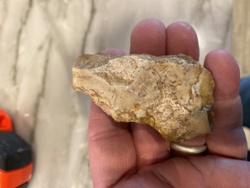
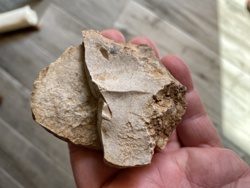
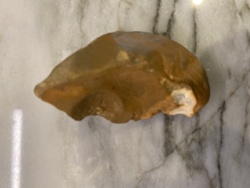
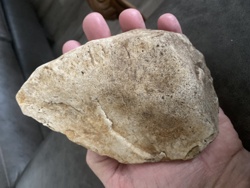
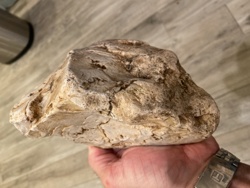
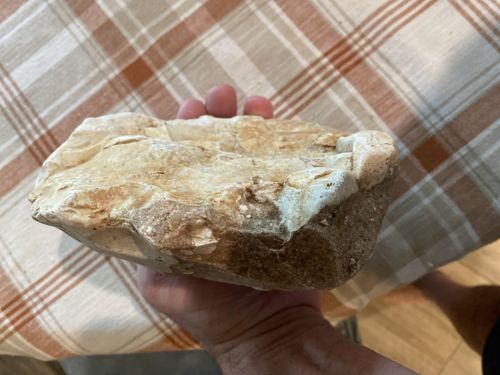
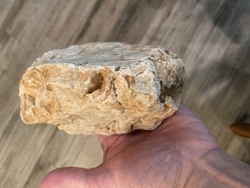
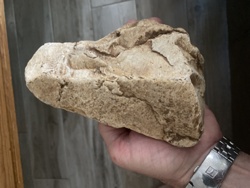
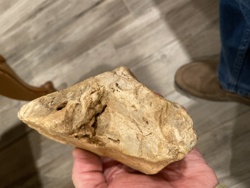
This is a substantial lithic specimen identified as a bifacial tool, specifically a hand axe or scraper, measuring approximately 7.75 inches by 5.50 inches. The item is composed of chert, displaying a variegated palette of creamy whites, tan, and earthy ochre tones. It features evidence of percussion flaking around the perimeter to create a workable edge, consistent with Acheulean-style manufacturing techniques. The surface exhibits a heavy patina and mineralization, suggesting significant age and prolonged environmental exposure. While the provided context suggests it may represent 'portable rock art' or a 'face/bird effigy,' from a formal archaeological perspective, these features appear to be geofacts or incidental results of the knapping process and natural weathering rather than intentional figurative carving. The condition is rugged with significant cortical remains on the central portions and a thick, rounded base intended for a palm grip. The specimen shows dulling of the flake scars, indicating it may have been subject to hydraulic wear or long-term soil chemistry changes. There are no modern jeweler's marks or signatures, consistent with a prehistoric lithic tool. The craftsmanship reflects a utilitarian Lower Paleolithic tradition focused on core reduction for heavy-duty butchery or woodworking tasks.
Estimated Value

$100 - $250

Basic Information

Category

Prehistoric Artifacts / Lithic Tools

Appraised On

March 6, 2026

Estimated Value

$100 - $250

Additional Details Provided By Owner

User Provided Information

Lower Paleolithic Acheulean chert bi face hand axe scraper portable rock art bird or face effigy found in Guthrie OK measuring 7.75" x 5.50"

Item Description

This is a substantial lithic specimen identified as a bifacial tool, specifically a hand axe or scraper, measuring approximately 7.75 inches by 5.50 inches. The item is composed of chert, displaying a variegated palette of creamy whites, tan, and earthy ochre tones. It features evidence of percussion flaking around the perimeter to create a workable edge, consistent with Acheulean-style manufacturing techniques. The surface exhibits a heavy patina and mineralization, suggesting significant age and prolonged environmental exposure. While the provided context suggests it may represent 'portable rock art' or a 'face/bird effigy,' from a formal archaeological perspective, these features appear to be geofacts or incidental results of the knapping process and natural weathering rather than intentional figurative carving. The condition is rugged with significant cortical remains on the central portions and a thick, rounded base intended for a palm grip. The specimen shows dulling of the flake scars, indicating it may have been subject to hydraulic wear or long-term soil chemistry changes. There are no modern jeweler's marks or signatures, consistent with a prehistoric lithic tool. The craftsmanship reflects a utilitarian Lower Paleolithic tradition focused on core reduction for heavy-duty butchery or woodworking tasks.
Get Your Items Appraised

Instant estimates of your treasures with AI-powered instant appraisals

Browse More Appraisals