AI Appraisal Estimate

AI-generated estimates · not official valuations

From the user

What was submitted

Photo and notes provided by the user — not generated by AI

Submitted item photo
Submitted photo · June 6, 2026

User's notes

No additional notes provided.

AI analysis below

AI appraisal

AI analysis & estimate

AI-Generated · Verify before acting

Everything below is generated by AI for informational purposes only. AI can make mistakes — the AI may misidentify items or misattribute them (artist, maker, brand, designer, origin, era). This is not an official valuation and should not be used for insurance, sale, tax, estate, legal, or lending purposes — or any decision requiring a certified appraisal. It is not an authoritative claim about any person, brand, or rights holder — do not share or rely on it as a factual statement about a third party. Always consult qualified professionals before making financial decisions.

Read the full disclaimer

AI Identification

·Not independently authenticated·Verify before acting

Irregularly Shaped Igneous or Sedimentary Rock Fragment

Geological Specimens / Natural Objects

AI Estimated Value

·Not an official valuation·Verify before acting

$0.00 - $5.00

As of June 6, 2026

AI Item Analysis

·AI can make mistakes·Verify before acting
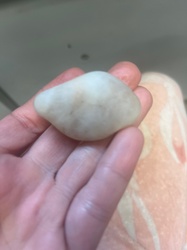
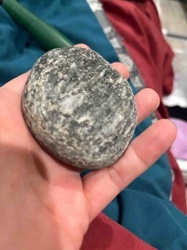
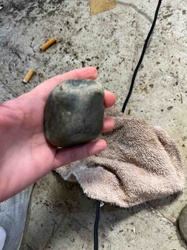
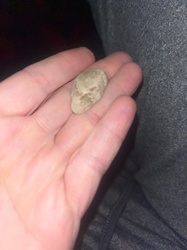
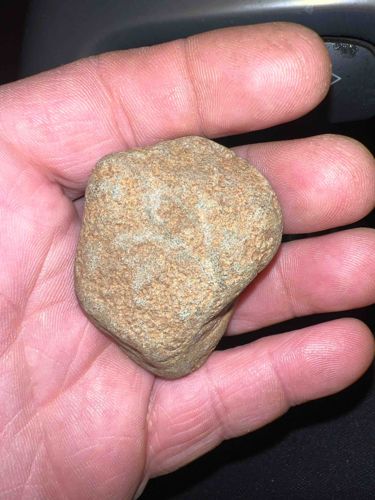
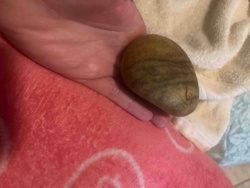
This object is a natural, irregularly shaped rock fragment held in a person's hand for scale, approximately 2 to 2.5 inches in diameter. The rock exhibits a coarse-grained, granular texture, suggesting it may be a variety of weathered granite or a highly lithified sandstone. Its coloration is a variegated mix of earthy browns, tans, and ochre, likely resulting from iron oxide staining or surface oxidation due to prolonged exposure to the elements. The surface is uneven and rugged, showing signs of natural erosion through water or wind, which has softened sharp edges into a more sub-angular profile. There are no definitive tool marks, deliberate engravings, or anthropogenic features that would classify it as a man-made artifact or primitive tool. No maker's marks, signatures, or historical stamps are present, and the condition appears entirely natural with organic pitting and characteristic geological wear. Variations in surface color include lighter grey-tan patches where the original mineral composition is less weathered. The item lacks the symmetries or retouching seen in lithic technology such as projectile points or scrapers, indicating a geological rather than archaeological origin. Its age is geological, potentially spanning millions of years depending on the regional strata from which it originated.
AI Appraisal Report

·AI can make mistakes·Verify before acting
I have virtually examined this natural stone fragment, which measures approximately 2 to 2.5 inches. Based on the visual evidence, the object is a geological specimen—likely a weathered igneous granite or a coarse-grained sedimentary sandstone. It exhibits characteristic sub-angular erosion and iron oxide staining consistent with natural weathering processes. My examination reveals no evidence of anthropogenic manipulation; there are no percussion bulbs, flaking patterns, secondary retouching, or use-wear that would classify this as a prehistoric lithic tool (such as a scraper or hand-axe). From a market perspective, this item is a common geological find. Unlike high-grade mineral specimens (e.g., crystals with aesthetic symmetry) or rare fossils, unrefined field stones hold negligible liquid value in the current collectibles market. Comparables for such items are typically found in bulk 'educational' sets or as decorative garden elements, where the per-unit price is nominal. The lack of rarity or aesthetic distinctiveness significantly limits its demand to primarily sentimental or educational contexts. While the geological age may span millions of years, age does not equate to monetary value in this instance without specific rare mineral properties. This appraisal is limited by the digital nature of the inspection. To provide a definitive geological identification, an in-person examination utilizing a streak test, Mohs hardness testing, and a hand-lens inspection of crystalline structure would be required. Furthermore, without a specific 'find-site' or documented provenance linking it to a notable geological formation or historical site, its status remains that of an ordinary natural object.

Get your items appraised

Instant estimates of your treasures with AI-powered appraisals

Browse More Appraisals