AI estimate as of October 28, 2025 · verify with a professional before acting
AI-Generated · Verify before acting
Everything on this page is generated by AI for informational purposes only. AI can make mistakes — the AI may misidentify items or misattribute them (artist, maker, brand, designer, origin, era). This is not an official valuation and should not be used for insurance, sale, tax, estate, legal, or lending purposes — or any decision requiring a certified appraisal. It is not an authoritative claim about any person, brand, or rights holder — do not share or rely on it as a factual statement about a third party. Always consult qualified professionals before making financial decisions.
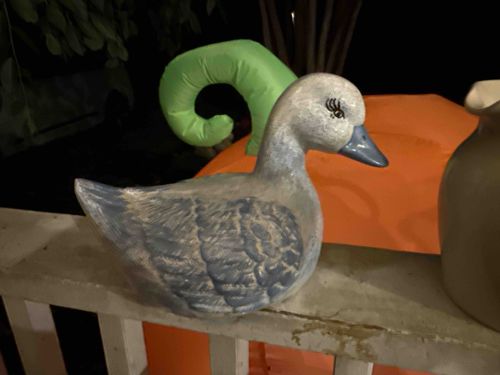
This is a ceramic figurine depicting a duck, likely intended for outdoor or garden decor. The duck is rendered in a somewhat stylized but recognizable form, sitting upright with its head turned slightly to the right. The primary colors are various shades of grey-blue and light grey, creating a weathered or aged appearance. The body features textured details suggesting feathers, painted in a darker blue-grey, especially on the wings and back. The head is lighter grey, with the beak painted a solid, slightly glossy blue. A distinctive feature is the presence of painted eyelashes in black on the duck's eye, which adds a touch of whimsical anthropomorphism. The overall finish appears matte or slightly textured. Given its outdoor placement on a railing, it shows signs of weathering, including some darker discoloration and possibly mildew or dirt accumulation on the underside and base, consistent with prolonged exposure to the elements. The craftsmanship appears to be folk art or mass-produced decorative work rather than fine art, with hand-painted details that may vary slightly from piece to piece. The style suggests it could be from the mid-to-late 20th century or more contemporary. No visible manufacturer's marks or signatures are discernible from the provided image. The size appears to be substantial enough to be a decorative garden accent, likely between 6 to 12 inches in length. Its condition indicates it has been in use, but no major chips, cracks, or repairs are evident from this view.
AI Appraisal Report
Upon visual examination of the provided image, I assess this ceramic duck figurine to be in fair condition, exhibiting signs of outdoor exposure including surface discoloration, likely from mildew or dirt accumulation, particularly on the base and underside. The weathered appearance seems partly intentional in its design, utilizing grey-blue and light grey tones, but also enhanced by environmental factors. Authenticity as a mass-produced decorative item is likely; however, without maker's marks or provenance, definitive authentication beyond 'decorative garden figurine' is not possible from images alone. The painted eyelashes add a whimsical, anthropomorphic touch common in garden decor.
Market conditions for such items typically fall into the low-to-mid range for decorative home and garden accents. Comparable items, often found in garden centers, antique malls, or online marketplaces (e.g., Etsy, eBay) usually retail between $10 and $40, depending on size, specific artistry, and original retail price. Demand for ceramic garden ducks is generally stable but not high, positioning this piece as a common decorative item rather than a collectible. Rarity is low, as similar items are widely available.
Factors significantly impacting value include its condition, lack of identifiable maker, and its utilitarian decorative purpose. Were it a rare, signed piece by a renowned folk artist, the value would be considerably higher. However, its current presentation suggests mass-market production.
Limitations in authenticity verification are significant. Without physical inspection, I cannot confirm the material composition beyond visual identification as ceramic, nor can I ascertain the presence of hidden repairs, chips, or manufacturer's stamps. In-person examination would allow for a tactile assessment of texture, exact dimensions, and a thorough inspection for marks. Provenance documentation could potentially link it to a specific maker or time period, and scientific testing, though unlikely for an item of this type, would verify material and paint composition. My valuation reflects its status as a common outdoor decorative item in used condition.