AI estimate as of October 9, 2025 · verify with a professional before acting
AI-Generated · Verify before acting
Everything on this page is generated by AI for informational purposes only. AI can make mistakes — the AI may misidentify items or misattribute them (artist, maker, brand, designer, origin, era). This is not an official valuation and should not be used for insurance, sale, tax, estate, legal, or lending purposes — or any decision requiring a certified appraisal. It is not an authoritative claim about any person, brand, or rights holder — do not share or rely on it as a factual statement about a third party. Always consult qualified professionals before making financial decisions.
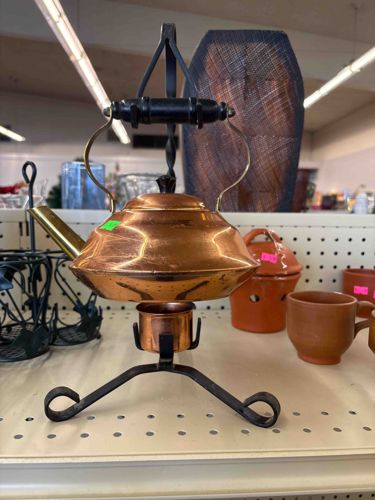
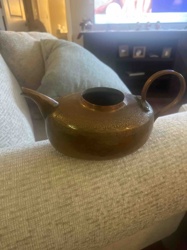
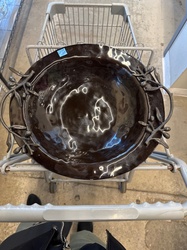
This item is a decorative and functional kettlestand or a component of a chafing dish, featuring a copper kettle-shaped vessel mounted on a wrought iron stand. The copper portion appears to be a broad, flat-bottomed 'kettle' or pot with a rounded, low-profile body, possibly intended to hold water or food that needs to be kept warm. It has a brass or copper-toned spout extending horizontally from one side and a circular, slightly domed lid. The copper shows signs of age and use, with a natural patina, some minor discoloration, and possibly a few superficial scratches typical of soft metal. A small, circular copper holder for a heating element (likely a tealight or small alcohol lamp, not included) is nestled within the wrought iron stand directly beneath the copper pot. The stand itself is made of dark, possibly blackened or painted, wrought iron. It features a tripod base with three scrolled feet, creating a stable platform. A central twisted iron rod extends upwards, supporting a horizontal wooden handle, which appears to be a dark-stained wood, possibly ebonized. Two brass or copper-toned curved rods extend from the handle to attach to the sides of the copper pot, acting as a balance and carrying mechanism. The overall design suggests a vintage or antique aesthetic, likely from the early to mid-20th century, suitable for rustic, colonial, or traditional decor. The craftsmanship appears to be hand-wrought for the iron components, indicating a degree of artisanal production. There are no clear maker's marks visible in the image. The functionality implies it was used for serving hot beverages (like tea or coffee) or keeping food warm.
AI Appraisal Report
Upon visual examination of the provided image, I assess this copper and wrought iron kettlestand/chafing dish to be in generally good vintage condition. The copper vessel exhibits a desirable natural patina commensurate with age and use, with minor discoloration and superficial scratches that are expected for a soft metal item of this type. The wrought iron stand appears robust and stable, with its original blackened or painted finish largely intact. The wooden handle seems solid. Authenticity, based solely on visual cues, suggests it is a genuine vintage piece, likely from the early to mid-20th century. The craftsmanship, particularly the hand-wrought iron, supports this. Market conditions for decorative and functional vintage kitchenware of this nature are moderately stable. Comparable items, often found in antique shops or online marketplaces, typically range from $100 to $300 depending on condition, size, and material quality. Demand is generally from collectors of vintage home decor, rustic kitchenware, or those seeking unique accent pieces. While not extremely rare, the combination of copper and wrought iron, along with its functional design, gives it a degree of desirability. Factors impacting its value positively include its overall aesthetic appeal and apparent completeness. The primary limitation in authenticity verification from an image alone is the inability to fully assess material composition, internal condition of the copper vessel (e.g., tinning), and precise age through tactile inspection. For full authentication, an in-person examination would be needed to check for maker's marks not visible in the image, assess the integrity of all joints and connections, and verify the wood type of the handle. Provenance documentation, though unlikely for such an item, would also add value.