Paleolithic Chert Hand Axe Scraper
Prehistoric Artifacts / Lithics

Paleolithic Chert Hand Axe Scraper

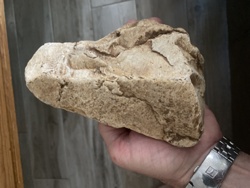
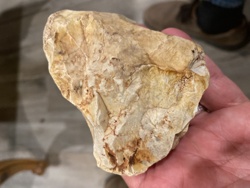
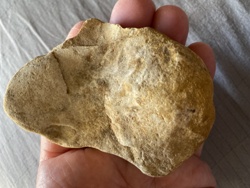
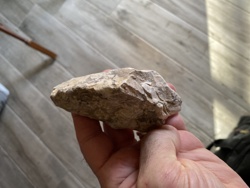
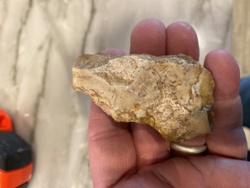
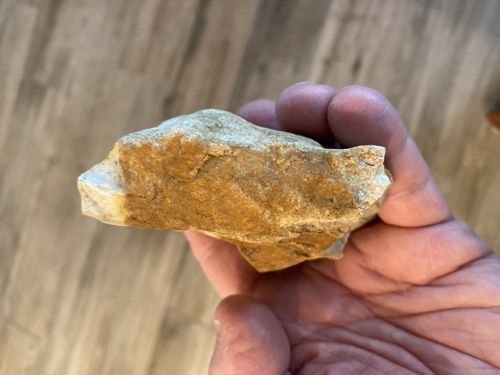
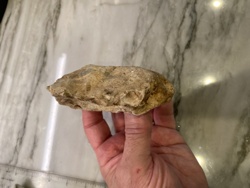
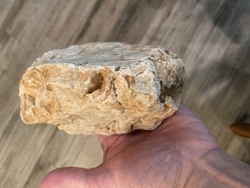
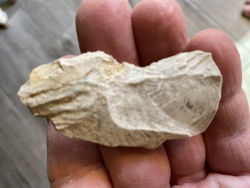
This artifact is a lithic tool measuring approximately 3 inches by 3 inches, consistent with a hand-held scraper or small hand axe. It is composed of chert, displaying a distinct bi-color appearance with creamy off-white cortex remnants and a core of darker honey-brown or tan patina. The specimen exhibits evidence of intentional conchoidal fracturing and percussion flaking along the edges, common in prehistoric tool manufacture. The surface shows a significant degree of orange-brown mineralization and heavy patina, suggesting prolonged exposure to iron-rich soils or significant geological age. The shape is ergonomically suited for a palm grip, with one side featuring a relatively flat dorsal face and the opposite showing more pronounced flaking scars to create a sharp, functional edge. There appear to be no modern tool marks or fresh breaks, with all edges showing rounded wear consistent with millennia of burial and environmental weathering. This piece represents a primitive yet effective utility tool used for scraping hides or processing organic materials, likely dating back to the Paleolithic era of North America based on its material composition and manufacture style.
Estimated Value

$45.00 - $75.00

Basic Information

Category

Prehistoric Artifacts / Lithics

Appraised On

February 25, 2026

Estimated Value

$45.00 - $75.00

Additional Details Provided By Owner

User Provided Information

Paleolithic chert hand axe scraper tool fiuns in Guthrie OK measuring 3" x 3"

Item Description

This artifact is a lithic tool measuring approximately 3 inches by 3 inches, consistent with a hand-held scraper or small hand axe. It is composed of chert, displaying a distinct bi-color appearance with creamy off-white cortex remnants and a core of darker honey-brown or tan patina. The specimen exhibits evidence of intentional conchoidal fracturing and percussion flaking along the edges, common in prehistoric tool manufacture. The surface shows a significant degree of orange-brown mineralization and heavy patina, suggesting prolonged exposure to iron-rich soils or significant geological age. The shape is ergonomically suited for a palm grip, with one side featuring a relatively flat dorsal face and the opposite showing more pronounced flaking scars to create a sharp, functional edge. There appear to be no modern tool marks or fresh breaks, with all edges showing rounded wear consistent with millennia of burial and environmental weathering. This piece represents a primitive yet effective utility tool used for scraping hides or processing organic materials, likely dating back to the Paleolithic era of North America based on its material composition and manufacture style.
Get Your Items Appraised

Instant estimates of your treasures with AI-powered instant appraisals

Browse More Appraisals