AI Appraisal Estimate

AI-generated estimates · not official valuations

From the user

What was submitted

Photo and notes provided by the user — not generated by AI

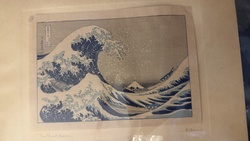
Submitted item photo
Submitted photo · May 18, 2026

User's notes

No additional notes provided.

AI analysis below

AI appraisal

AI analysis & estimate

AI-Generated · Verify before acting

Everything below is generated by AI for informational purposes only. AI can make mistakes — the AI may misidentify items or misattribute them (artist, maker, brand, designer, origin, era). This is not an official valuation and should not be used for insurance, sale, tax, estate, legal, or lending purposes — or any decision requiring a certified appraisal. It is not an authoritative claim about any person, brand, or rights holder — do not share or rely on it as a factual statement about a third party. Always consult qualified professionals before making financial decisions.

Read the full disclaimer

AI Identification

·Not independently authenticated·Verify before acting

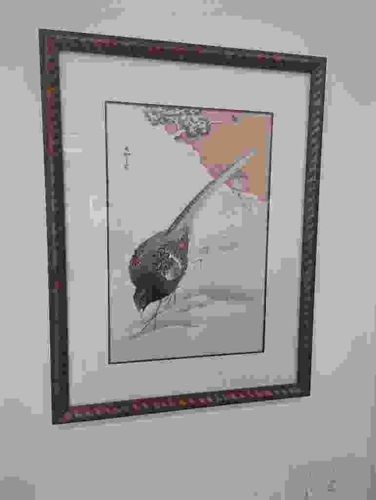
Kachō-ga Japanese Woodblock Print After Ohara Koson

Fine Art - Asian Prints

AI Estimated Value

·Not an official valuation·Verify before acting

$150 - $300

As of May 18, 2026

AI Item Analysis

·AI can make mistakes·Verify before acting
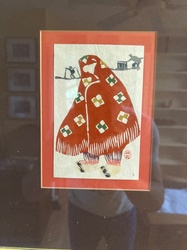
This item is a framed Japanese woodblock print, or 'hanga,' depicting a long-tailed bird, likely a pheasant or similar species, in a classic Kachō-ga (flower-and-bird) style. The composition features a large, dark-bodied bird with a stylized long tail positioned diagonally across the frame. In the upper right quadrant, there are decorative elements including cherry blossoms and a bold, orange-toned background segment. The print appears to be housed in a contemporary dark-finished wooden frame with red decorative accents along the inner edge, protected by a white mat and glazing. A vertical calligraphic signature and artist's seal are visible on the left side, identifying the work as being in the style of Ohara Koson (Shoson), a master of the Shin-hanga movement. The paper displays a smooth texture characteristic of washi, though it is difficult to determine if this is an original early 20th-century strike or a late 20th-century reprint. The condition appears stable with no immediate signs of foxing, though the colors in the background segment show a slight saturation consistent with modern high-quality reproduction. The framing provides a finished presentation, though it may not be museum-grade archival quality.
AI Appraisal Report

·AI can make mistakes·Verify before acting
I have virtually examined this Kachō-ga (bird-and-flower) woodblock print after Ohara Koson. The work depicts a Golden Pheasant, a classic subject for the Meiji/Taishō era artist. Upon visual inspection, the saturation of the orange sky and the crispness of the registrations suggest this is a mid-to-late 20th-century reprint or a contemporary 'after' strike, rather than an original lifetime edition (c. 1920s-1930s). The paper appears clean with no visible foxing, and the modern frame with red accents suggests a decorative rather than archival intent. The market for authentic Ohara Koson prints remains strong, with early Watanabe-sealed originals often exceeding $1,000. However, high-quality reprints (typically by publishers like Kyoto Hanga-In or Unsodo) occupy a more accessible market tier, usually retailing between $100 and $350 depending on the quality of the woodblocks used. This specific piece offers high decorative appeal, which sustains its value as a 'decorator' print despite its likely status as a reproduction. Final valuation is limited by the digital nature of this examination. To confirm authenticity and age, I would require an in-person physical inspection to examine the 'kento' (registration marks), the depth of pigment penetration on the verso of the washi paper, and the presence of specific publisher seals. Scientific testing of the ink's chemical composition and carbon dating of the paper would be necessary to definitively rule out modern inkjet or giclée reproductions. Provenance documentation or a gallery bill of sale from a reputable Japanese print specialist would significantly bolsters these findings.

Get your items appraised

Instant estimates of your treasures with AI-powered appraisals

Browse More Appraisals