AI estimate as of October 25, 2025 · verify with a professional before acting
AI-Generated · Verify before acting
Everything on this page is generated by AI for informational purposes only. AI can make mistakes — the AI may misidentify items or misattribute them (artist, maker, brand, designer, origin, era). This is not an official valuation and should not be used for insurance, sale, tax, estate, legal, or lending purposes — or any decision requiring a certified appraisal. It is not an authoritative claim about any person, brand, or rights holder — do not share or rely on it as a factual statement about a third party. Always consult qualified professionals before making financial decisions.
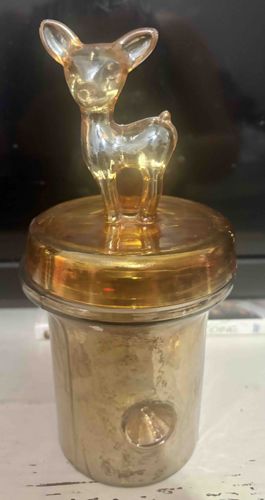
This item is a vintage candy dish or jar featuring a prominent depression glass deer (fawn) finial on its lid. The deer finial and the lid are crafted from amber or marigold colored carnival glass, exhibiting a distinct iridescent sheen that shifts in color, predominantly reflecting golden and orange hues. The fawn itself is rendered in a naturalistic pose, standing with all four legs planted on the lid, its head slightly turned, and large, alert ears. The details of its face, limbs, and tail are discernible through the translucent glass. The lower portion of the item is a cylindrical glass jar that appears to be silvered or mercury glass, currently displaying significant wear and oxidation. The silvering has flaked and tarnished unevenly, giving it a mottled, distressed appearance, ranging from dull silver to areas revealing the clear glass beneath or a yellowish tint due to age and environmental exposure. A single, prominent circular depression or 'thumbprint' detail is visible on the front side of the silvered jar, hinting at a potential pattern or design feature. The construction suggests two separate pieces: a glass jar and a lid with an integrated glass finial. The fit between the lid and the base appears secure, indicating they are likely original components of the same piece. The overall condition of the silvered base suggests considerable age and use, consistent with an item from the mid-20th century, particularly the Depression Era when similar glassmaking techniques and designs were popular. The craftsmanship, though mass-produced, shows a charming, decorative quality characteristic of the period.
AI Appraisal Report
I've examined this Vintage Depression Glass Deer (Fawn) Topped Candy Dish or Jar through the provided image. The carnival glass lid, featuring an amber/marigold fawn finial, is particularly attractive with its iridescent sheen, showing good detail for a mass-produced piece of its era. This type of glass was popular during the Depression Era, suggesting authenticity in style and material. The finial appears intact with no immediate signs of chips or cracks from this visual assessment, which is crucial for its value.
However, the silvered or mercury glass base presents significant condition issues. The extensive flaking, tarnish, and oxidation are clearly visible, impacting its aesthetic appeal substantially. While some collectors appreciate age-related wear, this level of deterioration typically detracts from value. The 'thumbprint' detail on the base suggests a design intent, but its visibility is hampered by the condition. The fit of the lid to the base appears good, suggesting they are original components.
In terms of market conditions, Depression-era carnival glass with animal finials is generally collectible, but the value is highly dependent on condition, particularly for the base. Comparables for well-preserved examples might fetch higher prices, but this item's base condition will limit its appeal. Demand for such pieces is steady but not exceptionally high. While the fawn finial is charming and a desirable feature, the compromised base prevents it from reaching its full potential market value. Rarity isn't a significant factor here, as similar items were produced. Without physical inspection, I cannot confirm the integrity of the glass for any hidden cracks or repairs, especially on the lid, nor can I definitively ascertain the exact composition or precise manufacturing technique of the silvering on the base. For a full authentication, in-person examination, potentially UV light inspection for repairs, and a detailed assessment of the glass type would be beneficial.