AI Appraisal Estimate

AI-generated estimates · not official valuations

From the user

What was submitted

Photo and notes provided by the user — not generated by AI

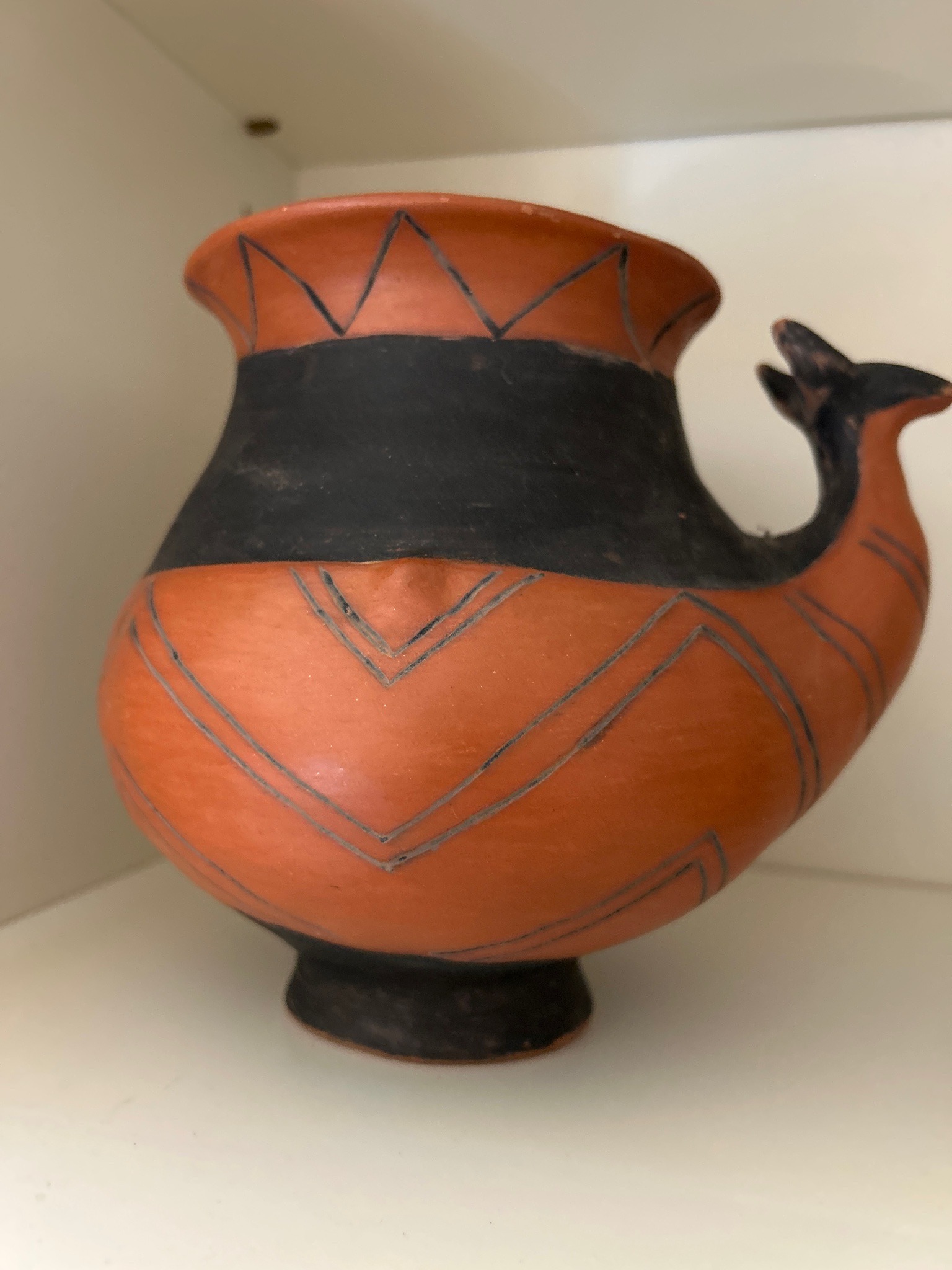
Submitted item photo
Submitted photo · July 18, 2026

User's notes

No additional notes provided.

AI analysis below

AI appraisal

AI analysis & estimate

AI-Generated · Verify before acting

Everything below is generated by AI for informational purposes only. AI can make mistakes — the AI may misidentify items or misattribute them (artist, maker, brand, designer, origin, era). This is not an official valuation and should not be used for insurance, sale, tax, estate, legal, or lending purposes — or any decision requiring a certified appraisal. It is not an authoritative claim about any person, brand, or rights holder — do not share or rely on it as a factual statement about a third party. Always consult qualified professionals before making financial decisions.

Read the full disclaimer

AI Identification

·Not independently authenticated·Verify before acting

Terracotta zoomorphic vessel in the style of Early Iron Age Persian pottery

Ceramics

AI Estimated Value

·Not an official valuation·Verify before acting

$2,000 - $4,500

As of July 18, 2026

AI Item Analysis

·AI can make mistakes·Verify before acting
This terracotta vessel features a bulbous body, a flared neck with a wide rim, and a decorative handle or spout shaped like the head and neck of a horned animal, likely a bull or ram. The piece is constructed from a reddish-buff clay and decorated with dark pigment, possibly manganese or carbon-based. The design includes a wide horizontal black band around the neck, nested chevron patterns on the lower body, and a series of triangles at the rim. The animal head handle is finished in black with simple incised lines. The craftsmanship is consistent with handmade, pithos-style ceramic traditions seen in the Marlik or Amlash cultures of the late 2nd to early 1st millennium BCE, though the freshness of the surface and lack of significant encrustation or mineral deposits suggest it could be a later revival or a high-quality replica. No maker's marks or signatures are visible, so attribution remains a hypothesis based on stylistic comparison. The condition appears stable with minor surface abrasions and some unevenness in the paint application consistent with hand-drawn methods.

AI Appraisal Report

·AI can make mistakes·Verify before acting
I have reviewed the provided details and image of the terracotta zoomorphic vessel. Based on what I can see, the piece assumes the form and decorative motifs associated with the Marlik or Amlash cultures of the Early Iron Age. The value of $2,000–$4,500 represents a fair market range for a period specimen of this type in stable condition. However, I cannot verify from a photo whether the material exhibits the necessary mineral mineralization or thermoluminescence profile required to validate an ancient origin. Because the surface appears notably clean and the pigment transitions lack the expected calcification often found in excavated pottery, there is a possibility this is a high-quality revival or replica. If determined to be a modern 'in the style of' production, the value would likely decrease to $150–$300 as a decorative object. Demand for Western Asiatic ceramics remains steady among collectors of antiquities, but buyers are increasingly cautious. A physical inspection by a specialist, provenance documentation, or scientific testing such as a TL (Thermoluminescence) test would be needed to move beyond a stylistic hypothesis. The current estimate is contingent upon the assumption of antiquity; any evidence of modern manufacture would significantly invalidate this range.

Get your items appraised

Instant estimates of your treasures with AI-powered appraisals

Browse More Appraisals