AI Appraisal Estimate

AI-generated estimates · not official valuations

From the user

What was submitted

Photo and notes provided by the user — not generated by AI

Submitted item photo
Submitted photo · June 23, 2026

User's notes

Jecquel christian

AI analysis below

AI appraisal

AI analysis & estimate

AI-Generated · Verify before acting

Everything below is generated by AI for informational purposes only. AI can make mistakes — the AI may misidentify items or misattribute them (artist, maker, brand, designer, origin, era). This is not an official valuation and should not be used for insurance, sale, tax, estate, legal, or lending purposes — or any decision requiring a certified appraisal. It is not an authoritative claim about any person, brand, or rights holder — do not share or rely on it as a factual statement about a third party. Always consult qualified professionals before making financial decisions.

Note

This analysis also relies on unverified notes provided by the user, which may be incomplete or inaccurate and could affect the result.

Read the full disclaimer

AI Identification

·Not independently authenticated·Verify before acting

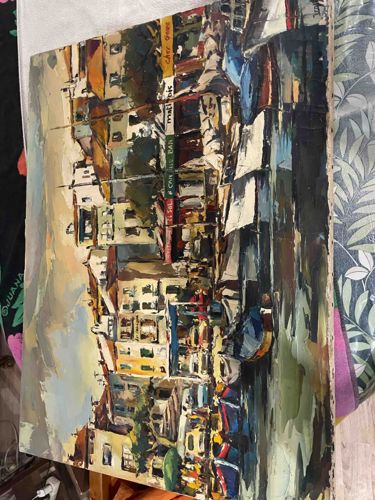
Original Post-Impressionist Port Scene by Christian Jequel

Fine Art - Paintings

AI Estimated Value

·Not an official valuation·Verify before acting

$4,000 - $6,000

As of June 23, 2026

AI Item Analysis

·AI can make mistakes·Verify before acting
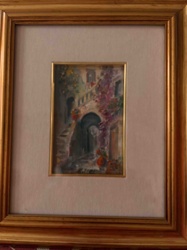
This is a vibrant and textured palette-knife oil painting on canvas by the renowned French artist Christian Jequel. The artwork depicts a bustling Mediterranean harbor scene, likely inspired by the Provence region or French Riviera, featuring tight architecture and docked fishing boats. Jequel is famous for his 'spatula' technique, which is evident here through the thick, impasto application of paint that creates a rhythmic, three-dimensional texture. The color palette is rich and warm, utilizing ochres, terracottas, and deep blues to convey a sun-drenched atmosphere. The composition includes vertical masts and building facades that contrast with the horizontal planes of the water. A signature 'Jequel' is visible in the upper right-hand corner of the canvas. Regarding its condition, the canvas appears to be unframed with a raw, exposed edge showing some fraying and minor paint loss along the perimeter, which is typical for vintage works stored without a protective frame. The painting reflects the artist's signature mid-to-late 20th-century style, showcasing high craftsmanship and a masterful command of light and shadow through gestural application. The work demonstrates high quality and is a characteristic example of the artist's celebration of daily life in the South of France.

AI Appraisal Report

·AI can make mistakes·Verify before acting
Based on my visual examination of this oil on canvas, the work displays the hallmark characteristics of Christian Jequel's 'spatula' technique. The impasto is expertly applied, creating the rhythmic texture and luminosity typical of his Mediterranean harbor scenes. The palette is consistent with his post-impressionist celebrations of the South of France, and the signature in the upper right quadrant aligns with known examples of his script. The condition indicates the work is currently unframed, with visible fraying and minor paint loss at the perimeter. This peripheral wear is common for canvas pieces of this age but does necessitate professional framing and minor stabilization to prevent further loss. Demand for Jequel remains steady among collectors of modern Provencal art, with his harbor scenes generally commanding a premium over smaller still lifes. Market comparisons for similar 20th-century streetscapes and port scenes by Jequel at auction and retail galleries support a valuation in the $4,000 to $6,000 range, depending on the canvas dimensions which were not specified. Please note that while the stylistic execution and medium appear consistent with an authentic work, this appraisal is based on digital images alone. A definitive authentication would require a physical inspection to verify the age of the canvas, the chemical composition of the pigments, and a review of provenance documentation or a certificate of authenticity from the artist's estate or representing gallery. In-person examination would also confirm if the edge fraying has compromised the structural integrity of the primary support.

Get your items appraised

Instant estimates of your treasures with AI-powered appraisals

Browse More Appraisals