AI Appraisal Estimate

AI-generated estimates · not official valuations

From the user

What was submitted

Photo and notes provided by the user — not generated by AI

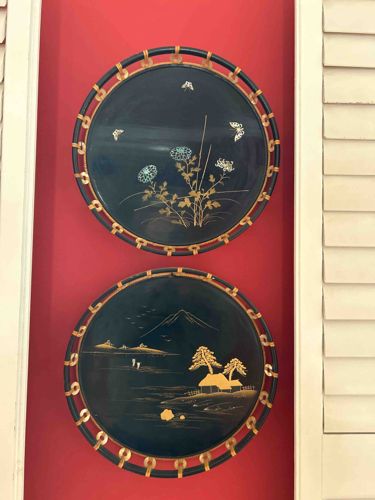
Submitted item photo
Submitted photo · May 25, 2026

User's notes

Black lacquer trays brought over from Korean War veteran

AI analysis below

AI appraisal

AI analysis & estimate

AI-Generated · Verify before acting

Everything below is generated by AI for informational purposes only. AI can make mistakes — the AI may misidentify items or misattribute them (artist, maker, brand, designer, origin, era). This is not an official valuation and should not be used for insurance, sale, tax, estate, legal, or lending purposes — or any decision requiring a certified appraisal. It is not an authoritative claim about any person, brand, or rights holder — do not share or rely on it as a factual statement about a third party. Always consult qualified professionals before making financial decisions.

Note

This analysis also relies on unverified notes provided by the user, which may be incomplete or inaccurate and could affect the result.

Read the full disclaimer

AI Identification

·Not independently authenticated·Verify before acting

Mid-20th Century Japanese Black Lacquerware Trays

Asian Art and Decorative Collectibles

AI Estimated Value

·Not an official valuation·Verify before acting

$100.00 - $185.00

As of May 25, 2026

AI Item Analysis

·AI can make mistakes·Verify before acting
A pair of circular black lacquer trays featuring traditional Japanese motifs executed in maki-e (sprinkled gold powder) and mother-of-pearl (raden) inlay. The top tray displays a floral arrangement of chrysanthemums and butterflies, while the bottom tray depicts a landscape scene including Mount Fuji, a thatched-roof house, pine trees, and a shoreline. Both trays feature a unique openwork bamboo or rattan border lashed to the main lacquer disc with natural fiber ties in a decorative loop pattern. The base material is likely lightweight wood or medium-density fiberboard coated in high-gloss black urushi-style lacquer. The craftsmanship targets the post-war Japanese 'souvenir' market of the early 1950s, consistent with items brought home by veterans. Condition shows minor surface scuffing and light scratches indicative of age, with some slight dulling of the gold paint. The decorative borders remain intact, though they show a natural aged patina and minor drying of the fiber bindings. No major cracks or chips in the lacquer are immediately visible in the current display orientation. The presence of Mount Fuji suggests these were produced in Japan, despite the provenance involving the Korean War theater.
AI Appraisal Report

·AI can make mistakes·Verify before acting
I have completed a visual examination of this pair of mid-20th-century Japanese black lacquerware trays. These pieces are classic examples of 'Show-era' export or souvenir ware produced during the post-WWII occupation and the early 1950s. The execution of the maki-e (sprinkled gold) and raden (mother-of-pearl) inlay is characteristic of mass-market production intended for Western servicemen; the themes of Mount Fuji and chrysanthemums were highly popular for this demographic. The condition is fair to good, with observed surface scuffing and minor desiccation of the fiber bindings on the unique rattan borders—a common aging sign for organic materials of this era. While the lacquer retains a respectable gloss, the decorative borders are the primary point of interest. The market for mid-century Japanese export lacquer is currently stable but saturated. These are not high-art urushi pieces by master craftsmen, but rather decorative collectibles. Comparables for similar paired sets in this condition typically clear at auction or in vintage shops within the $100 to $185 range. The historical provenance tied to the Korean War veteran adds sentimental value, though it does not significantly increase the financial valuation without a specific military association. Limitations: This appraisal is based on photographic evidence. A physical inspection is required to determine the substrate material (solid wood versus composite), the thickness of the lacquer, and to confirm the absence of deep-seated hairline cracks. Scientific testing for urushi content or wood dating is not recommended as the cost of such tests would exceed the item's market value.

Get your items appraised

Instant estimates of your treasures with AI-powered appraisals

Browse More Appraisals