AI Appraisal Estimate

AI-generated estimates · not official valuations

From the user

What was submitted

Photo and notes provided by the user — not generated by AI

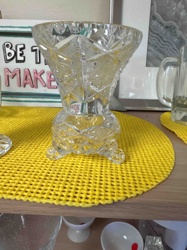
Submitted item photo
Submitted photo · May 30, 2026

User's notes

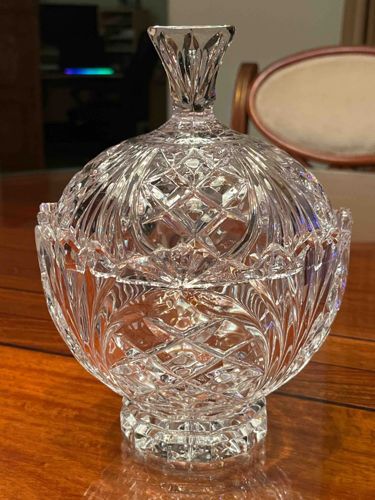
Edinburgh crystal candy jar

AI analysis below

AI appraisal

AI analysis & estimate

AI-Generated · Verify before acting

Everything below is generated by AI for informational purposes only. AI can make mistakes — the AI may misidentify items or misattribute them (artist, maker, brand, designer, origin, era). This is not an official valuation and should not be used for insurance, sale, tax, estate, legal, or lending purposes — or any decision requiring a certified appraisal. It is not an authoritative claim about any person, brand, or rights holder — do not share or rely on it as a factual statement about a third party. Always consult qualified professionals before making financial decisions.

Note

This analysis also relies on unverified notes provided by the user, which may be incomplete or inaccurate and could affect the result.

Read the full disclaimer

AI Identification

·Not independently authenticated·Verify before acting

Edinburgh Crystal Thistle Pattern Covered Candy Jar

Collectible Glassware / Decorative Arts

AI Estimated Value

·Not an official valuation·Verify before acting

$175.00 - $250.00

As of May 30, 2026

AI Item Analysis

·AI can make mistakes·Verify before acting
This is a fine lead crystal lidded candy or preserve jar, identified as the 'Thistle' pattern produced by Edinburgh Crystal. The item is characterized by a globular body and a domed lid, which is topped by a distinctive finial sculpted in the shape of a thistle bloom—the national emblem of Scotland. The glass exhibits high clarity and a brilliant refractive index, indicative of quality antique or vintage lead crystal. The decoration features intricate hand-cut details, including a cross-hatched diamond band across the center, flanked by deep vertical flutes that mimic the spiny foliage of a thistle. The rim of the base vessel is finished with a scalloped edge that matches the lid's seating. The jar sits on a sturdy, faceted pedestal foot. Based on the style and craftsmanship, this piece likely dates to the mid-to-late 20th century. The condition appears to be excellent with no visible chips, cracks, or clouding (sickness) in the glass, though minor shelf wear on the underside of the base is typical for pieces of this age. The weight and sharpness of the cuts suggest premium manufacturing from one of Scotland's premier glass houses.
AI Appraisal Report

·AI can make mistakes·Verify before acting
Upon visual examination of this lidded preserve jar, I have identified it as a hallmark piece of the 'Thistle' pattern by Edinburgh Crystal. The craftsmanship is consistent with mid-to-late 20th-century production, featuring the characteristic hand-cut diamond cross-hatching and deep vertical mitre cuts that simulate the thistle plant. The thistle-bloom finial remains the most critical value-driver for this specific form, as it is prone to chipping; this example appears to be in excellent condition with no visible internal fracturing or 'sickness.' The clarity of the lead crystal and the sharpness of the facets suggest a high-quality manufacture typical of the now-defunct Scottish glasshouse. Market demand for Edinburgh Crystal remains stable among collectors of UK glass and Scottish heritage items, though it has seen a slight softening from its peak in the early 2000s. Comparable sales for the 'Large Thistle' honey or candy jar typically fall within the $150 to $275 range depending on the specific size and the presence of the original acid-etched maker's mark on the base. Limitations: This appraisal is based strictly on visual photographic evidence. A definitive authentication requires an in-person inspection to verify the tactile 'ring' of the lead crystal and to locate the acid-etched 'Edinburgh Scotland' signature, which can be faint. I would also need to examine the base under a 10x loupe to confirm that the 'shelf wear' is consistent with age rather than modern grinding used to hide chips. Provenance or original retail packaging would further solidify the upper-tier valuation.

Get your items appraised

Instant estimates of your treasures with AI-powered appraisals

Browse More Appraisals