AI estimate as of July 8, 2025 · verify with a professional before acting
AI-Generated · Verify before acting
Everything on this page is generated by AI for informational purposes only. AI can make mistakes — the AI may misidentify items or misattribute them (artist, maker, brand, designer, origin, era). This is not an official valuation and should not be used for insurance, sale, tax, estate, legal, or lending purposes — or any decision requiring a certified appraisal. It is not an authoritative claim about any person, brand, or rights holder — do not share or rely on it as a factual statement about a third party. Always consult qualified professionals before making financial decisions.
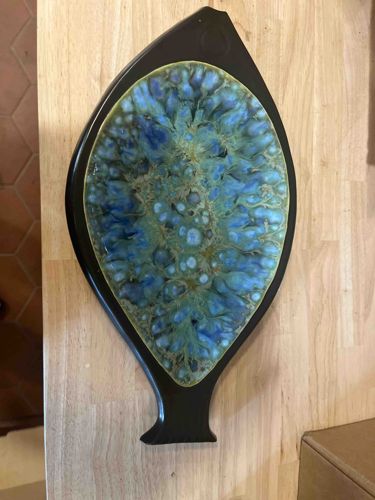
This item is a decorative wall plaque or serving dish, characterized by its elongated, stylized fish or eye-shaped silhouette. The main body of the piece is a dark, possibly matte black, material, likely ceramic or a highly finished wood. Inset into the center of this dark form is an oval-shaped, highly textured ceramic or glass element featuring an expressive, abstract glaze. The glaze exhibits a captivating array of blues and greens, with varying shades of aqua, teal, deep blue, and hints of brownish-green, creating an organic, almost cellular or coral-like appearance. The texture is overtly 'bubbly' or 'puddled,' suggesting a reactive glaze technique, where different glazes or firing processes cause them to separate and form distinct patterns. There are numerous small, irregular white or light-colored 'bubbles' dispersed throughout the blue and green areas, adding to the organic feel. The perimeter of the central glazed area is framed by a thin, raised border, possibly in a contrasting color like gold or a lighter brown, which separates it cleanly from the dark outer material. The overall condition appears good from the visible angles, with no obvious chips, cracks, or significant wear to the glazed surface. There might be some minor scuffs on the dark outer frame, consistent with handling or age. The craftsmanship appears solid, with a deliberate design choice evident in the contrast between the smooth, dark outer form and the vibrant, textured inner section. Given its aesthetic, it likely dates from the mid-20th century, particularly the 1960s or 1970s, aligning with styles like Mid-Century Modern or abstract art movements of that period.
AI Appraisal Report
Upon examining the images provided, I assess this item to be a well-crafted abstract ceramic wall plaque, likely doubling as a serving dish, dating from the mid-20th century, circa 1960s-1970s. The design, featuring a stylized fish or eye-shaped silhouette with a vibrant, 'fat lava' or reactive glazed center, is highly characteristic of West German or Italian studio pottery from that era. Artists like Bitossi or manufacturers such as Ruscha are known for similar techniques. The condition appears to be very good, with the complex, textured glaze seemingly free of major chips or cracks. The dark, contrasting frame shows some minor signs of age-appropriate wear.
The market for Mid-Century Modern decorative arts remains strong, and pieces with bold, expressive glazes like this are particularly sought after by collectors. While unsigned studio pottery can be difficult to attribute, the quality and aesthetic appeal are the primary value drivers here. The 'bubbly' or puddled texture is a significant factor, indicating a complex and desirable glazing technique.
However, this appraisal is limited by the inability to conduct a physical examination. I cannot confirm the maker, as marks are often found on the underside. A full authentication would require in-person inspection to identify any signatures, stamps, or impressed marks. Furthermore, I cannot definitively assess for hairline cracks or restorations not visible in the photographs. Without a signature or clear provenance, the value is based on its strong decorative and stylistic qualities rather than attribution to a famous designer or studio.