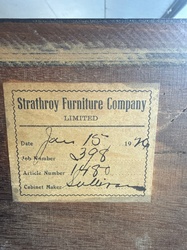
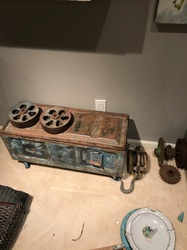
These notes were written by the person who submitted this item. Appraiser.AI has not verified them, and the AI's identification and estimate may rely on them.
AI Estimated Value
Not an official valuation
$600-900
AI estimate as of October 18, 2025 · verify with a professional before acting
AI-Generated · Verify before acting
Everything on this page is generated by AI for informational purposes only. AI can make mistakes — the AI may misidentify items or misattribute them (artist, maker, brand, designer, origin, era). This is not an official valuation and should not be used for insurance, sale, tax, estate, legal, or lending purposes — or any decision requiring a certified appraisal. It is not an authoritative claim about any person, brand, or rights holder — do not share or rely on it as a factual statement about a third party. Always consult qualified professionals before making financial decisions.
This analysis also relies on unverified notes provided by the user, which may be incomplete or inaccurate and could affect the result.
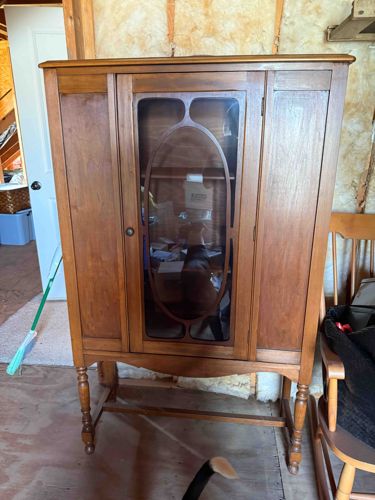
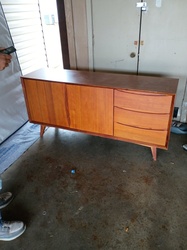
This is an antique or vintage china cabinet, likely from the Art Deco period, characterized by its sturdy wooden construction and distinct decorative elements. The cabinet is crafted from a medium-toned wood, possibly oak or a similar hardwood, exhibiting a warm, reddish-brown stain and a visible natural grain pattern. It features a central glass-front door flanked by two solid wood doors, creating a symmetrical design. The most striking feature is the central glass panel, which is not a single rectangular pane but rather a shaped glass insert with a distinctive curved, almost oval, opening framed by decorative wooden curves, typical of the Art Deco aesthetic. This ornate glass panel allows for the display of items stored inside, which appear to be various household objects. The cabinet stands on four turned legs, with the front two prominently visible and featuring a spool-turned or reeded design. A lower stretcher bar connects the legs, providing additional stability. The overall condition appears to be fair to good for its age, showing typical signs of wear and tear such as minor scratches, dings, and perhaps some fading or inconsistencies in the finish, as is common with older furniture. There are no immediate visible signs of major damage like large cracks or significant repairs, though a closer inspection would be needed to confirm. The hardware for the central door, a simple round knob or pull, is visible. The craftsmanship suggests a piece built to last, with solid joinery. The design hints at an early to mid-20th-century origin, likely between the 1920s and 1940s, given the Art Deco inspired glasswork and leg style. It lacks overt carved embellishments, relying instead on clean lines and the unique shaping of the central door to convey its style.
AI Appraisal Report
Upon my virtual examination of this Art Deco China Cabinet, I assess its condition to be fair to good for its age. The medium-toned wood exhibits a warm patina consistent with a possible oak or similar hardwood construction from the early to mid-20th century. I observe typical signs of wear, such as minor scratches, dings, and potential inconsistencies in the finish, which are expected for vintage furniture. The unique curved, almost oval, glass insert in the central door is a defining characteristic of Art Deco aesthetics, lending authenticity to its purported period of origin (1920s-1940s). The spool-turned legs and clean lines further support this. I see no immediate evidence of major structural damage or repairs, which is positive. However, without a physical inspection, I cannot ascertain the stability of jointery, the extent of finish degradation, or hidden repairs.
Market conditions for Art Deco furniture remain steady, with pieces exhibiting unique design elements garnering more interest. While this cabinet's design is distinct, it lacks the high-end materials or designer provenance that would command premium prices. Comparables for similar Art Deco-inspired china cabinets in good, ready-to-use condition typically fall within the $600-$1000 range. Its demand is moderate, appealing to collectors and decorators seeking period-specific accent pieces, but it's not exceptionally rare.
Factors impacting value positively include its authentic Art Deco styling, apparent solid construction, and functional utility. Negative factors would include any undiscovered structural issues, significant finish damage, or replacement parts. For full authentication and a more precise value, an in-person examination is crucial to assess wood type definitively, verify original hardware, scrutinize joinery, and detect any professional or amateur repairs. Provenance documentation, if available, would also aid in confirming its history.