AI Appraisal Estimate

AI-generated estimates · not official valuations

From the user

What was submitted

Photo and notes provided by the user — not generated by AI

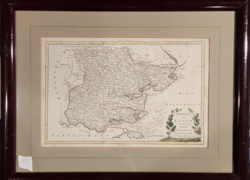
Submitted item photo
Submitted photo · June 17, 2026

User's notes

No additional notes provided.

AI analysis below

AI appraisal

AI analysis & estimate

AI-Generated · Verify before acting

Everything below is generated by AI for informational purposes only. AI can make mistakes — the AI may misidentify items or misattribute them (artist, maker, brand, designer, origin, era). This is not an official valuation and should not be used for insurance, sale, tax, estate, legal, or lending purposes — or any decision requiring a certified appraisal. It is not an authoritative claim about any person, brand, or rights holder — do not share or rely on it as a factual statement about a third party. Always consult qualified professionals before making financial decisions.

Read the full disclaimer

AI Identification

·Not independently authenticated·Verify before acting

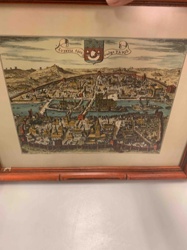
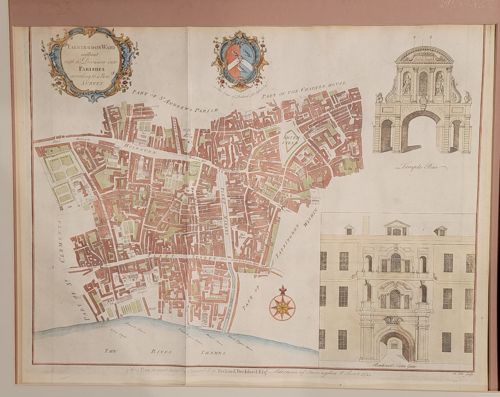
Farringdon Ward Without, with its Division into Parishes according to a New Survey (Strype's Survey of London)

Antique Map / Historical Print

AI Estimated Value

·Not an official valuation·Verify before acting

$450 - $650

As of June 17, 2026

AI Item Analysis

·AI can make mistakes·Verify before acting
This is a hand-colored copperplate engraving representing a map of the Farringdon Ward Without in London, originally published for John Strype's 1720 edition of 'A Survey of the Cities of London and Westminster'. The map is printed on laid paper with a visible vertical center fold, consistent with its origin as an atlas or book illustration. It features a detailed street-level layout of the ward, showcasing notable landmarks like Holborn and Fleet Street, with the River Thames at the bottom. The cartography is embellished with a decorative title cartouche in the top-left corner, a coat of arms in the top center, and a compass rose. To the right of the plan are two architectural vignettes: an elevation of 'Temple Bar' and 'Blackfriars Gate'. The coloring appears to be a later hand-application, utilizing a palette of muted reds, yellows, and greens to distinguish building blocks and parks. Regarding condition, the paper shows light toning and age-related yellowing across the surface. There is a faint vertical crease from the original binding and minor edge wear. The printing remains sharp, indicating a relatively early impression from the plate. This piece is representative of early 18th-century English cartography and urban documentation, highly valued for its historical accuracy regarding the post-Great Fire layout of London.
AI Appraisal Report

·AI can make mistakes·Verify before acting
Upon examination of the digital documentation for this 1720 hand-colored copperplate engraving from John Strype’s 'A Survey of the Cities of London and Westminster,' I find it to be a well-preserved example of 18th-century cartography. The map depicts Farringdon Ward Without, highlighted by the architectural vignettes of Temple Bar and Blackfriars Gate. The sharpness of the plate mark and the fine line work suggest an early impression. The visible laid paper texture and vertical fold are consistent with 18th-century book production. While the hand-coloring enhances the aesthetic appeal and value for decorators, it appears to be a modern application rather than contemporary to the printing date. The condition is overall good, with expected light toning and minor peripheral wear that do not detract from the central image. Market demand for Strype’s London maps remains steady due to their historical significance in documenting post-Great Fire urban development. Comparable sales for this specific ward map typically fall in the $400-$700 range depending on the vibrancy of coloring and paper quality. Factors impacting value include the inclusion of the architectural elevations, which are highly sought after by collectors. Limitations of this appraisal: A definitive verification of authenticity requires an in-person inspection to verify the watermark, measure the paper weight, and perform a microscopic analysis of the ink-paper interface to ensure it is not a high-quality facsimile. Provenance regarding the item's extraction from a specific 1720 or 1754 edition would further solidify its valuation.

Get your items appraised

Instant estimates of your treasures with AI-powered appraisals

Browse More Appraisals