AI Appraisal Estimate

AI-generated estimates · not official valuations

From the user

What was submitted

Photo and notes provided by the user — not generated by AI

Submitted item photo
Submitted photo · June 22, 2026

User's notes

No additional notes provided.

AI analysis below

AI appraisal

AI analysis & estimate

AI-Generated · Verify before acting

Everything below is generated by AI for informational purposes only. AI can make mistakes — the AI may misidentify items or misattribute them (artist, maker, brand, designer, origin, era). This is not an official valuation and should not be used for insurance, sale, tax, estate, legal, or lending purposes — or any decision requiring a certified appraisal. It is not an authoritative claim about any person, brand, or rights holder — do not share or rely on it as a factual statement about a third party. Always consult qualified professionals before making financial decisions.

Read the full disclaimer

AI Identification

·Not independently authenticated·Verify before acting

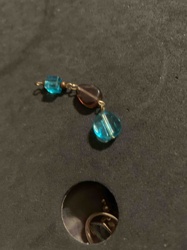
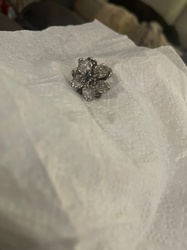
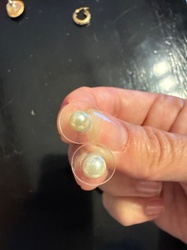
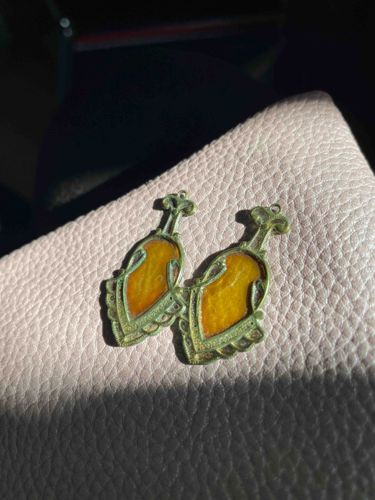
Pair of Art Nouveau Brass and Poured Glass Pendants

Antique Costume Jewelry Components

AI Estimated Value

·Not an official valuation·Verify before acting

$45.00 - $65.00

As of June 22, 2026

AI Item Analysis

·AI can make mistakes·Verify before acting
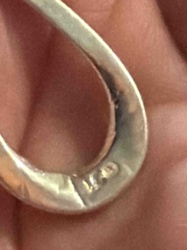
This is a pair of vintage decorative pendants, likely originally components of a larger piece of costume jewelry like a necklace or statement earrings. The pieces measure approximately 1.5 to 2 inches in length and are constructed from a cast brass-tone alloy metal with an aged, greenish-brown bronze patina. The design is heavily characteristic of the Art Nouveau period, featuring teardrop-inspired shapes, scrolling organic lines, and stylized floral motifs at the neck of each piece. Each pendant features a central translucent amber-colored insert, which appears to be poured glass or high-quality resin, designed to mimic the appearance of natural honey amber. The metal frame shows significant oxidation and surface wear, indicating substantial age. There are no visible maker's marks on the front, and the back is not shown, though the small jump rings at the top are original attachment points. The level of detail in the casting—specifically the beaded edges and recessed grooves—suggests mass-production from the early to mid-20th century. While they display cosmetic wear and verdigris, they retain structural integrity and represent a classic example of transitional Arts and Crafts or Art Nouveau-style commercial jewelry components.
AI Appraisal Report

·AI can make mistakes·Verify before acting
I have conducted a visual examination of this pair of Art Nouveau-style brass and poured glass pendants. Based on the cast metalwork’s scrolling organic forms and stylized teardrop motifs, these items demonstrate the distinct aesthetic of early 20th-century mass-produced costume jewelry components. The presence of verdigris (greenish oxidation) and the worn bronze-tone patina are consistent with aged copper-based alloys. The central amber-colored inserts show a clarity and edge-pooling characteristic of poured glass or early phenolic resins rather than natural gemstone. The current market for loose jewelry components from this era is steady but limited primarily to restorers and 'upcycling' jewelry designers. While the Art Nouveau style remains popular, these are unsigned commercial-grade pieces rather than artisan-signed works (such as those by Unger Bros or Liberty & Co). Their value is currently capped by their condition—specifically the significant surface oxidation—and the fact that they are separated from their original setting. Several limitations exist in this image-based appraisal. I cannot definitively confirm the material of the inserts without a thermal conductivity test or a 'hot point' test to distinguish glass from resin. Furthermore, a physical inspection is required to check for hidden maker’s marks on the reverse or inside the jump rings. The structural integrity of the metal, which may be brittle due to internal crystallization (metal rot), cannot be determined without tactile stress testing. For a definitive authentication, provenance documentation or a chemical analysis of the metal alloy would be necessary to distinguish an original 1910s casting from a mid-century reproduction.

Get your items appraised

Instant estimates of your treasures with AI-powered appraisals

Browse More Appraisals