Paleo Indian Chert Scraper and Lithic Debitage
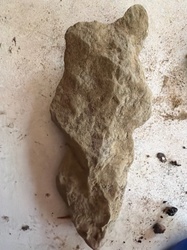
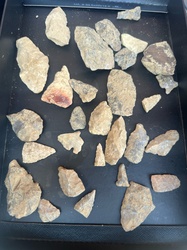
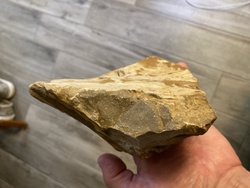
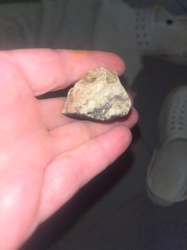
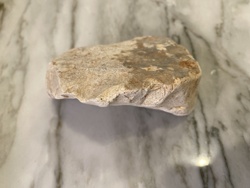
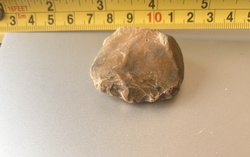
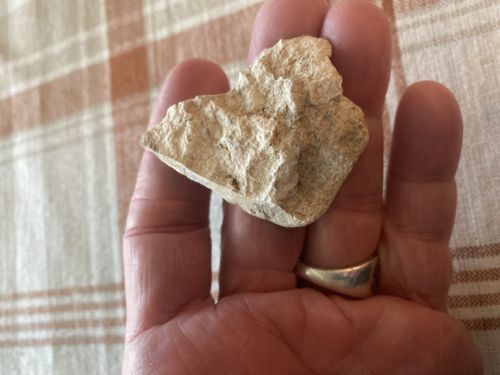
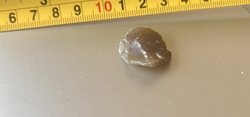
This specimen is a lithic object measuring approximately 2 inches by 1.75 inches, primarily composed of a light tan to buff-colored chert or silicate stone. The item exhibits a highly irregular, angular morphology consistent with lithic reduction or a natural rock fragment. The surface texture is notably coarse and weathered, displaying significant calcification and mineral buildup which suggests a prolonged period of exposure to the elements or burial in a mineral-rich soil profile. While the user identifies this as a point scraper or portable rock art effigy, the visual evidence reveals a lacks of diagnostic flaking patterns, bulb of percussion, or secondary retouching typically associated with intentional tool manufacturing from the Paleo-Indian period. There are no clear bilateral symmetries or specifically knapped edges that would define it as a formal scraper or projectile point. The 'effigy' interpretation is subjective and likely a result of pareidolia, as the protrusions and depressions appear to be the result of natural geological fracturing and erratic erosion rather than intentional sculptural modification. The condition is degraded with significant surface pitting, lack of lustrous patina, and heavy mineral crusting. No maker's marks or anthropogenic signatures are present, and the overall craftsmanship does not align with the sophisticated pressure flaking usually found in authentic Paleo-Indian cultural material.
AI-Generated Appraisal Disclaimer
Estimated Value
$5 - $20
Basic Information
Category
Archaeological Lithics/Geological Specimen
Appraised On
March 2, 2026
Estimated Value
$5 - $20
Additional Details Provided By Owner
User Provided Information
Paleo Indian chert point scraper portable rock art effigy found in Guthrie OK Measuring 2" x 1.75
Item Description
This specimen is a lithic object measuring approximately 2 inches by 1.75 inches, primarily composed of a light tan to buff-colored chert or silicate stone. The item exhibits a highly irregular, angular morphology consistent with lithic reduction or a natural rock fragment. The surface texture is notably coarse and weathered, displaying significant calcification and mineral buildup which suggests a prolonged period of exposure to the elements or burial in a mineral-rich soil profile. While the user identifies this as a point scraper or portable rock art effigy, the visual evidence reveals a lacks of diagnostic flaking patterns, bulb of percussion, or secondary retouching typically associated with intentional tool manufacturing from the Paleo-Indian period. There are no clear bilateral symmetries or specifically knapped edges that would define it as a formal scraper or projectile point. The 'effigy' interpretation is subjective and likely a result of pareidolia, as the protrusions and depressions appear to be the result of natural geological fracturing and erratic erosion rather than intentional sculptural modification. The condition is degraded with significant surface pitting, lack of lustrous patina, and heavy mineral crusting. No maker's marks or anthropogenic signatures are present, and the overall craftsmanship does not align with the sophisticated pressure flaking usually found in authentic Paleo-Indian cultural material.
Get Your Items Appraised
Instant estimates of your treasures with AI-powered instant appraisals