AI estimate as of October 6, 2025 · verify with a professional before acting
AI-Generated · Verify before acting
Everything on this page is generated by AI for informational purposes only. AI can make mistakes — the AI may misidentify items or misattribute them (artist, maker, brand, designer, origin, era). This is not an official valuation and should not be used for insurance, sale, tax, estate, legal, or lending purposes — or any decision requiring a certified appraisal. It is not an authoritative claim about any person, brand, or rights holder — do not share or rely on it as a factual statement about a third party. Always consult qualified professionals before making financial decisions.
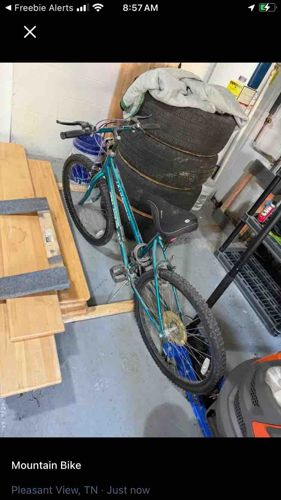
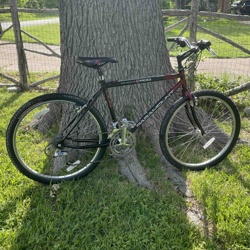
This appears to be a vintage Diamondback Ascent mountain bike, likely from the late 1980s to early 1990s, given the frame geometry, color, and component styles. The bike features a teal green metallic frame, possibly made of chromoly steel, a common material for quality mountain bikes of that era due to its durability and ride quality. The frame shows some weathering and potential scratches, consistent with regular use and age, though no major structural damage is immediately evident from the image. The handlebars are flat with black grips, and the seat is a standard mountain bike style, black with some visible wear. The wheels have knobby tires, indicating its off-road intended use. The rear wheel shows a gold-colored freewheel or cassette, which might suggest a Shimano Deore or similar groupset. The chainring and crank arms are visible, standard for older mountain bikes. The pedals are platform style. There are no clear manufacturer's marks or model numbers visible in the provided image. The overall condition suggests it is a used item with typical signs of wear and tear, including some dirt and grime. The bike exhibits the classic 'rigid frame' design, meaning it lacks suspension forks, common for early mountain bikes. This particular model would appeal to collectors of vintage bikes or individuals looking for a reliable, no-frills commuter or light trail bike.
AI Appraisal Report
I have visually examined this Teal Diamondback Ascent Mountain Bike. Based on the frame geometry, teal metallic color, and component styles, I assess this to be a vintage Diamondback Ascent, likely from the late 1980s to early 1990s. The chromoly steel frame, common for that era's quality mountain bikes, appears structurally sound, though I note weathering, scratches, and typical wear consistent with its age and use. The classic rigid frame design and knobby tires confirm its original intent as an off-road bike. The gold-colored freewheel or cassette hints at a mid-range Shimano groupset, common for Ascents. The black grips show wear, and the seat exhibits signs of use. Overall, the condition is fair to good for a vintage used bicycle, but it presents as uncleaned and unrestored.
From a market perspective, vintage rigid mountain bikes like this have a niche but growing demand, particularly for those seeking a reliable, no-frills commuter, light trail bike, or a project for restoration. Comparables, such as other Diamondback Ascents or similar era Specialized Hardrock/Rockhopper models in used condition, typically sell in the $150-$300 range, with restored examples fetching more. Rarity is not a significant factor here; these models were produced in large numbers. Factors impacting value include the bike's uncleaned state and lack of specific component identification. Significant improvements in value would require a thorough cleaning, mechanical tune-up, and potentially the replacement of worn consumables like tires, grips, and brake pads.
It is crucial to state that this appraisal is based solely on visual examination of the provided image. Limitations in authenticity verification exist as I cannot physically inspect the bike. Full authentication and a more precise value would require an in-person examination to verify frame integrity (no dents, cracks, or rust unseen in the image), confirm component originality and functionality, and identify specific serial numbers or model decals. Provenance documentation, though rare for bikes of this type, would also add value.