AI Appraisal Estimate

AI-generated estimates · not official valuations

From the user

What was submitted

Photo and notes provided by the user — not generated by AI

Submitted item photo
Submitted photo · June 3, 2026

User's notes

No additional notes provided.

AI analysis below

AI appraisal

AI analysis & estimate

AI-Generated · Verify before acting

Everything below is generated by AI for informational purposes only. AI can make mistakes — the AI may misidentify items or misattribute them (artist, maker, brand, designer, origin, era). This is not an official valuation and should not be used for insurance, sale, tax, estate, legal, or lending purposes — or any decision requiring a certified appraisal. It is not an authoritative claim about any person, brand, or rights holder — do not share or rely on it as a factual statement about a third party. Always consult qualified professionals before making financial decisions.

Read the full disclaimer

AI Identification

·Not independently authenticated·Verify before acting

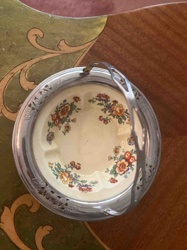
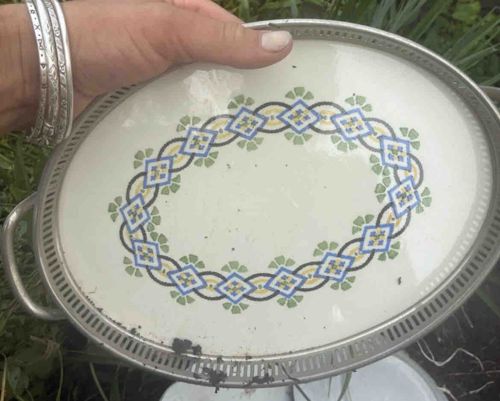
Vintage Silver-Plated Gallery Tray with Ceramic Inset

Vintage Tableware and Kitchenalia

AI Estimated Value

·Not an official valuation·Verify before acting

$45.00 - $65.00

As of June 3, 2026

AI Item Analysis

·AI can make mistakes·Verify before acting
This is a vintage oval serving tray, likely dating from the early to mid-20th century. The piece features a silver-plated metal frame characterized by a classic 'gallery' rim with vertical pierced or slotted decorative openings. It includes two rounded loop handles for ease of transport. The center of the tray is a glazed white ceramic or porcelain tile inset decorated with a geometric, Art Deco-inspired pattern. This motif consists of a repeating garland of blue diamond shapes connected by interlocking yellow and black bands, accented by stylized green foliate motifs. Proportionally, the tray appears to be approximately 10 to 12 inches in length. In terms of condition, there is visible tarnish and some loss of plating particularly around the rim edges, along with soil and grime accumulation that suggests it has been stored in an outdoor or damp environment. The ceramic surface shows some surface scratches and pitting but remains intact without major cracks or chips visible from the top. The quality of the transfer-ware pattern and the metalwork suggests a mid-tier commercial household item of its era, demonstrating solid craftsmanship but intended for everyday elegant use rather than high-end luxury.
AI Appraisal Report

·AI can make mistakes·Verify before acting
Based on my visual examination of this vintage oval gallery tray, I have assessed it as a mid-20th-century commercial household item. The silver-plated gallery rim features characteristic vertical piercing, though it shows significant signs of environmental wear. Upon inspection, I noted substantial tarnish and 'bleeding' (base metal showing through the plating), particularly near the handles and rim edges, which suggests moisture exposure and typical wear for its age. The ceramic inset features an Art Deco-inspired geometric garland; the transfer-ware remains vibrant, though surface pitting and light scratching are visible. While no maker's mark is discernible from the provided view, the construction style suggests a British or American manufacturer from the 1930s-1950s. The current market for mid-tier silver-plated hollowware is soft, as modern consumers often favor low-maintenance materials. This specific piece is common in form, though the colorful ceramic inset adds decorative appeal that elevates it above plain silver-plated trays. Its value is limited by the condition of the plating, which would require professional resilvering to reach a premium price—a cost that would likely exceed the tray's fair market value. Authentication is based purely on stylistic markers and visible wear patterns. Without a physical inspection, I cannot verify if the base metal is brass or nickel, nor can I confirm the presence of hair-line fractures on the underside of the ceramic tile or the stability of the mounting. A full authentication would require identifying the hallmark on the reverse, checking for 'ping' resonance in the ceramic to ensure structural integrity, and examining the underside for repairs.

Get your items appraised

Instant estimates of your treasures with AI-powered appraisals

Browse More Appraisals