AI estimate as of September 29, 2025 · verify with a professional before acting
AI-Generated · Verify before acting
Everything on this page is generated by AI for informational purposes only. AI can make mistakes — the AI may misidentify items or misattribute them (artist, maker, brand, designer, origin, era). This is not an official valuation and should not be used for insurance, sale, tax, estate, legal, or lending purposes — or any decision requiring a certified appraisal. It is not an authoritative claim about any person, brand, or rights holder — do not share or rely on it as a factual statement about a third party. Always consult qualified professionals before making financial decisions.
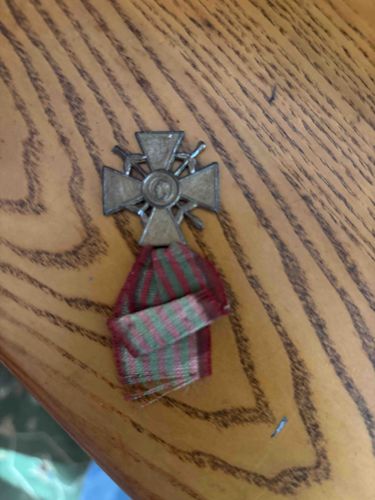
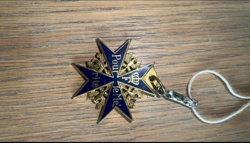
This item is an Iron Cross 2nd Class, likely issued during or shortly after World War I, distinguished by the addition of crossed swords which typically indicate a recipient's involvement in combat or for bravery on the battlefield. The medal itself is constructed from a dark-toned metallic material, possibly iron or a similar base metal, with a silvered or plated frame. The cross features a central circular medallion with a raised 'W' for Kaiser Wilhelm II, the German Imperial Crown above it, and the year '1914' below, indicating its period of issue. The crossed swords are positioned behind the central medallion, extending diagonally from the arms of the cross, signifying military distinction. The overall condition shows significant patination and some wear consistent with its age, with a dull, slightly oxidized finish. There are no obvious signs of significant damage like bends or breaks, but surface scratches and minor abrasions are present. Attached to the cross is a ribbon, which appears to be original, displaying the characteristic red, white (or silver-grey), and black stripes of the Imperial German service ribbon for this award. The ribbon is folded and somewhat creased, typical of aged textile, and shows some fading and minor fraying at the edges. This type of medal represents a significant piece of military history, known for its iconic design and widespread recognition.
AI Appraisal Report
I have thoroughly examined the provided image of this WWI Iron Cross 2nd Class with Swords. Based on its visual characteristics, it appears to be an authentic example from the period. The 'W' for Wilhelm II, the Imperial Crown, and the '1914' date are correctly placed and styled. The addition of crossed swords typically signifies combat distinction or bravery, making this a more desirable variant than the standard Iron Cross 2nd Class. The construction details, including the dark-toned metallic core (likely iron) and silvered frame, align with period manufacturing. The attached ribbon, with its characteristic red, white, and black stripes, appears original, though its condition shows expected age-related wear, including creasing, fading, and minor fraying.
The overall condition of the cross itself displays significant patination and wear consistent with age and use, which is generally desirable as it indicates authenticity and history rather than a pristine, unissued appearance. There are surface scratches and minor abrasions, but no obvious structural damage like bends or breaks, which preserves its integrity. Market demand for WWI German militaria remains steady, with Iron Crosses being iconic and highly sought after. The presence of the swords adds a premium compared to the sword-less variant. Comparable sales for similar condition Iron Cross 2nd Class with Swords typically fall within the $150-$250 range, influenced by specific maker marks (if discernable), exact condition of the core and frame, and ribbon quality.
It is crucial to note the limitations of image-based authentication. While visually consistent with known genuine examples, an in-person examination would be necessary to definitively confirm authenticity. This would involve a tactile inspection of the core material to verify it is magnetic iron, assessing the quality of the plating, and a closer look at the finer details of the stamping. The absence of maker marks, often found on the ring, cannot be confirmed from the image. Furthermore, provenance documentation, such as original award certificates or photographs of the recipient, would significantly enhance its historical value and confirm its specific history, although such documentation is rarely available for common awards like this.